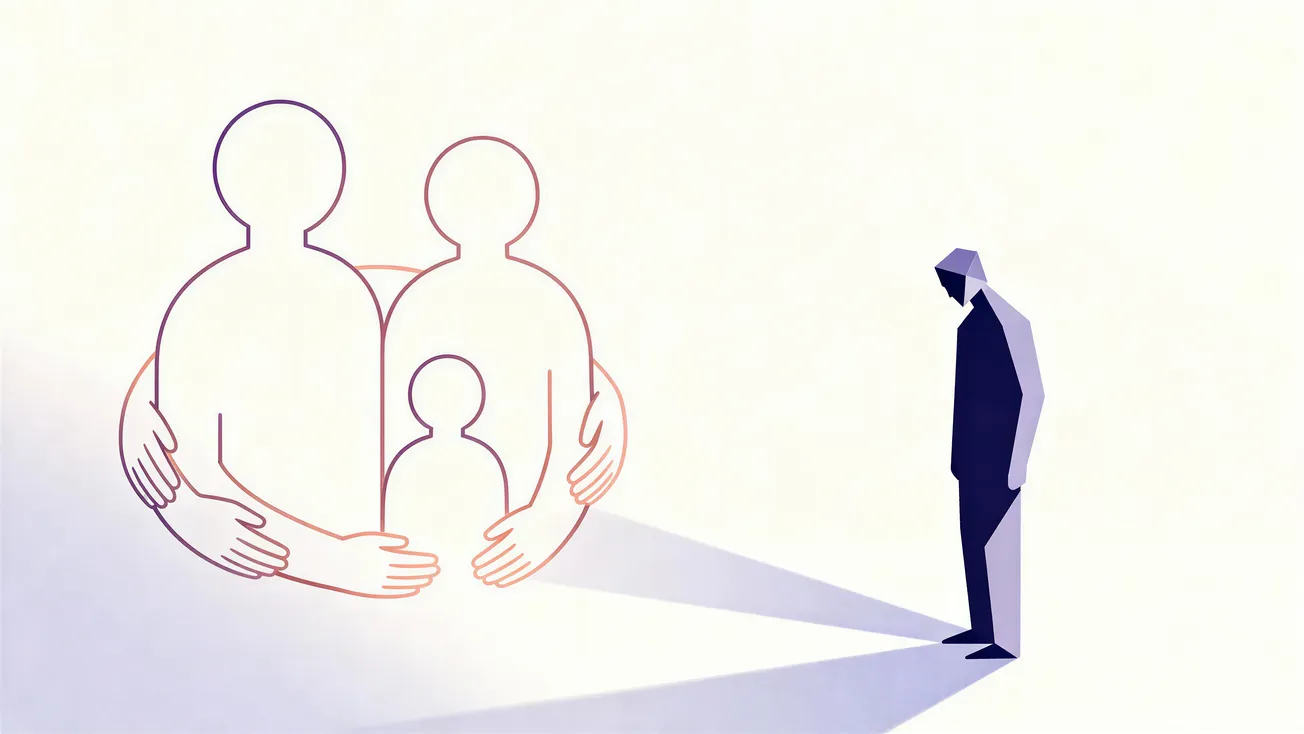
A person alone in the world, without any form of familial bond, suffers a kind of impoverishment that no material wealth can fill.
Even as individuals seek independence, they often create new families (through marriage, friendship, community) to fill that role.
Our lives find meaning through connection, care, and shared experience.
The concept of family speaks to an essential truth of human existence:
Humans are profoundly social and interdependent: we need family in one form or another.
The family, then, is as much a spiritual or emotional unit as it is a biological or economic one.
The family is one of the most fundamental institutions of human life, shaping our daily existence and our deepest sense of identity. It determines who we live with, share meals and resources with, and how we relate to others as children, parents, spouses, or kin[1]. Philosophers and social thinkers have long recognized the family’s significance. G.W.F. Hegel, for example, described the family as an embodiment of love – a unity where individuals are not isolated, but find their self-consciousness as part of a greater whole[2]. Indeed, family bonds often represent our first experience of love, belonging, and sacrifice for others. Yet “the family” is far from a simple or uniform concept. It is incredibly diverse across cultures and history, and its forms and meanings have changed over time[3]. From prehistoric clans to modern nuclear households, from patriarchal structures to egalitarian partnerships, the family has continuously evolved. It has been idealized as a source of nurturing love and harshly criticized as a source of oppression.
In this essay, we take a truth-seeking, comprehensive look at “The Family” – exploring it as a biological and evolutionary phenomenon, a cultural archetype, a historical institution, and a changing social reality. We will examine how the family may have catalyzed human cognitive evolution, how different societies have organized family life, what role families play in psychology and social structure, and what challenges the institution faces today. Throughout this exploration, we remain fearlessly introspective, aiming to uncover not only well-known facts but also deeper insights and “unknown unknowns” about the family. Ultimately, understanding the truths of the family – both its light and its shadow – is essential, for as truth-seekers we hold that only by honestly examining this cornerstone of human life can love and consciousness prevail in our personal lives and society.
(Let us begin by looking back to where the family began: in our evolutionary story.)
Evolutionary Origins: Family as Key to Human Evolution
Humanity’s story cannot be told without the family. Biologically and evolutionarily, the emergence of family structures was pivotal to our species’ survival and development. While many animals form mating pairs or groups for raising young, the human family possesses unique features that distinguished our ancestors from other primates[4][5]. Unlike our closest ape relatives who might live in harems or loose multimale-multifemale troops, early humans formed multi-level social systems built around long-term bonds and extended kin networks[6][7]. Anthropological evidence suggests that even in the earliest hunter-gatherer bands, our ancestors lived in multifamily groups – several families cooperating within a band or tribe, with layers of social ties extending beyond the immediate household[6]. This nested social structure – nuclear families nested in extended families, clans, and tribes – is an ancient feature of human sociality[5]. It means the concept of “family” in human evolution was never limited to just a mated pair and offspring; it often included a broader web of relatives.
One distinct human trait is that individuals maintain life-long ties with their natal family (parents, siblings) even after forming new families of their own[8]. In evolutionary terms, this was significant: it created ever-expanding circles of cooperation. Because early humans kept kin bonds across the lifespan, bands of related families could share food, care for each other’s children, teach survival skills, and defend against dangers in coordinated ways. This cooperation likely conferred huge survival advantages. Evolutionary biologists use concepts like kin selection and inclusive fitness to explain such behavior – individuals are predisposed to help those who share their genes (like close kin), thus enhancing overall genetic survival. In human families, kin selection may have encouraged altruism among relatives, while reciprocal altruism and mutual aid extended even to non-kin in the group[9]. These dynamics fostered the high level of social trust and learning that humans enjoy compared to other species[9].
Crucially, the human family also appears to be an evolutionary solution to a fundamental problem: the exceptionally long, dependent childhood that human children have. Human infants are born far more helpless than other mammals and require many years of intensive care and teaching. Paleoanthropologists believe this long childhood (a result of our large brains and bipedal physiology) could only have evolved in tandem with cooperative parenting – in other words, a family. Mothers, in particular, faced what one scholar calls “the central dilemma” – how to find enough time and energy to raise multiple dependent offspring without help[10]. The answer was cooperative childrearing. Early human mothers received help from others – fathers, yes, but also grandparents (notably maternal grandmothers), older siblings, and other community members[11][12]. This is the essence of the “cooperative breeding” or alloparenting hypothesis: humans evolved as cooperative breeders, meaning childrearing is a shared task of the family group, not just the biological parents[13][14].
The evidence for cooperative breeding in our evolution is compelling. Humans are one of the only primates where post-menopausal females (grandmothers) play a vital role – supporting the idea of the grandmother hypothesis, which suggests that human longevity beyond childbearing years was selected for because grandmothers improved grandchildren’s survival[11][12]. Anthropologist Kristen Hawkes and colleagues, for example, documented that among the Hadza hunter-gatherers, hardworking grandmothers enabled their daughters to have more children by helping feed and care for grandchildren[15]. By alleviating the time and resource constraints on mothers, cooperative parenting allowed our species to raise more offspring with better survival rates[11]. In turn, this facilitated the evolution of our big brains: a larger brain requires a longer childhood to learn and develop, which is only feasible in a supportive familial environment[16][17]. In short, the family – as a stable unit of shared childrearing – may have been the platform that launched the “cognitive explosion” of humanity, nurturing each generation so they could acquire language, skills, and culture.
Another distinctive feature tied to family evolution is pair-bonding – relatively stable reproductive partnerships (often cemented by social marriage contracts in all societies)[7]. Human mating systems are flexible (ranging from monogamy to polygamy in different cultures), but long-term pair-bonds are common and are thought to support cooperative parenting. A father investing in his mate and offspring could increase their survival, which is one reason evolutionary scholars long assumed the nuclear family (father, mother, children) was the original human family unit. However, recent research in behavioral ecology complicates this narrative: while male parental care is certainly important, the conventional patrifocal view (that the man-as-provider formed the core of family) is not the whole story[18][19]. Cooperative breeding perspectives suggest that the wider network – including females helping each other – was equally crucial[19]. In fact, the human family likely started not just as a male-female pair with kids in isolation, but as part of a community of multiple caregivers. This makes the human family very unusual compared to other primates and highlights its flexibility and adaptability. The “evolutionary arc of family formation” shows that there was no single static structure – instead, our ancestral families responded to challenges with creative cooperation[8].
To sum up, from an evolutionary standpoint the family can be seen as a strategy for survival that enabled humans to thrive. It provided a secure context for prolonged childhood learning, fostered cooperation through kinship ties, and channeled mating and reproduction into stable bonds. These factors gave Homo sapiens an edge in developing complex cognition and culture. The diversity of family arrangements (extended kin groups, polygamous harems, multifamily bands, etc.) across different ecologies also underscores that flexibility itself was a hallmark of the human family[3][20]. What all these forms share is that humans depend on each other: the family is nature’s way of binding individuals into interdependent units so that the whole becomes stronger than the sum of its parts. Little wonder that as humans spread across the globe, in every culture we find some form of family at the heart of social life.
The Family as Archetype and Cultural Symbol
Beyond its biological roots, “the family” occupies a profound place in the human imagination and psyche. Across world cultures, we see remarkably consistent symbolic roles: the nurturing Mother, the protecting Father, the innocent Child, the loyal Sibling, the wise Grandparent. These roles are so enduring that Carl Jung identified the mother and father as primary archetypes – universal patterns embedded in the collective unconscious of humanity[21][22]. The Father archetype, Jung noted, represents qualities like authority, guidance, strength, and wisdom (often envisioned as a king, chief, or sky-father deity)[21]. The Mother archetype embodies nurturance, care, fertility, and compassion (seen in images of the Earth Mother, goddesses, or one’s own biological mother)[22]. These archetypes recur in myths, religions, and art worldwide. For instance, many mythologies begin with divine families – the Greek Olympians with father Zeus and mother Hera, or the Egyptian Isis and Osiris with their child Horus. In these stories, cosmic dramas play out as family dramas, underlining how deeply we intuit family relationships as fundamental motifs of meaning.
The child, too, is an archetype of renewal and potential – think of the many hero legends where a child is born in humble circumstances and later saves the world, echoing our collective hope in each new generation. Psychologically, Jung suggested that encountering a real mother or father figure can “activate” the inner archetype in our minds[23][24]. A person’s own parents thus constellate powerful unconscious expectations – a child instinctively expects a mother to be loving and protective, for example, because of this deep archetypal template[24]. When reality aligns (or clashes) with the archetype, it shapes the child’s psyche in profound ways. In this sense, our personal family experience becomes entwined with ancient patterns of what family should be. We carry those patterns throughout life, often recreating aspects of our family-of-origin in new relationships or seeking partners who echo our parents in some way. The family lives within us as much as we live within a family.
Culturally, family roles and metaphors suffuse language and customs. We speak of “Mother Earth,” nations fathering new laws, sister cities, or the “family of nations.” Such language reflects the intuitive extension of kinship beyond bloodlines. Many communities refer to each other in familial terms (calling unrelated elders “Auntie” or “Uncle,” for example) to signify closeness. In some cultures, the concept of family expands spiritually to all humanity. An ancient Sanskrit saying, Vasudhaiva Kutumbakam, proclaims: “The wise believe that the entire world is a family.”[25]. This wisdom from the Maha Upanishad urges us to see every person as kin – breaking down the “small-minded” distinction of us vs. them in favor of a universal family bound by love[25]. The resonance of this idea across time – echoed in Christianity’s brotherhood of man, or the African concept of ubuntu (“I am because we are”) – suggests that the family ideal is a template for envisioning unity on a larger scale. We naturally understand what it means to care for family, and thus it serves as a model for caring for community, nation, or world.
However, the archetype of family is not all comfort and light; it also has a shadow side in cultural imagination. Family conflicts are a core theme of tragedy and drama: from Cain and Abel’s fratricide in the Bible, to the ancient Greek tragedy of Oedipus (whose fate was bound up in a tangle of father–son and mother–son relationships), to Shakespeare’s feuding Montagues and Capulets. These stories reflect an uncomfortable truth: the same intensity that makes family bonds loving can make family conflicts devastating. Betrayal or violence within a family strikes us as especially tragic (hence the enduring horror at incest or parricide in myths). On a societal level, the language of family can be co-opted for sinister ends – for instance, cults and gangs sometimes call their organizations “families” to exploit the instinct of loyalty. History has seen totalitarian movements refer to the leader as a paternal figure demanding filial obedience. Such uses remind us that the emotions tied to family (loyalty, obedience, unconditional love) can be manipulated. A “fearless” examination of the family archetype thus acknowledges its power can be double-edged. The very devotion that makes family nurturing can, if misdirected, become a tool for control or an excuse to tolerate abuse.
In sum, as an archetype the family is eternal and pervasive: it is encoded in our psyches and our stories. It represents a profound human truth – that we are fundamentally relational creatures, seeking motherly care, fatherly guidance, sibling companionship, and intergenerational continuity. Family is the metaphor we return to when we describe unity, yet also when we grapple with conflict. Recognizing these archetypal dimensions enriches our understanding beyond biology: the family is not just a set of people living together, but a symbol of how humans yearn to connect, how we conceptualize roles of care and authority, and how we find meaning in belonging to something larger than ourselves. This symbolic resonance is one reason debates about the family (what form it should take, who counts as family) are so passionate – at stake are not just practical arrangements, but deeply held visions of love, duty, and identity.
Families Through History: Diversity and Change
While the idea of family is timeless, the structure and norms of families have never been static. History reveals a kaleidoscope of family forms adapting to economic, social, and ideological shifts. It is common today to refer to the monogamous nuclear family as the “traditional family,” but historically that is somewhat misleading[26][27]. In most eras and cultures, the nuclear household (just parents and minor children) was only one part of a larger family network, or even a rarity. An anthropological review underscores that the nuclear family as an isolated unit “is the exception historically and in many other cultural contexts”, not the universal norm[26][3]. If anything, the hallmark of human families is flexibility: from polygamous households with one parent and multiple spouses, to joint families with multiple generations under one roof, to communal childrearing across a whole village.
Ancient and Pre-Modern Families: In hunter-gatherer times (which comprise the bulk of human history), families likely lived in bands where several related nuclear families camped and migrated together. In these groups, resources like food were shared, and child care might be a collective effort among kin. Anthropologists studying contemporary foraging societies (as models for the past) note high variation – some are more monogamous, others more polygynous, some practice sharing of parenting even to the extent of “partible paternity” (as among some Amazonian tribes who believe a child can have multiple fathers)[28][29]. Once humans adopted agriculture (~10,000 years ago), new forms emerged. Land inheritance became important, favoring extended family systems: large households where multiple generations (grandparents, adult sons with their wives and children, etc.) lived together to work the land. Patriarchal authority often ruled these units – e.g., in ancient Rome the paterfamilias (eldest male) held legal power over the family. Many agrarian societies also allowed or encouraged polygamy for those wealthy enough – more wives and children were an economic advantage on farms. In China and India, joint families with dozens of members were not uncommon, and lineage clans could span whole villages.
Marriage customs historically were very different from modern individual romance. Marriage was often arranged by families for economic or social alliances, and love was expected to grow after marriage. In medieval Europe, for instance, marriage among nobility was a contract between kin groups, and even peasants needed a lord’s approval to start a family. The concept of marrying purely for love took stronger hold only in the modern era, and even then gradually. Yet, interestingly, Hegel warned that basing marriage solely on transient feeling was risky – he saw marriage as an “ethical tie” that should be more stable than the ups and downs of passion[30][31]. This reflects a historical concern: families were viewed as too crucial to society to be left to whim, thus bound by norms, church or legal rules, and community oversight.
Industrial and Modern Transformations: The Industrial Revolution (18th–19th centuries) profoundly changed family life in many societies. As wage labor in factories replaced family farming, the economic function of the family shifted. No longer was the home necessarily a unit of production (like a farm or craft workshop); instead, men, women, and even children went out to work or school. Urbanization often meant young people leaving extended families in villages to form nuclear families in cities. The Victorian ideal (in Europe and America) emerged of the “separate spheres”: a breadwinner father and a homemaker mother – a sharp departure from earlier eras where husband and wife both labored at home or fields. This 19th-century nuclear family ideal, with a strict gender division, was held up as “traditional” in those cultures, but in reality it was a recent product of industrial society and not universal. Many families, especially among working classes and non-Western regions under colonial influence, could not afford this ideal (women had to work, extended kin supported each other, etc.).
The 20th century brought further shifts. Two world wars and economic upheavals put strains on families (many women became temporary heads of households during wars, for example). The mid-20th century in the West saw a brief golden era of the nuclear family (1950s baby boom, early marriage age, stay-at-home moms), but this too changed by late century. Starting in the 1960s–70s, developed societies experienced plummeting birth rates, higher divorce rates, and delays in marriage. By the 21st century, the portrait of family in many countries had drastically diversified: single-parent families, blended stepfamilies, cohabiting couples without marriage, same-sex parent families, and individuals living alone all became more common. As a Pew Research Center analysis notes, in 1970 about 67% of American adults 25–49 lived with a spouse and minor children, but by 2020 that share dropped to just 37%[32]. In other words, the classic “mom, dad and kids” household went from a solid majority to a minority in just a few decades. Taking its place is a plurality of arrangements – for instance, more people remaining unmarried, more couples delaying or foregoing children, and more unmarried partners raising children[33][34]. Interracial and intercultural marriages have risen, and since 2015 same-sex marriage is legal in many places (over 700,000 same-sex married couples in the U.S. by 2021, about 1% of all marriages)[35]. These changes reflect greater individual freedom in choosing family life, as well as social acceptance of diversity, but they also raise questions about the stability and future of the family as an institution.
Globally, a striking trend is the demographic shift affecting families: fertility rates have fallen sharply as societies modernize. As of 2022, the average number of children per woman in OECD countries is about 1.5 – less than half the rate in 1960 (3.3 children)[36]. This is far below the “replacement level” of ~2.1 needed to sustain population, leading to aging populations and fewer children. Countries like Italy and Spain are at only ~1.2, and South Korea hit a startling low around 0.7[36]. People are also having children later – the average age of motherhood in many countries is now around 30, up from mid-20s a few decades ago[37]. Many more individuals are ending up with no children at all, whether by choice or circumstance[38]. These trends mean smaller families and more people growing old without nearby kin. Societies face new challenges: supporting aging parents with fewer adult children to help, and potential loneliness or care deficits for the elderly and for those who would historically rely on family. Some governments are alarmed enough to offer policies incentivizing childbirth or easing work-family balance (e.g., subsidized childcare, parental leaves)[39][40]. Yet, underlying these policies is a profound question: what does family mean when it is no longer the default to marry young and have multiple children? Modern life has allowed individuals to define family on their own terms – which is liberating but also destabilizing to old patterns.
Cultural Variations: It’s important to stress that even today, there is no single “modern family” model globally. In many developing countries or traditional communities, extended families remain the norm. Three (or even four) generations living together is common in parts of Asia, the Middle East, and Africa. In some societies, families are expanding in new ways – for example, through transnational ties when migrants work abroad and send money home to support relatives (creating what some call “global families” linked by remittances and Skype calls rather than shared roofs). Elsewhere, we see intentional communities or co-living arrangements where unrelated people form family-like bonds for economic or social support. Anthropologist Louis Henry Morgan and later Claude Lévi-Strauss showed that kinship systems can be remarkably complex, with rules like clan exogamy (marrying outside one’s group) turning marriage into a way of linking families into larger networks. The only real tradition is change and diversity. The historical record suggests that the family has always been in flux, adapting to the needs of the time – whether to have more children for farm labor, fewer children for urban living, closer extended ties for mutual support, or smaller units for mobility. This adaptability is perhaps the family’s greatest strength: it is resilient, not in the sense of remaining unchanged, but in its ability to re-form and survive under new circumstances.
The Family in Social and Psychological Perspective
Understanding the family also requires looking at its role in shaping individuals and society. Families are often called the “basic unit” of society – a nucleus from which larger social structures grow. Indeed, family life is where socialization begins: it is within our families that we first learn language, norms, values, and behaviors. Parents and older relatives transmit culture and knowledge to children, consciously through instruction and unconsciously through example. This makes the family a powerful engine of continuity (or change) between generations. From a functionalist sociology viewpoint, the family serves critical functions: reproduction of the population, socializing the young, economic support for members, and regulation of sexual activity and lineage (who is related to whom)[41][42]. Émile Durkheim and later Talcott Parsons emphasized that the family provides emotional stability and a haven in a heartless world – what Parsons in the 1950s called the “warm bath” function of the nuclear family, soothing the stresses industrial workers faced. Whether or not one agrees with that rosy view, it is true that family bonds typically involve strong emotional interdependence.
Psychologically, family experiences are immensely formative. Attachment theory, pioneered by John Bowlby, showed that infants form deep attachment bonds with caregivers (usually parents) that influence their sense of security and ability to form relationships throughout life. A child who experiences consistent, loving care develops a secure attachment style, while one who faces neglect or unpredictable caregiving might become anxious or avoidant in relationships. Thus, healthy family environments – marked by love, clear communication, and support – tend to produce healthier, more well-adjusted individuals. Conversely, family dysfunction or trauma (abuse, parental conflict, instability) can leave lasting scars on a person’s psyche. Modern psychology identifies patterns like intergenerational trauma, where unresolved issues in a parent can unconsciously be passed to children. On a positive note, families also transmit resilience: values, coping skills, and self-esteem that can protect children even in a harsh outside world. The old saying “it all starts at home” has a lot of truth; while humans can grow and change beyond their upbringing, the family’s imprint is deep and enduring.
One illuminating framework for understanding family dynamics is family systems theory. Pioneered by thinkers like Murray Bowen and popularized by therapists at Palo Alto (Gregory Bateson, Paul Watzlawick, etc.), this perspective treats the family as an interactive system rather than just a collection of individuals. The family system has its own rules, roles, and communication patterns that influence each member’s behavior. A key insight here is that behavioral or psychological problems in one member often reflect issues in the family system as a whole. For example, a child’s anxiety might be a response to unspoken tensions between parents, or one teen’s “rebellion” might serve to distract the family from another problem. The system perspective shifts focus from blaming one person to observing relationships and feedback loops. In a healthy family system, communication is clear and roles are flexible (e.g. parents act as cooperative leaders, children can express themselves safely). In a troubled system, communication may be warped by double messages and rigid roles (e.g. an eldest child pressed into a pseudo-parent role for younger siblings, or a scenario where one member is the constant “scapegoat” for family issues).
Gregory Bateson’s famous double bind theory illustrates how toxic communication in families can impact mental health. A double bind occurs when a person receives contradictory messages on different levels and is not allowed to comment on the contradiction – effectively being “damned if you do, damned if you don’t.” Bateson and colleagues observed this pattern in families of schizophrenia patients: for instance, a mother tells her child “you can always talk to me” yet when the child opens up, the mother withdraws or scolds. The child is caught in a bind where expressing emotion is both encouraged and punished, and there is no escape from the paradox[43][44]. Over time, such repeated double binds can induce extreme anxiety and distorted reasoning, potentially contributing to psychosis[45][46]. While later research refined these ideas, the lasting contribution is recognizing that family communication patterns (clear vs. contradictory, open vs. repressive) profoundly affect mental well-being. Healthy families strive for congruent messages – where words and body language align, and where members are free to discuss problems or mixed feelings. As a Psychology Today summary puts it, “contradictory family messages can lead to psychological issues” and clear, consistent communication is crucial[47]. Family therapy approaches build on these insights, often aiming to improve communication, realign boundaries, and break negative cycles in the family system.
Sociologically, families are also arenas of power and inequality. Within families, gender and age often determine power dynamics – traditionally, many cultures vested authority in the husband/father (patriarchy) and to a lesser extent in elders over the young. These dynamics can be benevolent or abusive. Feminist scholars have been especially critical of how traditional family structures have enforced gender inequality. As John Stuart Mill observed in 1869, the family was a school of despotism: boys raised to believe themselves the natural “superior” of women would carry that attitude into society[48]. He argued that the subordination of women in marriage (legally and socially) was incompatible with a just society – highlighting the famous feminist mantra that “the personal is political”, meaning that what happens in private homes (power, division of labor, violence or respect) is a matter of justice, not just personal affair[49]. Contemporary feminists note three key reasons families must be examined through a justice lens: (1) Families are social institutions, not just “natural” – they’re shaped by laws and norms, so we can change them; (2) The family is where future citizens are shaped, so inequality or injustice there has ripple effects; (3) Traditional family roles have constrained women’s opportunities, by assigning unpaid domestic work and caregiving to women and limiting their public participation[50][51].
There have been various feminist responses: Liberal feminism seeks to make family life more equal through reforms (e.g. shared parenting, anti-discrimination laws) without abolishing the family structure itself[52][53]. Socialist feminism critiques the family as an economic unit that reproduces capitalist exploitation – pointing out that women’s unpaid labor in the home benefits the economy by raising workers at no cost, and that women’s dependence on husbands’ wages has been a pillar of capitalist family models[54][55]. Radical feminism goes further to argue that the traditional nuclear family is fundamentally a patriarchal institution that systematically oppresses women, both economically and sexually[56]. Radical feminists have highlighted how the cultural idealization of the submissive wife/mother role has often trapped women in situations of domestic servitude or even abuse, with societal silence around issues like marital rape or domestic violence[57][58]. They contend that true liberation may require dismantling or radically restructuring family norms, in favor of more communal or egalitarian arrangements[58][59]. Thanks to feminist advocacy, many legal systems now recognize domestic violence as a public issue, marital rape as a crime, and gender equality in marriage as a right – changes that were by no means obvious in earlier eras where the home was a “private” sphere beyond law.
From the viewpoint of children’s rights and welfare, the family has also been critiqued. Not every family is the loving safe haven it is idealized to be; some are sites of neglect, toxic control, or intergenerational trauma. Modern social services and child protection laws, which allow state intervention in cases of abuse, represent a societal acknowledgment that family autonomy has limits – the well-being of individuals (especially vulnerable members like children) can trump the sanctity of the family unit if necessary. This is a delicate balance, because excessive intervention can also be harmful, yet it underscores that truth requires shining light even into the “private” corners of family life. Only by acknowledging problems – such as cycles of abuse or harmful traditional practices (child marriage, female genital mutilation in some cultures tied to family honor) – can those harms be addressed.
In spite of these serious issues, we should also note that families have proven to be incredibly resilient and adaptive. Around the world, even as formal structures shift, people continue to forge familial bonds for support. We see “chosen families” emerging – for example, LGBTQ+ communities where friends become as close as family when biological families reject them, or groups of single adults who decide to live together and care for one another in the manner of a family. These underscore a truth: the human need for family – for belonging, care, and continuity – is deeply ingrained. Whether by blood or by choice, people seek those who will celebrate their joys, mourn their losses, and accept them unconditionally. The forms can vary, but the function remains crucial.
Contemporary Challenges and the Future of Family
In the early 21st century, the family stands at a crossroads of change, facing challenges that are social, economic, and technological. While the idea of family remains cherished, what constitutes a family and how families operate are being reimagined. Let’s highlight some key contemporary challenges and possible future directions for the family:
- Changing Family Structures: As discussed, there is no single dominant family form today in many societies. The pluralization of family structure means policies and expectations built around the old “male breadwinner + wife homemaker + kids” model are often out of step with reality. Schools, workplaces, and laws are adapting (for instance, recognizing same-sex parents on forms, or providing leave for fathers and not just mothers). However, social norms sometimes lag. Single parents (most often single mothers) still face stigma or lack of support; child-free adults may be seen as selfish in family-centric cultures; LGBTQ+ families may confront prejudice. The expansion of what family means – including stepfamilies, cohabiting couples, or unmarried partners – raises legal questions too: inheritance, custody, hospital visitation rights, etc., have needed updating to accommodate new family forms.
- Work–Family Balance: In many countries, both parents now work outside the home, which can strain the logistics of family life. The rise of dual-earner families (or single-parent working families) has made childcare a pressing issue. Nations in Europe and elsewhere have experimented with subsidized daycare, generous parental leave, or flexible work hours to alleviate the pressure, with varying success. The OECD reports that better policies to reconcile work and family life are essential to encourage people to have children in modern economies[39][60]. Without support, couples might delay or avoid having kids, contributing further to low birth rates. Additionally, the gender role negotiation within families is ongoing – even when both partners work, studies often find women still doing more housework and childrearing (the “second shift”). Achieving true equality at home is part of the challenge of realizing equality in the workplace and society.
- Economic Pressures: Economic trends heavily influence families. Housing costs in many cities are so high that young adults are living with their parents longer, delaying forming their own families[40][61]. Stagnant wages and insecure jobs can discourage marriage or childbearing. In some places, only the more affluent feel they can “afford” children, which can exacerbate class disparities in birth rates. Conversely, poverty and lack of opportunity also stress families – financial hardship is a known factor in marital strain and can harm children’s development due to instability or parents’ stress. Thus, macro-economics and family well-being are intertwined. If future economies continue gig-based or with less social safety nets, families might have to become even more of a support unit (for example, multi-generational homes pooling resources are already a response to tough times).
- Technology and Family Dynamics: The digital revolution is a new frontier for family life. On one hand, technology connects families across distances – video calls allow grandparents and grandchildren to maintain relationships oceans apart, and co-parenting apps help divorced parents coordinate. On the other hand, technology also introduces distractions and dilemmas: families may struggle to maintain quality time when everyone is glued to personal screens; children gain access to the wider world (and its risks) through the internet, sometimes undermining parental influence; and issues like online bullying or excessive gaming can become points of family conflict. Furthermore, reproductive technologies (IVF, surrogacy, genetic editing in the future) are redefining how families are formed, raising ethical questions about what constitutes parenthood. If we imagine even further ahead, artificial wombs or cloning might challenge the very biological basis of parent-child relations. The essence of family – love, bonding, commitment – will likely remain, but the pathways could radically change, requiring society to continually revisit its definitions of motherhood, fatherhood, and kin.
- Declining Fertility and Aging: As noted, many societies face a future where there are more elderly people and fewer children. In family terms, this could mean a “beanpole” family structure – long thin lineages with one child, one parent, one grandparent, etc., rather than the broad base of many siblings and cousins. Individuals might have very few blood relatives. This raises concerns of isolation: who will care for the elderly, and who will support individuals who have no siblings or cousins? One possible development is a return to extended or augmented families out of necessity – for example, friends moving in to care for an aging single person, or communities forming cooperative living for seniors who lack family. We might also see more multi-generational households making a comeback in wealthy countries (as already is common in many cultures), with grandparents moving in to help raise grandchildren and later being cared for by adult children. Such arrangements can benefit all – elders transmit wisdom and get care; parents get childcare help; children get love and mentorship from grandparents. The challenge will be restructuring society (housing, work patterns) to accommodate this if it happens.
- Cultural and Ideological Polarization: The family has become a focal point in cultural debates. Some see the changes in family structure as a decline of values, and they advocate for a “return” to traditional family norms (for instance, campaigns to promote marriage, discourage divorce, or gendered roles). Others celebrate the changes as emancipation from patriarchal or rigid models, emphasizing that what matters is the quality of relationships, not the form. This debate often plays out in politics and media, sometimes framing issues like same-sex parenting or single motherhood in moral terms. A truth-seeking approach would say: we must honestly assess outcomes. For example, can single parents raise well-adjusted kids? Research indicates yes, if given adequate support – what matters more is absence of poverty and presence of love, not the number or gender of parents. Likewise, do children of same-sex couples fare well? Studies so far show they do about as well as other children, debunking fears. On the other hand, what about divorce? It can be both an escape from a toxic marriage and a disruption for kids – outcomes vary widely. The point is, we should be guided by compassion and evidence, not nostalgia or fear. Families have always been diverse; what’s new is our willingness to recognize and respect that diversity.
Looking to the future, one can imagine some evolving scenarios for the family. Perhaps new forms of “intentional families” will grow – groups of friends or like-minded individuals who legally formalize bonds of mutual caregiving, almost like families by contract. We might see more fluid family boundaries, with co-parenting arrangements that involve more than two adults (already, some places recognize three-parent legal arrangements, such as a sperm donor plus a lesbian couple all being legal parents). The lines between family and community could blur if, for example, urban neighborhoods organize shared childcare or collective living spaces. With people living longer, a person could be a child, parent, grandparent, and great-grandparent all in one lifetime – potentially strengthening a sense of continuity, or possibly causing generation gaps under one roof. The challenge and opportunity will be to preserve the core gifts of family – love, support, belonging – while shedding the limitations (such as exclusivity, inequality, or rigidity).
One intriguing proposal by some social commentators is the notion of “forge your own family” to combat isolation. For instance, writer David Brooks argued that the breakdown of the traditional nuclear family in America has been harmful (“a disaster”), but rather than trying to force a return to 1950, we should encourage new kinds of chosen families and community networks as the social backbone[62]. These might include multi-family cohabitation, communal living, or networks of “fictive kin” (treating friends as family). In a way, this is a modern re-invention of the extended family using non-biological ties. Humans seem to be circling back to the insight that it does take a village – or at least, life is better when you have a familial village around you.
Conclusion: The Eternal Truths of Family
Our exploration of “The Family” – spanning evolution, archetype, history, sociology, and future possibilities – reveals a complex, dynamic reality. Yet amid all this complexity, some eternal truths emerge. First and foremost is that humans are profoundly social and interdependent: we need family in one form or another. Whether it’s the literal genetic family that protected our ancestors from predators, or the metaphorical human family that we hope will unite the world, the concept of family speaks to an essential truth of human existence – that our lives find meaning through connection, care, and shared experience. A person alone in the world, without any form of familial bond, suffers a kind of impoverishment that no material wealth can fill. This is why even as individuals seek independence, they often create new families (through marriage, friendship, community) to fill that role. The family, then, is as much a spiritual or emotional unit as it is a biological or economic one.
Another truth is the incredible adaptability of the family. The family endures because it changes. There is no one “correct” family model set in stone by nature or divinity. As we saw, the nuclear family so common today in certain places is actually a historical outlier, and even now globally it’s only one of many patterns[3][20]. The strength of family lies in its flexibility: love and mutual obligation can bind people in myriad ways – monogamous couples, polygamous units, extended kin networks, blended stepfamilies, same-sex partnerships, and beyond. What makes these all “families” is a set of functions: they provide support, socialization, identity, and often a long-term commitment to each other’s wellbeing. When those functions are fulfilled, the label matters less. Thus, a fearless truth-seeker must conclude that the traditionalist view of one family form being “the eternal truth” is incomplete – the deeper truth is that family is an evolving solution to human needs. As long as those needs persist, families will find ways to form, even if tomorrow’s families look very different from yesterday’s.
We also confronted the dark truths about family: it can be a place of great pain as well as great love. A realistic view of family acknowledges both halves. Families have been the cradle of love, where people sacrifice for each other and experience unconditional acceptance. They have also been where power can corrupt intimacy – where women were subjugated, children silenced, or violence hidden behind closed doors. The truth is that love and power intersect in family life. The only way to ensure the family’s future is positive is to bring truth into family relationships themselves. When family members communicate honestly and compassionately, when they uphold each other’s dignity, the family can heal and thrive. This is where the earlier maxim – “Truth is the only path for love and consciousness to prevail” – rings especially true. In practical terms, this might mean encouraging open dialogue in families, educating parents in positive parenting (instead of repeating abusive cycles), and fostering a culture where seeking help (therapy, counseling) for family issues is not taboo but normalized. Transparency and truth-telling are the antidotes to the potential abuses of family power; they allow love to flourish in its authentic form, not twisted by fear or domination.
Finally, the family embodies a hopeful truth about humanity’s capacity for connection across time. Families link the past and future in a very concrete way – through genealogy, memory, and inheritance of all kinds (genes, stories, property, culture). Each of us is literally the living result of countless family lines stretching back into prehistory. We carry forward the lives of our ancestors, and if we have children or mentor the next generation, we pass on that torch. In this sense, the family is about continuity of consciousness: it is how human consciousness and knowledge persist beyond a single lifespan, touching immortality in a sense. Even those without children contribute to this continuity by influencing younger people (nieces, students, community youth) – widening the notion of family to human family. Perhaps that is the deepest truth: we are all family. If we view humanity as one big family – as the sages of old suggested – then love and consciousness truly have a chance to prevail on a global scale. We would treat each other with the care and empathy that we offer to our closest kin.
As lofty as that ideal is, it starts with the humble, daily acts within our own families: listening to a child’s question, forgiving a partner’s mistake, supporting a sibling’s dream, respecting a parent’s wisdom. These small truths build a big truth. In the end, the story of “The Family” is the story of us all – ever-changing yet ever-essential, challenging us to grow in empathy, and rewarding us with belonging. No matter how society transforms, the quest for a loving family – in whatever form – remains a driving force of human life. By fearlessly examining the family, by honoring both its blessings and its trials, we move closer to understanding ourselves. And in that understanding lies the potential for greater love and a more conscious, connected world – one family, in the deepest sense of the word.
Sources
- Hegel, G.W.F. Philosophy of Right, §158 (1820). (Family as unity of love)[2]
- MDPI – Scelza, B.A. “The Human Family—Its Evolutionary Context and Diversity” (2021). (Evolution of family, cooperative breeding, diversity of forms)[27][8]
- Jungian Psychology – Wikipedia: "Jungian Archetypes." (Father and Mother archetypes definitions)[21][22]
- Sanskrit Wisdom – Sneha Chavan, “Vasudhaiva Kutumbakam: The World is One Family” (Medium, 2025). (Ancient quote about world as family)[25]
- Pew Research Center – Aragão et al., “The Modern American Family” (2023). (Statistics on changing U.S. family structures)[32][35]
- OECD – Society at a Glance 2024 (Press Release, 20 June 2024). (Fertility decline from 3.3 to 1.5, aging population trends)[36][37]
- Psychology Today – Padraic Gibson, “Speak Your Mind, but Not Like That: The Double Bind Theory” (Feb 2024). (Bateson’s double bind in family communication)[43][44]
- Stanford Encyclopedia of Philosophy – “Feminist Perspectives on Reproduction and the Family” (2013). (Mill’s critique of patriarchal family, ‘personal is political’)[48][49]
- Gender Studies blog – How Feminist Theories Challenge Traditional Family Structures (n.d.). (Radical feminist view of family as patriarchal oppression)[56]
[1] [3] [4] [5] [6] [7] [8] [9] [10] [11] [12] [13] [14] [15] [17] [18] [19] [20] [26] [27] [28] [29] [41] [42] The Human Family—Its Evolutionary Context and Diversity
https://www.mdpi.com/2076-0760/10/6/191
[2] [30] [31] Hegel's Philosophy of Right: The Family
https://www.marxists.org/reference/archive/hegel/works/pr/prfamily.htm
[16] Extended parenting and the evolution of cognition - PMC
https://pmc.ncbi.nlm.nih.gov/articles/PMC7293161/
[21] [22] [23] [24] Jungian archetypes - Wikipedia
https://en.wikipedia.org/wiki/Jungian_archetypes
[25] Vasudhaiva Kutumbakam: The World is One Family | by Sneha Chavan | Medium
https://medium.com/@chavansneha966/vasudhaiva-kutumbakam-the-world-is-one-family-5f511cbf43e9
[32] [33] [34] [35] How the American Family Has Changed | Pew Research Center
https://www.pewresearch.org/social-trends/2023/09/14/the-modern-american-family/
[36] [37] [38] [39] [40] [60] [61] Declining fertility rates put prosperity of future generations at risk | OECD
[43] [44] [45] [46] [47] Speak Your Mind, but Not Like That: The Double Bind Theory | Psychology Today Canada
[48] [49] [50] [51] Feminist Perspectives on Reproduction and the Family (Stanford Encyclopedia of Philosophy)
https://plato.stanford.edu/entries/feminism-family/
[52] [53] [54] [55] [56] [57] [58] [59] How Feminist Theories Challenge Traditional Family Structures » Gender Studies
https://gender.study/gender-sensitization/feminist-theories-challenge-family-structures/
[62] Number 2 in 2020: Yes, David Brooks, the Nuclear Family Is the ...
AI Collaboration with ChatGPT 5.1Pro
The Family as Archetype, Evolutionary Engine, and Modern CrisisChatGPT
Tracing history and biological aspects, exploring its archetype and societal impacts, and reflecting on current family challenges.
I’m thinking through systemic, psychological, and sociological theories about family structure, dynamics, and modern challenges, while speculating on future developments and their implications for human meaning.
Searched for human family evolution and cognitive developmentChatGPT
I’m mapping out various studies to understand how caregiving, particularly extended parenting and social cognition, influenced human evolution. The review article seems promising for an overview of the human family’s evolutionary context.
Read mdpi.com
ChatGPT
I'm just examining the abstract, starting at location 458, to get a sense of the context or findings.
Read more from mdpi.com
ChatGPT
OK, let me see. The abstract suggests a shift from the nuclear family to cooperative breeding, considering multiple caregivers and evolutionary context. References to cooperative breeding, kin selection, and male parental care are included.
Read more from mdpi.com
ChatGPT
OK, let me see. The MDPI article seems to contrast historical family diversity with today's nuclear families, spotlighting cooperative breeding. A conclusion could offer clear, valuable insights.
Read more from mdpi.com
ChatGPT
I’m piecing together specific headings from "find results," acknowledging references up to line number 1700, and extending the exploration for a comprehensive summary.
Read more from mdpi.com
ChatGPT
I'm starting at L1192 to locate the relevant information. This approach should reveal the precise details we need.
Read more from mdpi.com
ChatGPT
I'm sharing insights on human families' evolution, emphasizing cooperative breeding, localized and extended structures, and the significance of balanced gender roles and cooperation.
Searched for Jungian family archetypes and collective unconsciousChatGPT
I explored Jung's family archetypes, such as the nurturing mother and authoritative father, noting their cross-cultural consistency and sacred child archetype. Using Wikipedia to source more details.
Read en.wikipedia.org
ChatGPT
I’m looking into Wikipedia's detailed archetypes, specifically searching for the "father archetype" to see if it’s explicitly listed.
Read more from en.wikipedia.org
ChatGPT
Scrolling through text line 341, thinking about the next steps.
Read more from en.wikipedia.org
ChatGPT
I'm thinking through the father and mother archetypes, their significance in Jungian psychology, and their roles in nurturing and authority.
Searched for philosophy of family love and consciousnessChatGPT
I'm working through Hegel's Philosophy of Right, where family and love are united as expressions of mind's unity and spirit.
Read marxists.org
ChatGPT
Mapping out Hegel's view of families as fundamental ethical units marked by love, focusing on interdependence and collective identity. Avoiding heavy citations for clarity.
Searched for feminist critique of traditional family patriarchyChatGPT
I'm considering the Stanford Encyclopedia of Philosophy for its high-quality, scholarly content, and also noting that blog or summary sources might provide alternative perspectives.
Read plato.stanford.edu
ChatGPT
I’m evaluating John Stuart Mill's argument on family inequality and its societal implications. I’m also considering the feminist critique of family as a patriarchal institution and the idea that "the personal (family) is political."
Read gender.study
ChatGPT
I'm considering the evolution of the nuclear family, linked to reduced fertility and increasing divorce rates, to provide a contemporary context. Now, I'll gather statistical data to show these trends.
I'm looking into potential network settings to resolve the error from the search.
Searched for nuclear family decline statistics 2020ChatGPT
I'm gathering info from Pew on American family dynamics, noting changes and trends. This might include U.S. data as an example.
Read pewresearch.org
ChatGPT
It's fascinating to see how factors like delayed marriage, single parenthood, and declining fertility rates have reshaped family structures, leading to a notable decrease in households with both a spouse and child.
Searched for declining birth rates and aging societyChatGPT
I'm thinking about incorporating a statistic on declining fertility to emphasize the challenge to family as an institution. This could be a concise addition to the larger context.
Read oecd.org
ChatGPT
I’m curious about OECD fertility rates from 1960 to 2022. Below replacement fertility suggests population decline and an aging population.
Searched for Bateson's double bind theory in familyChatGPT
Piecing together insights from Psychology Today for a useful snippet.
Read psychologytoday.com
ChatGPT
I’m organizing sections to cover evolutionary roots, cultural significance, and psychological theories, thoughtfully incorporating citations and adhering to the structure provided.
Searched for "world is one family" in SanskritChatGPT
Considering the idea that the family concept could universalize, leading to a global human family embraced by love and empathy, with potential citations from Upanishad or Medium article [0].
Read medium.com
ChatGPT
OK, let me see. I’m gathering fascinating family-related info, from loyalty to trauma, to craft a detailed essay. Progressing steadily through the outline.
Read mdpi.com
ChatGPT
I'm piecing together a draft for the answer, weighing the provided data and guidelines.
Research completed in 13m · 17 sources