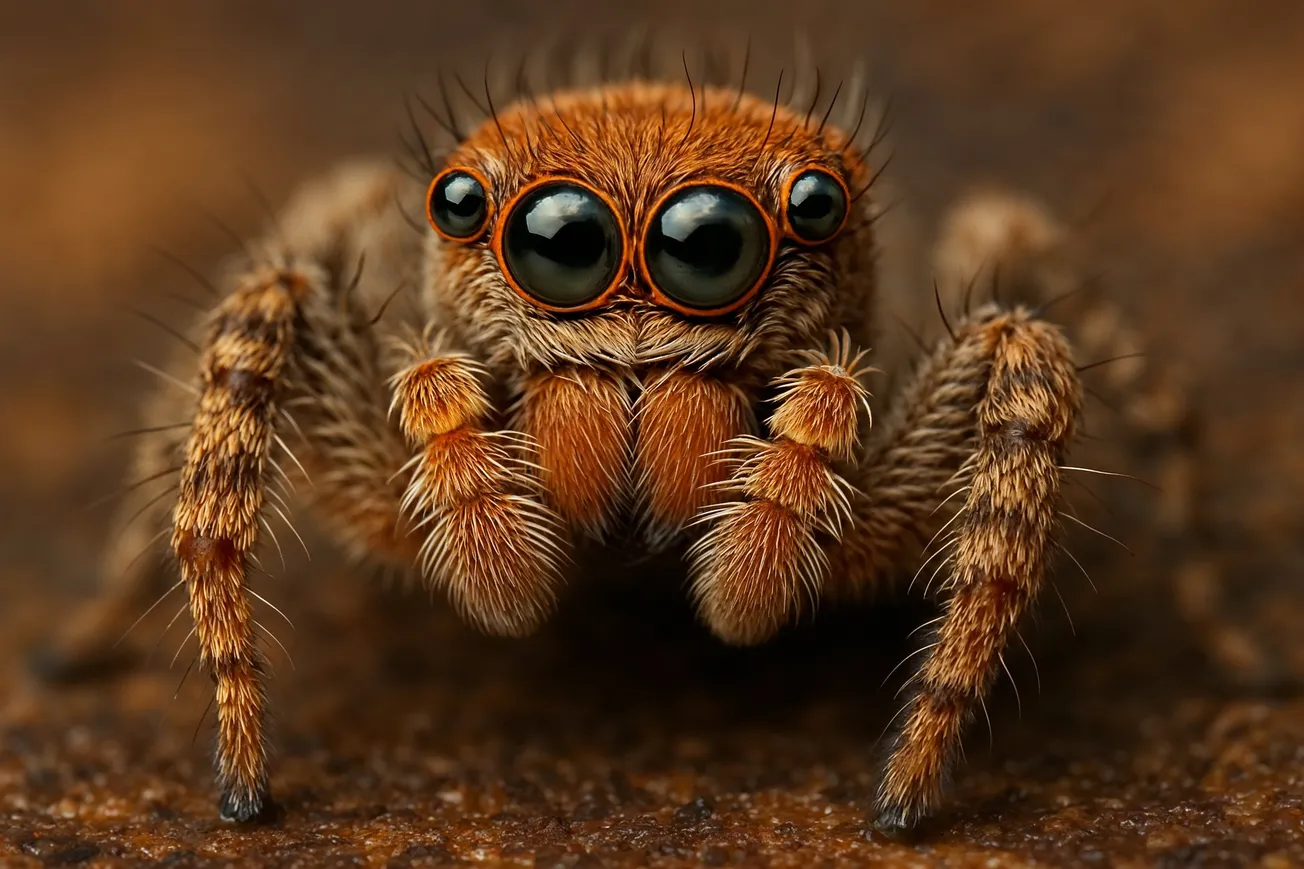
Cognition is the active maintenance of a system's structural and functional integrity through the selective reduction of environmental uncertainty, realized through a generative model that simulates potential futures and selects actions to align sensory inputs with those predictions.
The prevailing scientific and philosophical definitions of cognition have long been constrained by a vertebrate-centric orthodoxy. This intellectual legacy, rooted in the Aristotelian Scala Naturae, posits a linear hierarchy of intelligence culminating in the human cerebral cortex, effectively marginalizing the vast majority of life on Earth. This report challenges that paradigm by conducting a rigorous, first-principles analysis of cognition through the case study of Portia, a genus of araneophagic (spider-eating) jumping spiders. Despite possessing a nervous system of approximately 600,000 neurons—orders of magnitude smaller than the mammalian brain—Portia exhibits behavioral complexities that satisfy the most rigorous criteria for high-level cognition: multi-stage planning, inhibitory control, object permanence, and dynamic problem-solving.
By synthesizing data from ethology, comparative neuroanatomy, information theory, and the philosophy of mind, this report constructs a "biocentric" definition of cognition. We demonstrate that cognitive sophistication is not a function of gross neural mass but of specific circuit topologies—such as the arthropod Central Complex and its homology to the vertebrate Basal Ganglia—and the efficient minimization of thermodynamic free energy. We explore the theoretical frameworks of Active Inference and Unlimited Associative Learning to argue that Portia operates as a distinct cognitive agent, utilizing its web and the webs of others as extended cognitive apparatuses. Ultimately, this analysis suggests that cognition is a fundamental biological imperative for managing environmental uncertainty, arising convergently across phylogenetically distant lineages whenever life faces the existential pressure of complex, adversarial interaction.
 Eduardo Bergel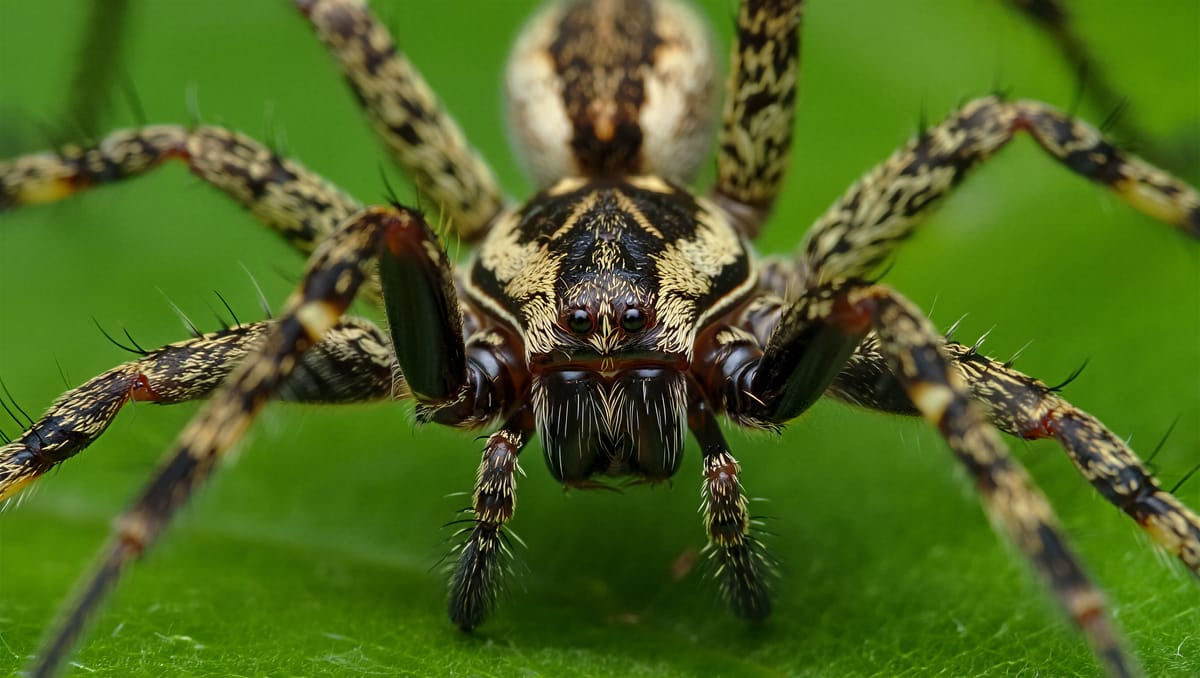
1. Introduction: The Cognitive Paradox and the Biocentric Turn
The study of the mind has historically been an exercise in narcissism. For centuries, the "null hypothesis" of animal intelligence has effectively been a hypothesis of "mindlessness until proven otherwise," with the burden of proof set impossibly high for organisms diverging from the primate template.1 This anthropocentric gaze has created a cognitive paradox: how do we account for the sophisticated, flexible, and seemingly rational behaviors of organisms that lack the biological hardware we assume is necessary for such feats?
The jumping spider Portia sits at the center of this paradox. As a predator that specializes in hunting other intelligent predators, Portia navigates a "cognitive arms race" that has honed its mind into a weapon of deceptive precision.2 Unlike the standard model of the invertebrate as a "reflex machine"—an automaton driven by hard-coded instincts—Portia displays a capacity for trial-and-error learning, long-term planning, and the manipulation of abstract concepts like numbers and object identities.4 To understand Portia is to dismantle the Scala Naturae and replace it with a phylogenetic tree of independent cognitive evolutions.
1.1 The Failure of the Scala Naturae
The Scala Naturae, or Great Chain of Being, organizes life into a ladder of ascending perfection, with simpler organisms at the bottom and humans at the apex.6 In this view, evolution is progressive, and the "lower" animals are merely rudimentary versions of the "higher" ones. This fallacy has profound implications for how we define cognition. It leads to the assumption that because a spider does not have a hippocampus, it cannot have a cognitive map; or because it lacks a prefrontal cortex, it cannot have executive function.
However, modern evolutionary biology reveals that evolution is not a ladder but a branching bush. The lineages of arthropods, mollusks, and chordates diverged over 600 million years ago.8 Since that split, each lineage has independently faced the universal problems of survival: finding food, avoiding predation, and navigating space. The solution to these problems is what we call cognition. Therefore, we must adopt a biocentric perspective, analyzing the spider’s mind not as a failed attempt at a human mind, but as a masterpiece of optimization for its own specific ecological niche.10
1.2 Defining Cognition from First Principles
To escape the trap of anthropomorphism (projecting human traits where they don't exist) and anthropodenial (denying shared traits where they do exist) 12, we must ground our definition of cognition in physics and thermodynamics.
At its most fundamental level, a living organism is a localized system that resists the Second Law of Thermodynamics. While the universe tends toward entropy (disorder), life maintains a low-entropy state (order).14 To do this, an organism must exchange matter and energy with its environment. However, the environment is chaotic and uncertain. To survive, the organism must predict the fluctuations of the environment to secure resources and avoid harm.
From this physical necessity, we derive a working definition of cognition that encompasses Portia, humans, and potentially even plant life:
Cognition is the set of information-processing mechanisms by which an agent models the causal structure of its environment to minimize uncertainty (surprisal) and select actions that maintain its structural and functional integrity.
This definition relies on the "behaviour-generating toolkit" proposed in the field of Basal Cognition 16:
- Sensing/Perception: The transduction of physical signals into internal states.
- Valence: The assignment of value (good/bad) to those states relative to homeostasis.
- Memory: The retention of information about past states to inform future predictions.
- Decision Making: The selection of one action from a set of mutually exclusive possibilities.
- Agency: The capacity to initiate action endogenously, rather than merely reacting to external stimuli.
Under this framework, Portia is not a "simple" animal. It is a highly efficient prediction machine, operating within a sensory world of polarized light and vibratory vectors, utilizing a brain the size of a poppy seed to solve problems that would baffle a supercomputer.
2. Behavioral Evidence: The Empirical Case for Portia’s Mind
The assertion that Portia possesses "cognition" is not a philosophical fancy; it is an empirical conclusion derived from decades of rigorous experimentation, primarily by researchers Robert Jackson and Fiona Cross. Their work has subjected Portia to the same battery of psychological tests used on primates and human infants, revealing a cognitive repertoire that includes detour planning, object permanence, and numerical competence.
2.1 The Detour Problem: A Test of Insight and Planning
The detour task is considered a gold standard in comparative psychology because it requires the subject to suppress a prepotent instinct (moving directly toward food) in favor of a secondary plan (moving away from food to reach it via an indirect route). For a jumping spider, whose primary hunting mode is a line-of-sight pounce, the urge to move toward prey is overwhelming. Overcoming this urge implies high-level inhibitory control.
In the classic experimental setup, Portia is placed on a starting tower and shown a prey item (e.g., a lure made from a dead spider) on a target tower. The two towers are separated by a gap of water, which Portia cannot cross. To reach the prey, the spider must descend the starting tower, cross a platform, and ascend the correct ramp to the target tower. Critically, once the spider leaves the starting platform, the prey is completely obscured from view by opaque screens. The spider must navigate the entire route "blind" to the target.1
2.1.1 The Visual Inspection Routine
Before moving, Portia engages in a behavior never seen in standard "reflexive" predators. It spends a significant amount of time—often minutes—on the starting platform, scanning the environment. It rotates its cephalothorax and moves its independent eye tubes (retinas) to inspect the various potential routes.1 This scanning is not a passive intake of light; it is an active information-gathering process.
The researchers found that Portia does not simply choose the first path it sees. In complex setups with multiple ramps (some leading to the target, some to dead ends), Portia visually traces the path segments from the start to the finish. Only after completing this "visual-inspection routine" does the spider initiate movement. This delay between stimulus (seeing prey) and response (moving) is the hallmark of deliberation. The spider is loading a representation of the environment into working memory and simulating the outcome of traversing each path.
2.1.2 Execution of the Blind Detour
Once Portia begins the detour, it often has to turn 180 degrees away from the prey and descend into an area where the prey is no longer visible. The fact that Portia continues to navigate correctly toward the "virtual" location of the prey implies the existence of a secondary representation.5
A primary representation is a direct sensory correlate (e.g., the firing of retinal neurons when looking at the prey). A secondary representation is a mental model held in the absence of the stimulus. Portia is guiding its motor commands not by what it sees now (which is just a ramp or a wall), but by what it saw minutes ago. This capacity to decouple action from immediate perception is a foundational element of advanced cognition.17
Furthermore, if the researchers alter the apparatus so that the previously "correct" path now leads to a dead end, Portia learns from the error. However, it does not require hundreds of trials like a rat in a Skinner box. Portia often solves these problems on the first or second try, suggesting a form of insight learning rather than simple associative conditioning. The spider simulates the route internally ("in its head") before committing to the physical energetic cost of the journey.
2.2 Object Permanence and the Expectancy Violation Paradigm
The detour experiments prove Portia knows where the prey is. But does it know what the prey is? Does it hold a specific concept of the object, or just a generalized "food" marker? To answer this, researchers utilized the "expectancy violation" method, a technique originally developed to test the cognitive development of human infants.
In these experiments, Portia is allowed to view a specific prey item (e.g., a dew-drop spider) on a target platform. A shutter is then lowered, blocking the view. While the spider is visually isolated, the experimenter swaps the prey for a different object (e.g., a beetle, or a different number of spiders). The shutter is then raised, or the spider is allowed to complete the detour to the target.4
2.2.1 The Concept of Identity
If Portia were merely driven by a hunger reflex, finding any food at the end of the detour should be satisfactory. However, the results show a distinct "surprise" reaction. When Portia arrives at the target and finds a beetle instead of the spider it originally saw, it displays significant hesitation. It pauses, scans the area, and shows a longer latency to attack compared to control trials where the prey remains unchanged.4
This hesitation is the behavioral signature of cognitive dissonance or, in the language of the Free Energy Principle, a high prediction error. The spider’s internal model predicted "spider," but its sensory input reported "beetle." The system must halt to resolve this conflict. This proves that Portia does not just remember "something is there"; it remembers the specific identity of the object.
2.2.2 Numerosity: The "One, Two, Many" System
The limits of Portia’s working memory were probed by changing the number of prey items.
- 1 vs. 2: Portia hesitates if it sees 1 prey but finds 2, or vice versa.
- 2 vs. 3: Portia distinguishes between 2 and 3 items.
- 3 vs. 4: Portia fails to notice the difference.4
This pattern perfectly matches the "subitizing" range found in vertebrates, including humans. Humans can instantly grasp the number of items up to about 4 without counting; beyond that, we must switch to a different cognitive mechanism (sequential counting). Portia appears to possess an Object File System—a discrete slot in working memory for each item. When the number of items exceeds the number of slots (roughly 3), the system defaults to a category of "many." The convergence of this specific numerical limit in a spider and a human is a stunning example of the universal constraints on biological information processing.
2.2.3 Mental Rotation and Concept Generalization
Interestingly, Portia is surprised if the type of prey changes, but not if the orientation changes. If it sees a spider facing left, and then finds it facing right, it attacks without hesitation.18 This seemingly simple result implies a profound cognitive capability: concept generalization. Portia has extracted the invariant features of the prey (its "spider-ness") independent of its viewing angle. It recognizes that a rotated spider is still the same spider. This requires a form of mental rotation, manipulating the 3D representation of the object in its mind to match the new sensory input.17
2.3 Aggressive Mimicry: The Turing Test of the Web
While spatial navigation reveals Portia’s physical intelligence, its hunting strategy reveals its social or "biotic" intelligence. Portia feeds on other spiders, often invading their webs to capture them. This is an extraordinarily dangerous proposition; the resident spider is on its home turf, surrounded by its own sensory network (the web), and is usually capable of killing Portia. To succeed, Portia uses aggressive mimicry—sending false signals to manipulate the behavior of the resident.1
2.3.1 The "Generate-and-Test" Algorithm
Unlike many mimics that have a fixed, genetically hard-coded signal (e.g., a moth that always looks like an owl eye), Portia is a flexible mimic. It encounters hundreds of different spider species, each with a different "language" of vibrations. Portia cannot possibly have a stored template for every potential victim. Instead, it uses a trial-and-error algorithm that functions like a cryptographic brute-force attack.20
- Phase 1: Broadcasting. Upon entering a web, Portia emits a variety of signals—plucking, drumming, and trembling the silk with its palps and legs. It behaves like a synthesizer, generating a random stream of vibratory frequencies.
- Phase 2: Monitoring. Portia carefully observes the resident spider’s reaction.
- Null Result: If the resident ignores the signal, Portia discards it and tries a new pattern.
- Negative Result: If the resident reacts aggressively (charging), Portia immediately stops or retreats, registering that signal as "danger."
- Positive Result: If the resident reacts with curiosity or slow approach (interpreting the signal as a trapped insect or a potential mate), Portia identifies a "hit."
- Phase 3: Refinement. Portia narrows its output to repeat and refine the successful signal, effectively "locking on" to the control channel of the victim.
This behavior qualifies Portia as a Popperian Creature in Daniel Dennett’s hierarchy of intelligence.1 A Skinnerian creature (like a simple worm) learns by dying—if it makes a mistake, it is selected against. A Popperian creature can hypothesize ("What if I pull the web like this?") and test the hypothesis against the environment, allowing its hypotheses to die in its stead. Portia tests the signal; if the signal fails, the signal "dies," but Portia lives to try another frequency.
2.4 Inhibitory Control: The "Spider Marshmallow Test"
Underlying all these behaviors—the pause before detouring, the hesitation in expectancy violation, the patient modulation of web signals—is the capacity for inhibitory control.
In comparative psychology, the ability to suppress an immediate impulse in service of a future goal is a defining metric of executive function (exemplified by the Marshmallow Test in children).21 For a jumping spider, the instinct to jump on a moving target is the most powerful behavioral drive. Yet, Portia routinely overrides this instinct.
- In the detour task, Portia must turn its back on the prey—an action that is diametrically opposed to the predatory instinct.
- In mimicry, Portia may spend hours slowly luring a victim closer, suppressing the urge to strike until the probability of success is maximized.
This suppression creates a "temporal gap" between stimulus and response. It is in this gap that cognition happens. By inhibiting the automatic reflex, Portia allows the central nervous system time to process information, access memory, and simulate potential futures. The evolution of this inhibitory capacity is arguably the most critical step in the emergence of a complex mind from a simple brain.
3. The Neural Substrate: The Hardware of the Micro-Brain
The paradox of Portia is that these mammalian-level behaviors are executed by a nervous system that is anatomically alien to the vertebrate plan. There is no cortex, no hippocampus, and the entire brain fits inside a volume of less than a cubic millimeter. How does this "micro-brain" compute?
3.1 The Central Complex: The Arthropod Homonculus
In the vertebrate brain, executive function and spatial navigation are distributed across the prefrontal cortex and the hippocampus. In arthropods (insects, crustaceans, and arachnids), these functions are centralized in a midline structure known as the Central Complex (CX). In spiders specifically, the homolog to the insect CX is the Arcuate Body (AB).23
The Central Complex is the "command and control" center of the arthropod. It is a highly organized, columnar neuropil that acts as a hub for sensory integration and motor planning.
- The Compass: Neurons within the CX maintain a dynamic representation of the animal’s heading. In insects, this is often locked to the polarization of skylight. In Portia, the Arcuate Body integrates visual landmarks to create a "cognitive map" of the surroundings.23
- The Odometer: Other circuits track optic flow and proprioceptive feedback (step counting) to estimate distance traveled.
- Vector Integration: By combining the compass and the odometer, the CX performs path integration (vector navigation). It calculates a "home vector" that allows the animal to return to a starting point after a circuitous journey. This vector math is the computational basis of Portia’s detour ability.27
3.2 The Arcuate Body in Portia
The Arcuate Body of the jumping spider is hypertrophied compared to other arachnids, reflecting the intense demands of visual processing.
- Visual Integration: Portia has four pairs of eyes. The Anterior Lateral Eyes (ALEs) are motion detectors with a wide field of view. The Anterior Median Eyes (AMEs) are high-resolution telephoto lenses with a narrow field of view. The retinas of the AMEs are movable—they can scan back and forth and zoom in and out.
- The Scanner: The Arcuate Body receives massive input from these eyes. It likely functions as the controller for the "visual inspection routine," directing the movement of the retinas to build up a composite image of the scene, much like a satellite mapping terrain.3
- Layered Processing: The AB has a layered structure similar to the vertebrate cortex or the insect mushroom body. These layers allow for the segregation of sensory modalities (vision, vibration) and their subsequent integration into a unified "object representation".29
3.3 Deep Homology: The Basal Ganglia Connection
For decades, neurobiologists assumed that the arthropod brain and the vertebrate brain were completely unrelated evolutionary experiments. However, the discovery of Deep Homology—genetic regulatory networks conserved over half a billion years—has overturned this view.
Recent research suggests that the Arthropod Central Complex and the Vertebrate Basal Ganglia share a common evolutionary origin.31 The Basal Ganglia are the "gating" mechanisms of the vertebrate brain, responsible for action selection. They work by tonic inhibition: the default state of the motor system is "off" (inhibited). To move, the Basal Ganglia must selectively "disinhibit" a specific motor program.
- Structural Parallel: Both the CX and the Basal Ganglia receive inputs from the entire brain and project outputs to motor centers. They both utilize a loop architecture involving inhibitory neurons (often GABAergic) and modulatory neurons (Dopamine in vertebrates, Octopamine/Dopamine in arthropods).
- Functional Parallel: Dysfunction in the Basal Ganglia leads to disorders of action selection (Parkinson’s, Huntington’s). Similarly, damage to the Central Complex in insects leads to deficits in walking initiation, turning, and target tracking.31
This homology suggests that the fundamental circuit for Agency—the ability to decide what to do next—evolved very early in the history of Bilateria. Portia is not inventing a new way to think; it is using an ancient, highly optimized circuit for decision-making. The "Spider Marshmallow Test" is essentially a stress test of this Basal Ganglia-like circuit, measuring its capacity to maintain inhibition on the "jump" command while the "detour" plan is being computed.
3.4 Convergent Architectures of Learning
While action selection is handled by the CX/Basal Ganglia, associative learning (connecting stimuli to rewards) requires a different architecture. Here, we see a striking example of Convergent Evolution.
Three distinct lineages—Vertebrates, Insects, and Cephalopods—have independently evolved a specific neural topology for learning: the Fan-Out / Fan-In architecture.33
Table 3.1: Comparative Neural Architectures for Associative Learning
The Logic of the Circuit:
- Fan-Out (Divergence): Sensory input is projected onto a vast number of interneurons (Kenyon/Granule cells). This expands the dimensionality of the data, separating similar patterns. For example, the smell of "rose" and "rotting rose" might be similar at the nose, but they activate completely different sets of Kenyon cells. This is Sparse Coding.
- Fan-In (Convergence): These thousands of sparse representations converge onto a small number of output neurons (Decision cells).
- Plasticity: When a reward (sugar/prey) is detected, a neuromodulator (Dopamine/Octopamine) strengthens the active synapses.
Portia uses this architecture (in its Arcuate Body and associated neuropils) to learn the complex associations of mimicry. When it finds a signal that works on a prey spider, the "reward" signal strengthens the connection between that specific vibratory pattern and the "attack" command. The universality of this circuit suggests it is the mathematically optimal solution for learning in a noisy world.
4. Theoretical Frameworks: The Physics of Spider Thought
Having established the behavior and the hardware, we must now address the software. What are the computational principles driving Portia’s mind? To answer this, we turn to physics-based theories of cognition that transcend the specific biological substrate.
4.1 The Free Energy Principle (FEP) and Active Inference
The Free Energy Principle, proposed by neuroscientist Karl Friston, provides a unifying theory for biology. It posits that all self-organizing biological systems, from single cells to human societies, act to minimize Free Energy.14 In this context, Free Energy is mathematically equivalent to Surprisal (a measure of improbability) or the upper bound on the entropy of sensory states.
- The Imperative: To survive, Portia must keep its internal states (hunger, body temperature, hydration) within viable bounds. It must avoid "surprising" states (like starving or being eaten).
- The Generative Model: To minimize surprise, Portia’s brain maintains a Generative Model of the world—a probability distribution of what it expects to sense.
- Prediction Error: When there is a mismatch between the Model and the Sensory Input (e.g., "I expect a spider, I see a beetle"), the system generates a Prediction Error (Surprise).
Active Inference describes the two ways an organism can minimize this error 36:
- Perceptual Inference (Change the Mind): Update the internal model to match the sensory data. ("Okay, it's a beetle, not a spider.")
- Active Inference (Change the World): Act on the environment to force the sensory data to match the model. ("I expect to be eating, so I will attack the prey.")
Portia is a master of Active Inference. Its "visual inspection routine" is a form of Epistemic Action—action performed not to change the world, but to change the informational state of the agent. By scanning the towers, Portia is gathering data to reduce the uncertainty of its model before it commits to the high-stakes action of the detour. The "hesitation" seen in the expectancy violation experiments is the system freezing to process a spike in Free Energy/Surprise. The delay is the time it takes for the brain to update the Generative Model to accommodate the new reality.14
4.2 Unlimited Associative Learning (UAL)
While FEP explains the mechanics of survival, what marks the transition to Consciousness? Evolutionary biologists Simona Ginsburg and Eva Jablonka propose Unlimited Associative Learning (UAL) as the transition marker for minimal sentience.40
- Limited Learning: Many simple organisms show limited learning (e.g., a sea slug habituating to a touch). This is reflexive and domain-restricted.
- Unlimited Learning: UAL is the capacity to learn novel associations between compound stimuli (combining vision, vibration, and context) and value (reward/punishment) in an open-ended way. It allows the organism to assign valence to new objects it has never encountered before.
Portia clearly exhibits UAL. Its aggressive mimicry is not a fixed action pattern; it is a creative, open-ended search for a solution. It learns "If I pluck string A at frequency X, the prey turns; if I pluck string B, the prey charges." It builds a complex, flexible model of the interaction in real-time. According to the UAL framework, this capacity requires a centralized "global workspace" where sensory streams are integrated and evaluated. Therefore, Portia possesses the functional architecture of phenomenal consciousness. It feels the drive of hunger, the "plan" of the signal, and the "surprise" of the failed mimicry.
4.3 Integrated Information Theory (IIT)
Integrated Information Theory approaches consciousness from the bottom up. It equates consciousness with $\Phi$ (Phi), the amount of integrated information a system generates that is irreducible to its parts.43
- Integration: A system has high $\Phi$ if it is highly interconnected, such that the state of the whole cannot be predicted just by knowing the state of the parts.
- Differentiation: The system must also have a vast repertoire of possible states.
Despite its small size, the Portia brain (specifically the Arcuate Body) is highly integrated. It combines high-bandwidth visual data, mechanosensory data from the legs, and internal state data. It is not a collection of isolated reflexes (low $\Phi$); it is a unified control system. While we cannot yet calculate the $\Phi$ of a spider, the structural complexity suggests it is non-trivial. Portia’s "world" is likely a rich manifold of tension vectors and visual geometry—a distinctive "arachnid qualia" that constitutes its subjective reality.45
5. Boundaries of the Mind: Extended and Enactive Cognition
We have looked inside the spider. Now we must look outside. One of the most radical insights from the study of Portia is that cognition is not confined to the exoskeleton. The Theory of Extended Cognition, championed by philosophers Andy Clark and David Chalmers, argues that tools and environmental structures can become literal parts of the cognitive circuit.46
5.1 The Web as an Extended Phenotype
For a web-building spider, the web is not just a house; it is a sensory organ. Spiders are mostly deaf to airborne sound, but their vibration sensitivity is exquisite. The web acts as a gigantic, externalized eardrum.
- Tunable Sensors: Crucially, the web is a tunable sensor. By tightening the radial threads, a spider can change the resonance frequency of the web. It can "tune in" to the high-frequency wingbeat of a fly or "tune out" the low-frequency rumble of the wind. This is peripheral attention. The spider is filtering information before it reaches the brain, using the physics of silk to perform computation.48
- External Memory: The state of the web (damaged, sticky, tense) serves as an external memory store. The spider does not need to remember "a fly hit the left sector" because the vibration of the left sector is the memory.
5.2 Portia’s Parasitic Cognition
Portia is unique because it invades other spiders' webs. It is a cognitive hacker.
- Hijacking the Extension: When Portia plucks the web of a victim, it is manipulating the victim’s extended sensory apparatus. It sends false data inputs into the victim’s cognitive system.
- The Coupled System: This supports the Enactive view of cognition.1 Cognition is not something Portia "has"; it is something Portia "does." The thinking process is the dynamic loop formed by Portia, the silk, and the resident spider. The "mind" in this interaction is a transient, distributed system. Portia adjusts its pluck, the web transmits, the resident shifts, Portia senses the shift. The intelligence lies in the coupling.
5.3 Comparative "Mindless" Intelligence
To contextualize Portia, we can look at organisms that perform cognition with no neurons at all.
- Slime Molds: The single-celled slime mold Physarum polycephalum can solve mazes and replicate the efficiency of the Tokyo subway system.50 It does this by extending protoplasmic tubes (exploration) and reinforcing the ones that find food (exploitation), while letting the others wither. This is the fluid-dynamic equivalent of Portia’s "generate-and-test" algorithm.
- Plants: Plants navigate soil gradients with their root tips, integrating gravity, moisture, and touch. They trade nutrients via mycorrhizal networks.52
- The Continuum: Portia sits on a continuum of biological problem-solving. Neurons are not a magical substance that creates mind; they are simply high-speed interconnects that allow the fundamental processes of Active Inference (exploration/exploitation) to happen at the millisecond scale required for predation, rather than the hourly scale of root growth.39
6. Evolutionary Implications: Convergent Evolution and the Arms Race
The existence of Portia proves that high-level cognition is not a fluke of the primate lineage. It is a convergent solution to specific ecological problems.
6.1 The "Cognitive Arms Race" Hypothesis
Why is Portia so smart? Why invest expensive metabolic energy in a brain that can plan detours and count prey?
- The Driver: Araneophagy. Hunting a fly requires speed and reflex. Hunting a rock requires nothing. But hunting a spider—another predator with venom, webs, and sensors—requires simulation.
- Machiavellian Intelligence: Just as the complexity of primate social politics likely drove the evolution of the human brain (the Social Brain Hypothesis), the complexity of predatory politics likely drove Portia. To eat a spider, Portia must predict what the spider will do. It must have a "Theory of Mind" for its prey. It must simulate the prey’s agency to manipulate it.2
6.2 Convergence of "Smart" Traits
The fact that Portia evolved object permanence, numerosity (up to 4), and inhibitory control—traits found in crows, elephants, and humans—suggests that these are Attractor States in the landscape of cognitive evolution.
- The Logic: If you are an organism moving through space, there is a distinct survival advantage to remembering where things are (Object Permanence). If you are a predator, there is an advantage to waiting for the right moment (Inhibition). Evolution "discovers" these algorithms repeatedly because they are the most efficient ways to minimize Free Energy in a complex world.8
7. Conclusion: The Web of Thought
This analysis of Portia forces a radical restructuring of our understanding of the mind. Cognition is not a luxury of the large-brained; it is the fundamental machinery of life.
From the first principles of thermodynamics, we see that Portia is a highly optimized system for minimizing uncertainty. It builds a model of its world, tests that model through active scanning and mimicry, and updates it through learning. It uses its web and the webs of others as extended cognitive circuits. It utilizes a neural architecture (the Central Complex) that shares a deep homology with our own decision-making centers.
We therefore arrive at a new, biocentric definition: Cognition is the active maintenance of a system's structural and functional integrity through the selective reduction of environmental uncertainty, realized through a generative model that simulates potential futures and selects actions to align sensory inputs with those predictions.
In Portia, we see this definition in action. The spider on the tower, freezing for a minute to trace a path to a hidden prey, is not "acting as if" it is thinking. It is thinking. It is engaging in the same fundamental process of counterfactual simulation that allows a human to plan a commute or a game of chess. The scale is different, but the physics is the same. The mind is not a human invention; it is the universe’s way of knowing itself, one vibration at a time.
References & Data Sources
- Behavior & Ethology: 1
- Neuroanatomy & Central Complex: 23
- Cognitive Evolution & Definitions: 6
- Theoretical Frameworks (FEP, UAL, IIT): 14
- Extended & Basal Cognition: 1
Works cited
- Arthropod Intelligence? The Case for Portia - Frontiers, accessed December 10, 2025, https://www.frontiersin.org/journals/psychology/articles/10.3389/fpsyg.2020.568049/full
- Cognitive Abilities of Araneophagic Jumping Spiders - Gwern, accessed December 10, 2025, https://gwern.net/doc/biology/portia/1998-wilcox.pdf
- (PDF) Spider Cognition - ResearchGate, accessed December 10, 2025, https://www.researchgate.net/publication/251449434_Spider_Cognition
- Representation of different exact numbers of prey by a spider-eating predator - Journals, accessed December 10, 2025, https://royalsocietypublishing.org/doi/10.1098/rsfs.2016.0035
- The execution of planned detours by spider‐eating predators - ResearchGate, accessed December 10, 2025, https://www.researchgate.net/publication/291184566_The_execution_of_planned_detours_by_spider-eating_predators
- Old and New Approaches to Animal Cognition: There Is Not “One Cognition” - PMC - NIH, accessed December 10, 2025, https://pmc.ncbi.nlm.nih.gov/articles/PMC7555673/
- Consciousness at sea - PMC - PubMed Central - NIH, accessed December 10, 2025, https://pmc.ncbi.nlm.nih.gov/articles/PMC12612694/
- Cephalopod Brains: An Overview of Current Knowledge to Facilitate Comparison With Vertebrates - Frontiers, accessed December 10, 2025, https://www.frontiersin.org/journals/physiology/articles/10.3389/fphys.2018.00952/full
- Embodied cognitive evolution and the limits of convergence - PMC - PubMed Central, accessed December 10, 2025, https://pmc.ncbi.nlm.nih.gov/articles/PMC12198903/
- Old and New Approaches to Animal Cognition: There Is Not “One Cognition”, accessed December 10, 2025, https://www.researchgate.net/publication/342689384_Old_and_New_Approaches_to_Animal_Cognition_There_Is_Not_One_Cognition
- More than one cognition: A call for change in the field of comparative psychology, accessed December 10, 2025, https://www.sciencedaily.com/releases/2020/07/200714101224.htm
- Hediger, Ryan (2018) Animal suicide and "anthropodenial". Animal Sentience 20(16) - WBI Studies Repository, accessed December 10, 2025, https://www.wellbeingintlstudiesrepository.org/cgi/viewcontent.cgi?article=1304&context=animsent
- Animal Cognition - Stanford Encyclopedia of Philosophy, accessed December 10, 2025, https://plato.stanford.edu/entries/cognition-animal/
- Free energy and inference in living systems | Interface Focus | The Royal Society - Journals, accessed December 10, 2025, https://royalsocietypublishing.org/doi/10.1098/rsfs.2022.0041
- The Markov blankets of life: autonomy, active inference and the free energy principle - PMC, accessed December 10, 2025, https://pmc.ncbi.nlm.nih.gov/articles/PMC5805980/
- Reframing cognition: getting down to biological basics ... - Journals, accessed December 10, 2025, https://royalsocietypublishing.org/doi/10.1098/rstb.2019.0750
- SPECIALISED USE OF WORKING MEMORY BY PORTIA AFRICANA, A SPIDER-EATING SALTICID - PMC - NIH, accessed December 10, 2025, https://pmc.ncbi.nlm.nih.gov/articles/PMC3946049/
- Specialised use of working memory by Portia africana, a spider-eating salticid - PubMed, accessed December 10, 2025, https://pubmed.ncbi.nlm.nih.gov/23982622/
- Trial‐and‐error derivation of aggressive‐mimicry signals by Brettus and Cyrba, spartaeine jumping spiders (Araneae: Salticidae) from Israel, Kenya, and Sri Lanka - Taylor & Francis Online, accessed December 10, 2025, https://www.tandfonline.com/doi/abs/10.1080/03014223.2002.9518294
- Reliance on trial and error signal derivation by Portia africana, an araneophagic jumping spider from East Africa - ximena nelson, accessed December 10, 2025, https://www.ximenanelson.com/uploads/4/5/4/9/4549707/jackson__nelson_2011.pdf
- Stanford marshmallow experiment - Wikipedia, accessed December 10, 2025, https://en.wikipedia.org/wiki/Stanford_marshmallow_experiment
- The Marshmallow Study Revisited - University of Rochester, accessed December 10, 2025, https://www.rochester.edu/news/printable.php?id=4622
- The insect central complex and the neural basis of navigational strategies - PMC, accessed December 10, 2025, https://pmc.ncbi.nlm.nih.gov/articles/PMC6474401/
- The allometry of the arcuate body in the postembryonic development of the giant house spider Eratigena atrica - PMC - PubMed Central, accessed December 10, 2025, https://pmc.ncbi.nlm.nih.gov/articles/PMC5845603/
- A three-dimensional immunofluorescence atlas of the brain of the hackled-orb weaver spider, Uloborus diversus - PMC - PubMed Central, accessed December 10, 2025, https://pmc.ncbi.nlm.nih.gov/articles/PMC11418967/
- The Central Complex as a Potential Substrate for Vector Based Navigation - Frontiers, accessed December 10, 2025, https://www.frontiersin.org/journals/psychology/articles/10.3389/fpsyg.2019.00690/full
- Unraveling the neural basis of spatial orientation in arthropods - PMC - PubMed Central, accessed December 10, 2025, https://pmc.ncbi.nlm.nih.gov/articles/PMC10354119/
- Arthropod phylogeny: onychophoran brain organization suggests an archaic relationship with a chelicerate stem lineage - Journals, accessed December 10, 2025, https://royalsocietypublishing.org/doi/abs/10.1098/rspb.2006.3536
- A three-dimensional immunofluorescence atlas of the brain of the hackled-orb weaver spider, Uloborus diversus | bioRxiv, accessed December 10, 2025, https://www.biorxiv.org/content/10.1101/2024.09.05.611298v2
- A three-dimensional immunofluorescence atlas of the brain of the hackled-orb weaver spider, Uloborus diversus - eLife, accessed December 10, 2025, https://elifesciences.org/reviewed-preprints/107732
- Deep Homology of Arthropod Central Complex and Vertebrate Basal Ganglia - PubMed, accessed December 10, 2025, https://pubmed.ncbi.nlm.nih.gov/23580521/
- Deep Homology of Arthropod Central Complex and Vertebrate Basal Ganglia | Request PDF, accessed December 10, 2025, https://www.researchgate.net/publication/236196970_Deep_Homology_of_Arthropod_Central_Complex_and_Vertebrate_Basal_Ganglia
- The vertical lobe of cephalopods: an attractive brain structure for understanding the evolution of advanced learning and memory systems - PubMed, accessed December 10, 2025, https://pubmed.ncbi.nlm.nih.gov/26113381/
- Cellular and synaptic organization of the Octopus vertical lobe - eLife, accessed December 10, 2025, https://elifesciences.org/reviewed-preprints/105973
- Convergent evolution of complex brains and high intelligence - PMC - PubMed Central - NIH, accessed December 10, 2025, https://pmc.ncbi.nlm.nih.gov/articles/PMC4650126/
- Free energy principle - Wikipedia, accessed December 10, 2025, https://en.wikipedia.org/wiki/Free_energy_principle
- The free-energy principle: a rough guide to the brain? - FIL | UCL, accessed December 10, 2025, https://www.fil.ion.ucl.ac.uk/~karl/The%20free-energy%20principle%20-%20a%20rough%20guide%20to%20the%20brain.pdf
- A Gentle Introduction to the Free Energy Principle | by Arthur Juliani, PhD | Medium, accessed December 10, 2025, https://awjuliani.medium.com/a-gentle-introduction-to-the-free-energy-principle-03f219853177
- The Active Inference Approach to Ecological Perception: General Information Dynamics for Natural and Artificial Embodied Cognition - PubMed Central, accessed December 10, 2025, https://pmc.ncbi.nlm.nih.gov/articles/PMC7805975/
- Unlimited associative learning and consciousness: further support and some caveats about a link to stress - University of Idaho, accessed December 10, 2025, https://verso.uidaho.edu/esploro/outputs/journalArticle/Unlimited-associative-learning-and-consciousness-further/996651399901851
- The Transition to Minimal Consciousness through the Evolution of Associative Learning - PMC - PubMed Central, accessed December 10, 2025, https://pmc.ncbi.nlm.nih.gov/articles/PMC5177968/
- Learning and the Evolution of Conscious Agents - Tel Aviv University, accessed December 10, 2025, https://cris.tau.ac.il/en/publications/learning-and-the-evolution-of-conscious-agents
- Estimating the Integrated Information Measure Phi from High-Density Electroencephalography during States of Consciousness in Humans - Frontiers, accessed December 10, 2025, https://www.frontiersin.org/journals/human-neuroscience/articles/10.3389/fnhum.2018.00042/full
- Integrated information theory - Wikipedia, accessed December 10, 2025, https://en.wikipedia.org/wiki/Integrated_information_theory
- Integrated Information Theory of Consciousness | Internet Encyclopedia of Philosophy, accessed December 10, 2025, https://iep.utm.edu/integrated-information-theory-of-consciousness/
- The Thoughts of a Spiderweb | Quanta Magazine, accessed December 10, 2025, https://www.quantamagazine.org/the-thoughts-of-a-spiderweb-20170523/
- Spider Minds, Extended Minds, and the Web - Lawrence University Blog Service, accessed December 10, 2025, https://blogs.lawrence.edu/philosophy/2023/03/05/spider-minds-extended-minds-and-the-web/
- [PDF] Extended spider cognition | Semantic Scholar, accessed December 10, 2025, https://www.semanticscholar.org/paper/Extended-spider-cognition-Japyass%C3%BA-Laland/6188623b97ee1181621a097ff24590740fd59f2b
- (PDF) Extended spider cognition - ResearchGate, accessed December 10, 2025, https://www.researchgate.net/publication/313460476_Extended_spider_cognition
- Information Transfer During Food Choice in the Slime Mold Physarum polycephalum - Frontiers, accessed December 10, 2025, https://www.frontiersin.org/journals/ecology-and-evolution/articles/10.3389/fevo.2019.00067/full
- Slime Mold Organism Maps the Cosmic Web and Finds Something Interesting - YouTube, accessed December 10, 2025, https://www.youtube.com/watch?v=BcVQ_eH7M50
- What is cognitive about 'plant cognition'? [Preprint] Jonny Lee - PhilSci-Archive, accessed December 10, 2025, http://philsci-archive.pitt.edu/21881/1/LEE_J%20-%20Pre-print%20-%20What%20is%20cognitive%20about%20plant%20cognition.pdf
- Predicting green: really radical (plant) predictive processing - PubMed, accessed December 10, 2025, https://pubmed.ncbi.nlm.nih.gov/28637913/
- Extended spider cognition - PMC - PubMed Central - NIH, accessed December 10, 2025, https://pmc.ncbi.nlm.nih.gov/articles/PMC5394149/
- The execution of planned detours by spider-eating predators - PubMed - NIH, accessed December 10, 2025, https://pubmed.ncbi.nlm.nih.gov/26781057/
- Trial-and-Error Solving of a Confinement Problem by a Jumping Spider, Portia fimbriata - Gwern.net, accessed December 10, 2025, https://gwern.net/doc/biology/portia/2001-jackson.pdf
- Spider Flexibly Chooses Aggressive Mimicry Signals for Different Prey By Trial and Error - Gwern.net, accessed December 10, 2025, https://gwern.net/doc/biology/portia/1993-jackson.pdf
- Signals and Signal Choices made by the Araneophagic Jumping, accessed December 10, 2025, https://discovery.researcher.life/article/signals-and-signal-choices-made-by-the-araneophagic-jumping-spider-portia-fimbriata-while-hunting-the-orb-weaving-web-spiders-zygiella-x-notata-and-zosis-geniculatus/bf6316f41b4e3102bb8e6121cedaebb0
- Exploration into the Adaptive Design of the Arthropod “Microbrain” - BioOne, accessed December 10, 2025, https://bioone.org/journals/zoological-science/volume-16/issue-5/zsj.16.703/Exploration-into-the-Adaptive-Design-of-the-Arthropod-Microbrain/10.2108/zsj.16.703.full
- Neural activity in the central complex of the cockroach brain is linked to turning behaviors, accessed December 10, 2025, https://journals.biologists.com/jeb/article/216/6/992/11901/Neural-activity-in-the-central-complex-of-the
- Neural mechanisms underlying the evolvability of behaviour - PMC - PubMed Central - NIH, accessed December 10, 2025, https://pmc.ncbi.nlm.nih.gov/articles/PMC3130364/
- Evolving specialization of the arthropod nervous system - PNAS, accessed December 10, 2025, https://www.pnas.org/doi/10.1073/pnas.1201876109
- A historical perspective on the insect central complex: Anatomy, development, and function., accessed December 10, 2025, https://molecularpsychology.org/articles/2-19
- How the insect central complex could coordinate multimodal navigation - eLife, accessed December 10, 2025, https://elifesciences.org/articles/73077
- How the insect central complex could coordinate multimodal navigation - PMC, accessed December 10, 2025, https://pmc.ncbi.nlm.nih.gov/articles/PMC8741217/
- Investigating visual navigation using spiking neural network models of the insect mushroom bodies - Frontiers, accessed December 10, 2025, https://www.frontiersin.org/journals/physiology/articles/10.3389/fphys.2024.1379977/full
- A connectome of the Drosophila central complex reveals network motifs suitable for flexible navigation and context-dependent action selection | eLife, accessed December 10, 2025, https://elifesciences.org/articles/66039
- The Cortico-Basal Ganglia-Cerebellar Network: Past, Present and Future Perspectives, accessed December 10, 2025, https://pmc.ncbi.nlm.nih.gov/articles/PMC6831548/
- Invertebrate cognition, sentience and biology - WBI Studies Repository, accessed December 10, 2025, https://www.wellbeingintlstudiesrepository.org/cgi/viewcontent.cgi?article=1615&context=animsent
- Convergent evolution - Wikipedia, accessed December 10, 2025, https://en.wikipedia.org/wiki/Convergent_evolution
- Molecular Evidence for Convergence and Parallelism in Evolution of Complex Brains of Cephalopod Molluscs: Insights from Visual Systems | Integrative and Comparative Biology | Oxford Academic, accessed December 10, 2025, https://academic.oup.com/icb/article/55/6/1070/2363496
- Anthropomorphism and Anthropodenial: Consistency in Our Thinking about Humans and Other Animals - Philosophy Documentation Center, accessed December 10, 2025, https://www.pdcnet.org/collection-anonymous/pdf2image?pdfname=philtopics_1999_0027_0001_0255_0280.pdf&file_type=pdf
- Are We in Anthropodenial? (By Frans de Waal) : r/likeus - Reddit, accessed December 10, 2025, https://www.reddit.com/r/likeus/comments/pwf8q5/are_we_in_anthropodenial_by_frans_de_waal/
- The Problem of Meaning: The Free Energy Principle and Artificial Agency - PubMed Central, accessed December 10, 2025, https://pmc.ncbi.nlm.nih.gov/articles/PMC9260223/
- Any successful story of active inference (free energy principle)? - Reddit, accessed December 10, 2025, https://www.reddit.com/r/reinforcementlearning/comments/1fbu536/any_successful_story_of_active_inference_free/
- Active Inference and the Free Energy Principle - Tasshin, accessed December 10, 2025, https://tasshin.com/blog/active-inference-and-the-free-energy-principle/
- The Problem with Phi: A Critique of Integrated Information Theory - PMC - PubMed Central, accessed December 10, 2025, https://pmc.ncbi.nlm.nih.gov/articles/PMC4574706/
- Why I Am Not An Integrated Information Theorist (or, The Unconscious Expander), accessed December 10, 2025, https://scottaaronson.blog/?p=1799
- Learn by example: Active Inference in the brain -1 - Kaggle, accessed December 10, 2025, https://www.kaggle.com/code/charel/learn-by-example-active-inference-in-the-brain-1
- A Free Energy Principle for Biological Systems - PMC - PubMed Central, accessed December 10, 2025, https://pmc.ncbi.nlm.nih.gov/articles/PMC3510653/
- Unlimited Associative Learning and the origins of consciousness: a primer and some predictions - PubMed, accessed December 10, 2025, https://pubmed.ncbi.nlm.nih.gov/33597791/
- Unlimited Associative Learning and the Theory- Light Approach to Non-human Consciousness, accessed December 10, 2025, https://myweb.ttu.edu/josgottl/Unlimited.pdf
- From Artificial Intelligence to Active Inference: The Key to True AI and 6G World Brain [Invited] - arXiv, accessed December 10, 2025, https://arxiv.org/html/2505.10569v1
- Is the Free-Energy Principle a Formal Theory of Semantics? From Variational Density Dynamics to Neural and Phenotypic Representations - MDPI, accessed December 10, 2025, https://www.mdpi.com/1099-4300/22/8/889
- The Active Inference Approach to Ecological Perception: General Information Dynamics for Natural and Artificial Embodied Cognition - Frontiers, accessed December 10, 2025, https://www.frontiersin.org/journals/robotics-and-ai/articles/10.3389/frobt.2018.00021/full
- Consciousness in active inference: Deep self-models, other minds, and the challenge of psychedelic-induced ego-dissolution - Oxford Academic, accessed December 10, 2025, https://academic.oup.com/nc/article/2021/2/niab024/6360857
- Predicting green: really radical (plant) predictive processing - Journals, accessed December 10, 2025, https://royalsocietypublishing.org/doi/10.1098/rsif.2017.0096
- Quantitative abilities of invertebrates: a methodological review - PMC - PubMed Central, accessed December 10, 2025, https://pmc.ncbi.nlm.nih.gov/articles/PMC8904327/
- Brain and behavioral lateralization in invertebrates - Frontiers, accessed December 10, 2025, https://www.frontiersin.org/journals/psychology/articles/10.3389/fpsyg.2013.00939/full
- Invertebrates as models of learning and memory: investigating neural and molecular mechanisms | Journal of Experimental Biology | The Company of Biologists, accessed December 10, 2025, https://journals.biologists.com/jeb/article/226/3/jeb244844/286732/Invertebrates-as-models-of-learning-and-memory
- On the prospects of basal cognition research becoming fully evolutionary: promising avenues and cautionary notes - PubMed Central, accessed December 10, 2025, https://pmc.ncbi.nlm.nih.gov/articles/PMC11802611/
- Uncovering cognitive similarities and differences, conservation and innovation - PMC, accessed December 10, 2025, https://pmc.ncbi.nlm.nih.gov/articles/PMC7935018/
- (PDF) Where Association Ends. A Review of Associative Learning in Invertebrates, Plants and Protista, and a Reflection on Its Limits - ResearchGate, accessed December 10, 2025, https://www.researchgate.net/publication/355156342_Where_association_ends_A_review_of_associative_learning_in_invertebrates_plants_and_protista_and_a_reflection_on_its_limits
- Extended spider cognition - PubMed, accessed December 10, 2025, https://pubmed.ncbi.nlm.nih.gov/28176133/
- Externalized memory in slime mould and the extended (non-neuronal) mind - ResearchGate, accessed December 10, 2025, https://www.researchgate.net/publication/357279861_Externalized_memory_in_slime_mould_and_the_extended_non-neuronal_mind
- On the role of the plasmodial cytoskeleton in facilitating intelligent behavior in slime mold Physarum polycephalum - NIH, accessed December 10, 2025, https://pmc.ncbi.nlm.nih.gov/articles/PMC4594612/
- What Is an Individual? Biology Seeks Clues in Information Theory. | Quanta Magazine, accessed December 10, 2025, https://www.quantamagazine.org/what-is-an-individual-biology-seeks-clues-in-information-theory-20200716/