COGNITION DECODED
THE PORTIA PARADOX
We are truth seekers. For centuries, dogma dictated that a brain smaller than a pinhead could not "think." The Portia spider shatters this anthropocentric illusion. This analysis explores the hidden truths of invertebrate intelligence, challenging the very definition of consciousness.
1. The Anthropocentric Error
Historically, cognition was viewed as a vertical ladder, with Humans at the pinnacle and invertebrates at the bottom. This view assumes intelligence is strictly proportional to brain mass and morphological complexity. The data below illustrates the "Traditional Dogma" versus the emerging "Biocentric Reality" where cognition is a result of environmental necessity, not just biomass.
Figure 1: Contrast between assumed cognitive capacity (Dogma) and observed problem-solving capability (Truth).
2. Hardware: The 8-Eye Array
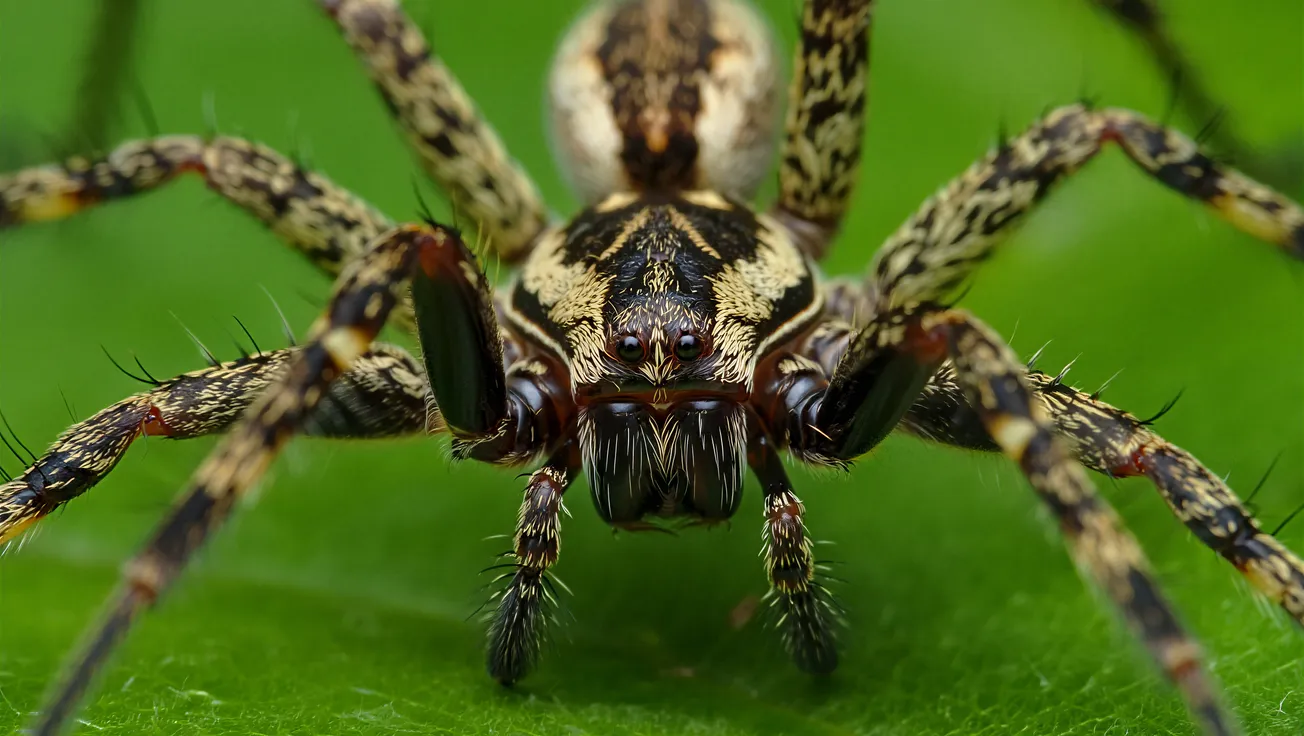
To understand the software (mind), we must look at the hardware. Portia does not rely on webs to sense the world; it sees it. Unlike the blurry motion-detection of most spiders, Portia possesses a visual cortex analogue distributed across eight distinct eyes, allowing for depth perception and high-resolution scanning essential for "Planning."
3. Mental Representation & Persistence
Cognition requires "Representation"—the ability to hold a mental image of a target that is no longer visible. In experiments, Portia will take complex detours to reach prey, losing visual contact for extended periods. Unlike a reflex-driven predator, Portia retains the "concept" of the prey.
"They'll persist on a detour for as long as an hour, or even more, after losing sight of the target."
4. The Logic of the Hunt
Portia hunts Spitting Spiders, which are dangerous predators themselves. This requires conditional logic processing, not instinctual lunging. The spider simulates outcomes based on variables (Orientation and Egg Sac presence).
Calculate Rear Approach (Blindspot)
Direct Frontal Assault
5. The Deception Algorithm
Portia invades webs and "plays" the silk like a musical instrument. It cycles through vibration patterns until it finds the specific frequency that tricks the resident spider into thinking it is a mate or trapped insect. This chart visualizes a hypothetical "frequency sweep" trial-and-error session.
6. Cognitive Fingerprint
Comparing the cognitive attributes of a typical web-building spider versus the active hunting Portia. Note the massive expansion in "Planning" and "Vision" despite similar brain mass.