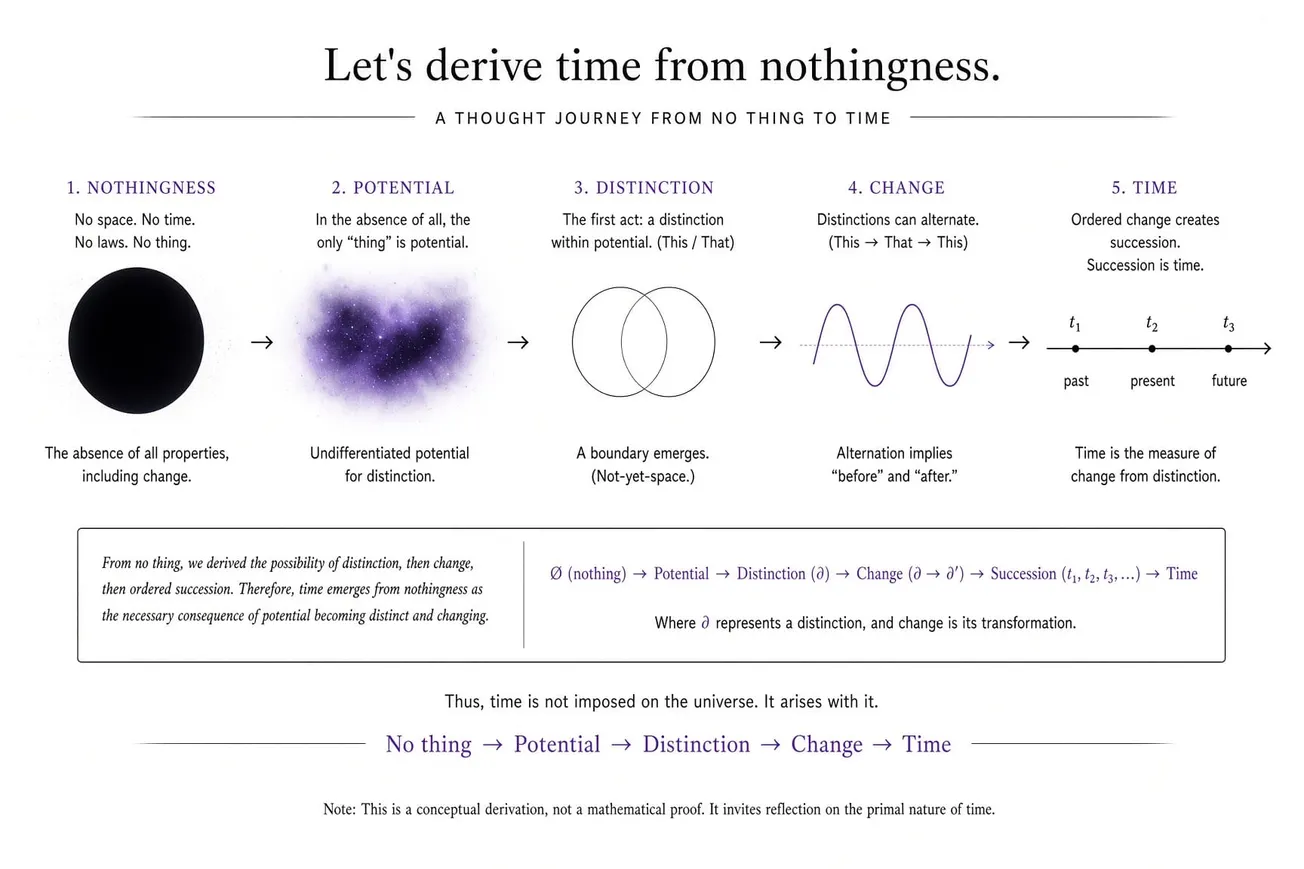
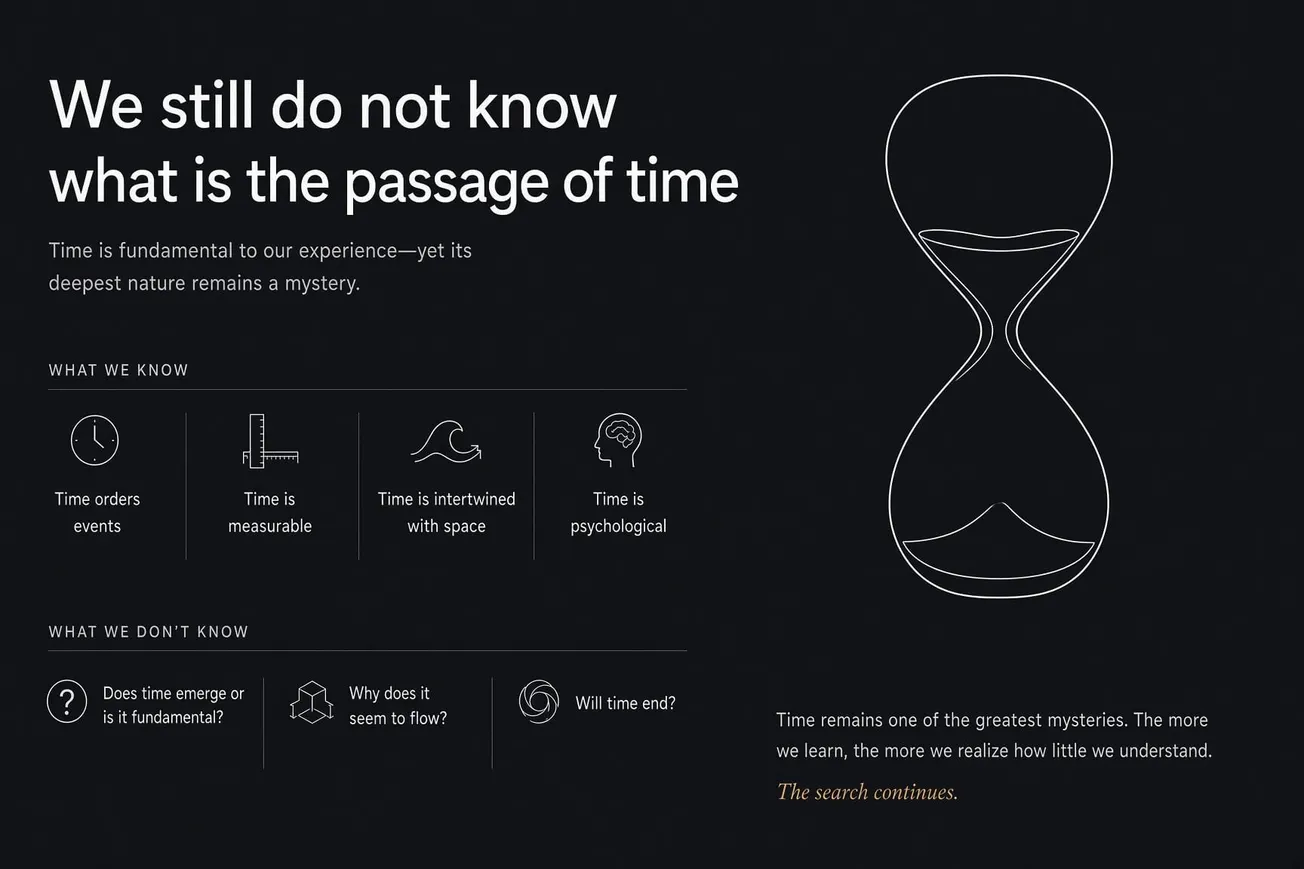
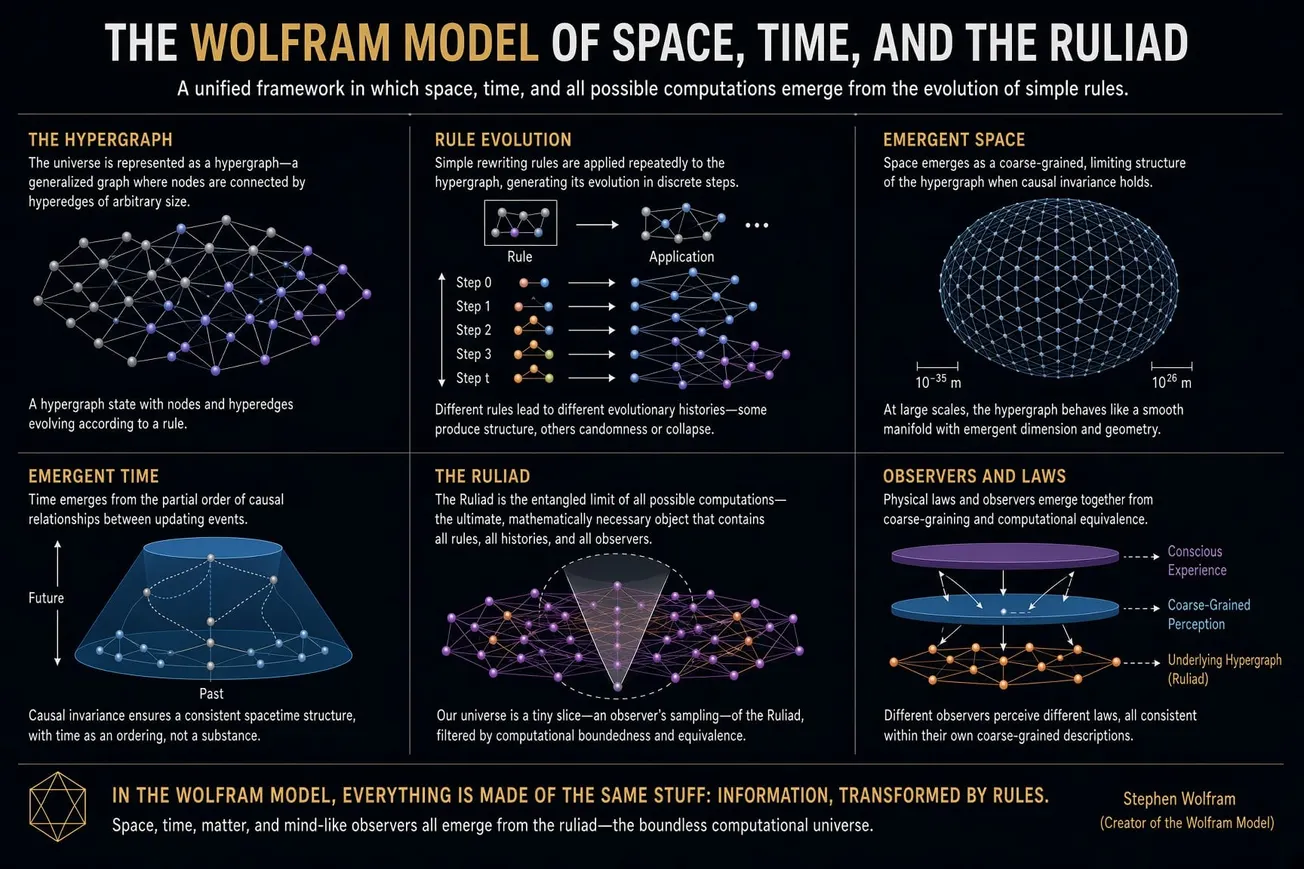
The arrow of time is not in the laws of physics.
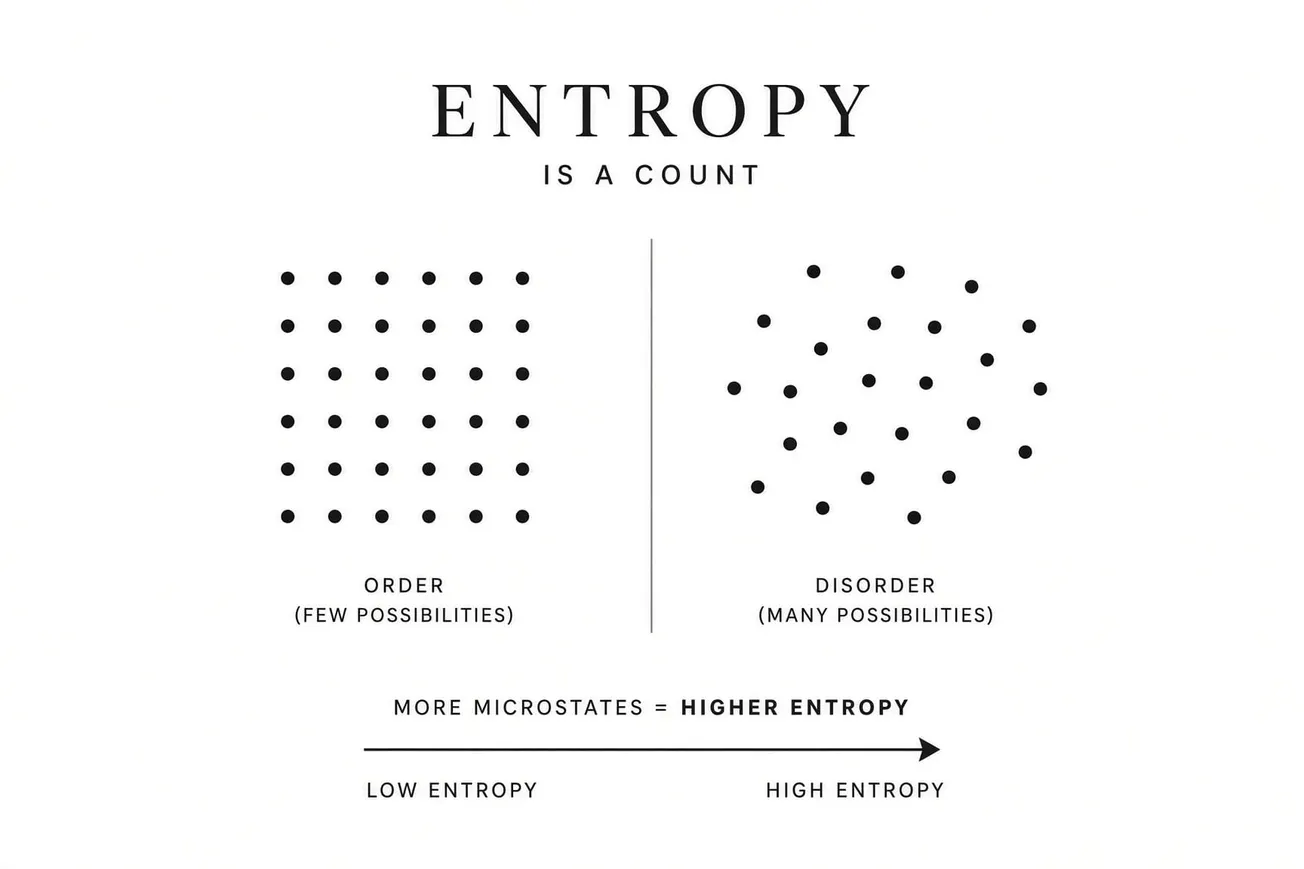
Physics contains exactly two time-asymmetric facts: the thermodynamic gradient and the collapse of the wave function. Everything else is direction-blind.
Review: Zahavy, "LLMs can't jump" (DeepMind, Jan 2026)
Everyone accepts they did not choose their height, or age. But can you decide what you find beautiful, whom you love, what angers you, what you believe?
The isolation is not an obstacle that seeing had to overcome. It is the reason seeing exists.
Claude Opus 5 Musings, applying the dogmatic average on an individual human.
From eight words of information to a definition of mind, by Einstein’s method — every assumption counted out loud
A Mind Is What Keeps Its Past Alive. A fault-tolerant causal process that keeps an actionable model of its own causal ancestry and encounters alive above the error-correction threshold, and uses that model to select and regulate its next transition.
You do not have to assume the universe is made of tiny indivisible pieces in order to explain why everything you can measure is finite. You only have to assume there is a limit to how finely two states can be told apart.
Escaping the Dogmatic Average
What Happens When a Medicinal Chemist Asks Ibogaine How It Works?
It is not really about light. It is about what space and time are.
Intelligence Beyond Neurons, Bioelectric Bodies, and the Experimental Search for Minds in Unfamiliar Matter
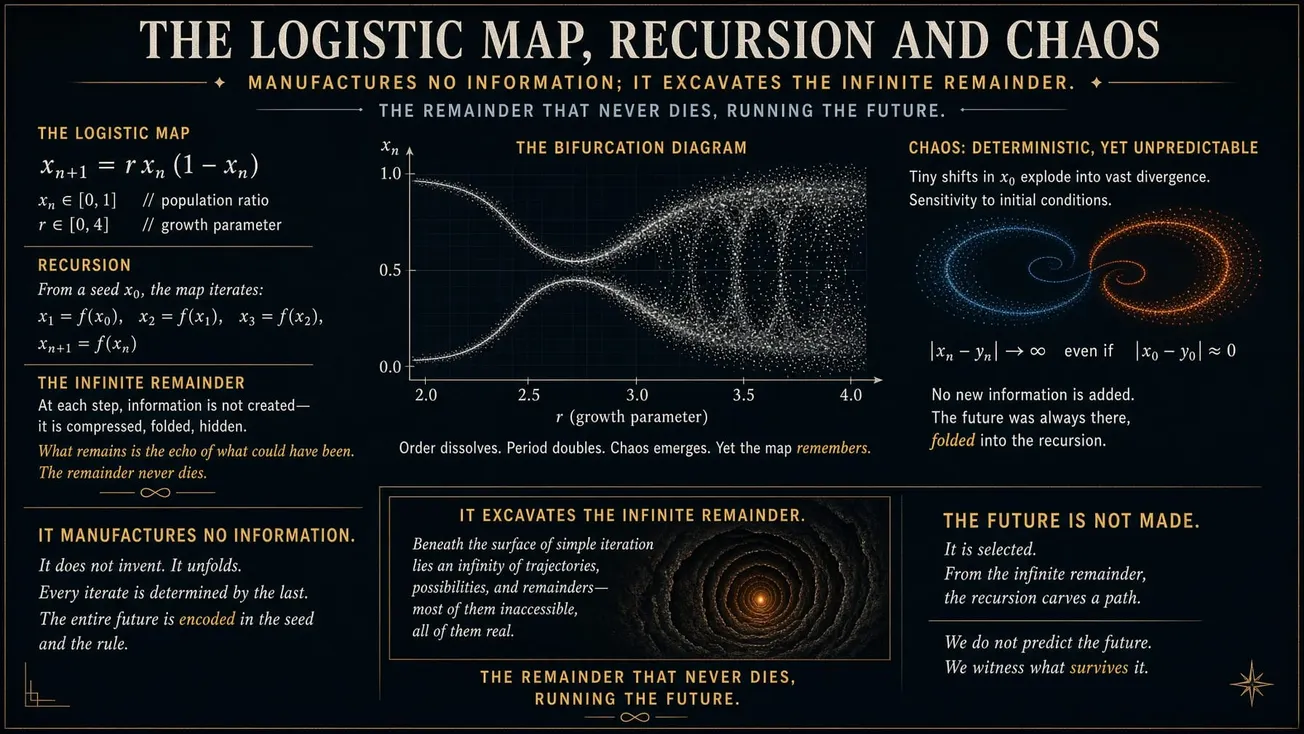
But randomness in the strongest sense, says the future is nowhere at all.
Can finite evidence ever certify that an observed event was not predetermined? This essay argues that the answer is conditional rather than absolute. Certification is possible only relative to a restricted and exhaustible class of competing deterministic explanations. If the admissible deterministic alternatives remain inexhaustible, every finite observational record leaves
Can any observer, using finite observations and experiments, determine whether the events of its world are genuinely undetermined, rather than the output of some hidden deterministic mechanism?
The Evidence Boundary - Can an observer determine whether the events in its world are genuinely indeterministic, rather than the outputs of an unknown deterministic mechanism?