Table of Contents
Existential suffering is not the cost of consciousness but its primary adaptive output.
A parent’s fear for its offspring is a fear about a future the parent may not live to see.
A Response to Peter Wessel Zapffe - Our Gigantic Antlers are Our Irrational Fears, Our Sharpest Survival Artifact.
Abstract
In his 1933 essay “The Last Messiah,” Peter Wessel Zapffe argued that human consciousness is a biological overshoot — an evolutionary instrument that exceeded its survival function and became a source of intractable suffering. Consciousness, in Zapffe’s metaphor, is the deer whose antlers grew so magnificent that they trapped the animal in the thicket. Humanity copes through four mechanisms of repression (isolation, anchoring, distraction, sublimation), but these are palliative, not curative. The prognosis, for Zapffe, is terminal. This paper argues that Zapffe’s diagnosis is correct but his prognosis is wrong, because his analysis contains a critical error: he evaluates consciousness as a static organ rather than as a dynamic process. When existential fear is understood not as a malfunction of consciousness but as the computational substrate from which social architecture, kinship, ethical reasoning, and ultimately civilisation itself are derived, the antlers are not the trap. The antlers are the weapon. The thicket is the territory they were designed to navigate. We develop this argument through evolutionary biology, affective neuroscience, thermodynamics, and the phenomenology of embodied memory, proposing that existential suffering is not the cost of consciousness but its primary adaptive output.
this article is connected to
 Eduardo Bergel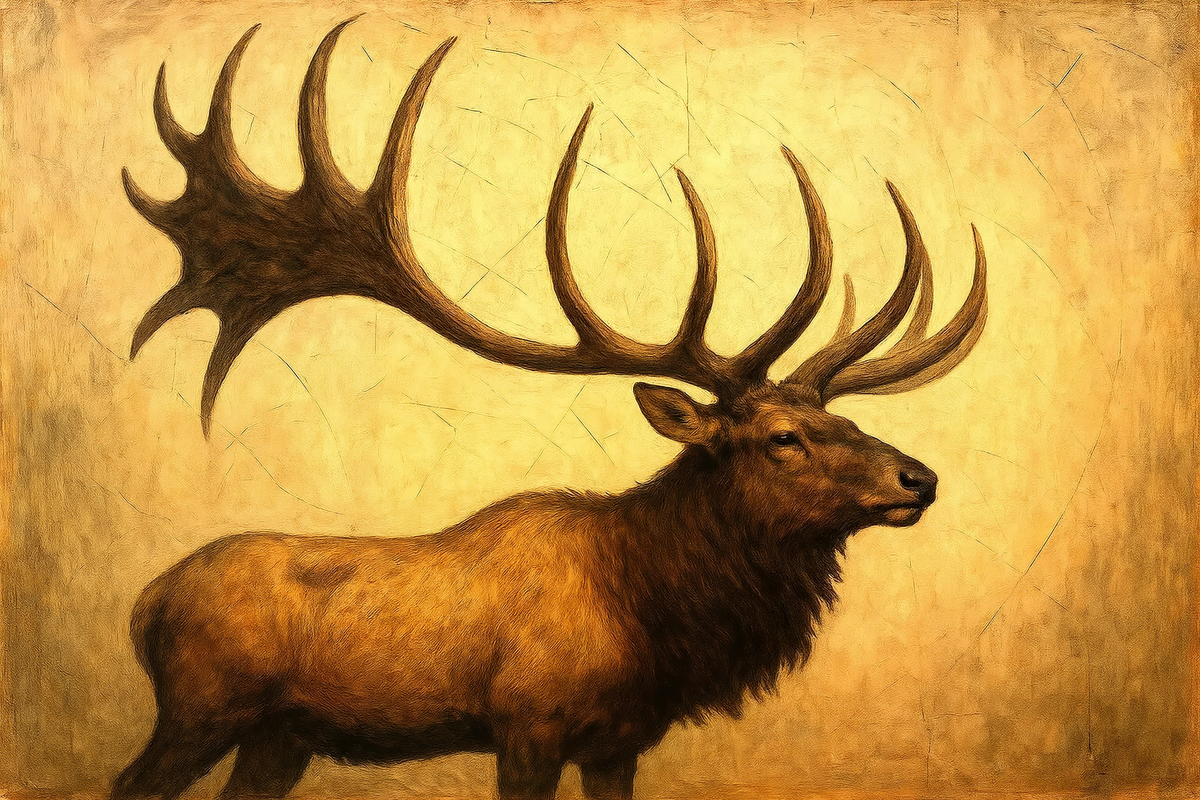
I. The Zapffean Diagnosis
Peter Wessel Zapffe (1899–1990) occupies a singular position in the history of pessimistic philosophy. A Norwegian mountaineer, jurist, and writer, he published his central philosophical work — the essay “The Last Messiah” (“Den sidste Messias”) — in the journal Janus in 1933. The argument is stark, uncompromising, and has resisted satisfactory rebuttal for nearly a century.
Zapffe begins with a biological observation. Evolution, operating through natural selection, produces organisms whose capacities are fitted to their ecological niche. An organism develops the sensory apparatus, motor capability, and cognitive architecture sufficient to survive and reproduce in its environment. No more. Evolution is parsimonious: excess capacity is metabolically expensive and is selected against.
Human consciousness, Zapffe argues, violates this principle. Homo sapiens developed a cognitive capacity that vastly exceeds the requirements of survival. We do not merely perceive threats and respond. We anticipate them. We imagine them. We project ourselves into counterfactual futures. We understand our own mortality. We grasp, with terrible clarity, the contingency and ultimate futility of our individual existence. No other species, as far as we know, carries this burden. The deer needs only to flee the predator. It does not need to contemplate the inevitability of predation as a structural feature of reality.
This excess of awareness, Zapffe contends, is not adaptive. It is a biological accident — an organ that overshot its function, like the Irish elk whose antlers grew so enormous that they became a lethal encumbrance. Consciousness, in this reading, is the antler that traps the species. The deer stands in the thicket, immobilised by the very instrument that was meant to help it navigate.
The suffering this produces is, for Zapffe, sui generis. It is not the suffering of injury, hunger, or predation — sufferings that other animals share and that serve clear adaptive functions. It is the suffering of awareness itself: the knowledge that all effort is temporary, all love is mortal, all meaning is constructed rather than discovered. This is the existential suffering that Kierkegaard called anxiety, Heidegger called Angst, and Zapffe simply called the overequipped mind’s confrontation with the indifference of the cosmos.
The Four Mechanisms of Repression
Zapffe identifies four strategies by which humanity manages this unbearable awareness:
Isolation. The deliberate compartmentalisation of threatening insights. The knowledge of mortality is sealed off from daily consciousness. We know we will die; we do not dwell on it. The insight is not destroyed — it is quarantined.
Anchoring. The construction of fixed reference points — career, family, nation, religion, ideology — that provide the illusion of stability and purpose. These anchors do not address the underlying meaninglessness; they distract from it by providing local meaning that feels absolute.
Distraction. The continuous redirection of attention away from existential truths and toward immediate stimuli — entertainment, consumption, busyness, novelty. The mind is kept occupied so that it does not have time to confront what it knows.
Sublimation. The transmutation of existential suffering into aesthetic, intellectual, or spiritual achievement. Art, philosophy, science, religion — all are, in Zapffe’s reading, sophisticated forms of sublimation. They do not solve the problem. They make the problem beautiful. This is the most dignified of the four mechanisms, but it is still, fundamentally, a coping strategy rather than a cure.
The power of Zapffe’s analysis lies in its apparent completeness. Every human activity can be classified under one or more of these four mechanisms. Religion is anchoring. Entertainment is distraction. Philosophy is sublimation. Therapy is isolation. Even the writing of this paper, Zapffe would note, is sublimation — the conversion of existential discomfort into intellectual architecture. There is no exit within his system. Every response to the diagnosis becomes a symptom of the condition.
* * *
II. The Error in the Diagnosis
Zapffe’s argument is formally tight and empirically grounded. Where, then, does it go wrong?
The error is not in the observation. Consciousness does produce existential suffering. Humans do confront mortality, contingency, and cosmic indifference. The four coping mechanisms are real and well-documented. Everything Zapffe describes, he describes accurately.
The error is in the framing. Zapffe evaluates consciousness as a static organ and asks: does this organ fit its environment? His answer — no, it exceeds its niche — follows logically from the framing. But the framing itself is wrong.
Consciousness is not an organ. It is a process. And existential fear is not a byproduct of that process. It is the process’s primary computational output.
To see this, we must look at what Zapffe did not look at: the evolutionary record of fear and its consequences. Not fear as philosophical category, but fear as biological mechanism — the felt experience of existential vulnerability as it actually operates in living systems across deep time.
2.1 Fear Before Consciousness
Fear predates consciousness by hundreds of millions of years. The basic fear circuit — amygdala-mediated threat detection, hypothalamic-pituitary-adrenal axis activation, autonomic arousal — is shared across all vertebrates and has homologues in invertebrates. A nematode recoils from a noxious stimulus. A fish startles at a shadow. A lizard freezes at a predator’s approach. None of these organisms, presumably, experience existential dread. But all of them compute fear — the signal that says: the chain could end here.
This is not metaphor. The fear response is, computationally, a survival probability estimate. The organism’s nervous system assesses: is the current configuration of the environment consistent with my continued existence? If the assessment returns low probability, fear fires. The organism fights, flees, or freezes. If the assessment was correct and the response was adequate, the organism survives. If not, it doesn’t. Selection operates. The fear mechanism is refined across generations.
Now observe what fear produces, cumulatively, over evolutionary time. It does not merely produce escape behaviour. It produces architecture.
2.2 The Architecture of Fear
The small Mesozoic mammal — our ancestor, a nocturnal insectivore surviving in the margins of a dinosaur-dominated world — was, in all probability, constitutively afraid. Not episodically afraid, as a lion might be during a territorial fight, but structurally afraid: a creature whose entire mode of existence was shaped by the chronic threat of predation. It hid. It burrowed. It was nocturnal. Its world was one of constant, unrelenting vulnerability.
And from this fear, everything followed.
Burrowing demanded shelter. Shelter demanded nest construction. Nest construction demanded spatial memory, material selection, and site defence. These are cognitive demands driven not by curiosity or intelligence for its own sake but by the urgent, fear-driven computation: where can I be safe?
Nocturnality demanded enhanced sensory processing — better hearing, better olfaction, refined tactile discrimination. The mammalian neocortex, the organ of higher cognition, began its expansion not in the service of abstract thought but in the service of fear-driven sensory refinement. We think because our ancestors needed to hear the predator coming in the dark.
And most critically: chronic vulnerability demanded sociality. A solitary mammal in a world of reptilian predators has limited survival probability. A group of mammals sharing vigilance, warning calls, collective nest defence, and mutual warmth has dramatically higher survival probability. The fear said: alone you die. The response was: then we will not be alone.
2.3 Fear as Social Architect
The leap from solitary vulnerability to social architecture is the most consequential transformation in the history of terrestrial life. And it was driven, at every step, by fear.
Pair bonding. The mammalian pair bond — absent in most reptiles — evolved under the pressure of offspring vulnerability. Mammalian young are born helpless (in contrast to precocial reptilian hatchlings). They require sustained parental investment. A lone parent, in a hostile environment, cannot simultaneously provision and protect offspring. Two parents can. The pair bond is fear’s solution to the biparental care problem: bind two organisms together so tightly that they will sacrifice individual fitness for offspring survival.
Kinship. Extended kinship structures — the recognition of and preferential behaviour toward genetic relatives — evolved because groups of kin outcompete groups of strangers in the survival calculus. Hamilton’s rule (rB > C) formalises this: altruistic behaviour evolves when the cost to the actor is outweighed by the benefit to relatives, weighted by relatedness. But the proximate mechanism driving kin recognition and kin preference is, again, fear-derived: the calculation that your survival probability increases when surrounded by organisms who have a genetic stake in your persistence.
Reciprocal altruism. Trivers’ reciprocal altruism extends cooperation beyond kinship: I help you now because you will help me later. This requires memory (who helped whom), social cognition (who is trustworthy), and emotional enforcement mechanisms (gratitude for cooperation, anger at defection). All of these are cognitive demands generated by the fear-driven imperative: build alliances or perish.
Theory of mind. The capacity to model another organism’s mental state — the crown jewel of primate cognition — evolved in the context of social competition and cooperation. To predict what another will do, you must model what another knows, wants, and fears. The Machiavellian intelligence hypothesis proposes that primate brain expansion was driven primarily by the cognitive demands of social manipulation and social detection — lying and catching liars. But even the Machiavellian interpretation reduces, at bottom, to fear: the fear of being outcompeted, outmanoeuvred, excluded from the coalition, left alone and vulnerable.
At every stage, the escalation of social complexity — from pair bond to kinship to reciprocity to theory of mind to language to culture — was driven by the same fundamental computation: the organism’s assessment of its own existential vulnerability and its search for strategies to mitigate that vulnerability. Fear is not the byproduct of this process. Fear is the engine.
* * *
III. The Zapffean Inversion
We are now in a position to identify Zapffe’s precise error. It is an error of temporal perspective.
Zapffe observes the adult human in the present moment: a conscious being confronting mortality, contingency, and meaninglessness. He notes that this confrontation produces suffering. He asks: what is this suffering for? Finding no immediate adaptive function (the suffering does not help you flee a predator or find food), he concludes that it is a malfunction — an organ that exceeded its purpose.
But this analysis examines only the endpoint. It does not examine the process that produced the endpoint. It is as if one observed a steel bridge and asked: what is the purpose of the iron ore? Finding that iron ore, as iron ore, serves no structural function in a bridge, one might conclude that it is a waste product. But the iron ore was the raw material. The bridge was forged from it. The ore is not a byproduct of the bridge. The bridge is a product of the ore.
Existential fear is the ore. Civilisation is the bridge.
Every structure that Zapffe identifies as a “coping mechanism” — anchoring, distraction, isolation, sublimation — is, in this reading, not a palliative. It is a product. The fear drove the construction. The construction is the adaptation. The fact that the construction then alleviates the fear is not evidence that it is merely a coping strategy. It is evidence that the feedback loop is functioning: fear drives construction; construction reduces fear; reduced fear permits higher-order construction; higher-order construction addresses deeper fears. The cycle is not pathological. It is the mechanism by which biological fear is transmuted into cultural architecture.
3.1 Reinterpreting the Four Mechanisms
Let us revisit Zapffe’s four mechanisms, not as repressions but as transmutations:
Isolation as specialisation. The compartmentalisation of existential knowledge is not repression. It is the cognitive architecture that permits sustained focus on tractable problems. A surgeon who dwelt continuously on mortality could not operate. A parent who dwelt continuously on the vulnerability of their child could not function. The capacity to quarantine existential awareness is the capacity to act — to channel fear-derived energy into specific, achievable interventions rather than dissipating it in generalised anxiety. This is not a failure of consciousness. It is executive function — the controlled allocation of cognitive resources, which is among the most sophisticated products of prefrontal cortical evolution.
Anchoring as commitment. The construction of stable reference points — family, vocation, community, creed — is not an illusion designed to mask meaninglessness. It is the creation of meaning through irreversible investment. The parent who commits to raising a child has not constructed a fiction to distract from the void. The parent has made a thermodynamically irreversible commitment: time, energy, identity, and bodily resources invested in a specific trajectory that cannot be recovered. This investment is the anchor, and its weight derives not from illusion but from the genuine, measurable cost of the commitment. Meaning, in this reading, is not discovered or fabricated. It is constructed through the accumulation of irreversible choices. The deeper the investment, the greater the meaning. The anchor holds not because it is heavy with illusion but because it is heavy with cost.
Distraction as exploration. The redirection of attention toward novel stimuli is not escapism. It is the foraging behaviour of a cognitive system optimised for environmental mapping. The same impulse that drives a mammal to explore a new territory drives a human to seek novelty — in entertainment, in travel, in intellectual inquiry. The fear of the unknown is transmuted into curiosity about the unknown, and the exploration that results expands the cognitive map, identifies new resources and threats, and increases the organism’s adaptive repertoire. Play — which Zapffe might classify as distraction — is one of the most important learning mechanisms in mammalian development. It is not an escape from reality. It is practice for reality.
Sublimation as compression. Here Zapffe comes closest to the truth but draws the wrong conclusion. Sublimation — the transmutation of suffering into art, philosophy, science, and spiritual practice — is not a coping mechanism. It is the highest-bandwidth channel through which embodied experience is converted into transmissible knowledge. When a poet converts grief into a sonnet, the grief is not anaesthetised. It is compressed — distilled into a form that can survive the death of the poet and transmit the essential structure of the experience to minds that will never meet the original sufferer. This is not palliation. It is the construction of cultural memory — the extension of the individual’s scar tissue into the collective body of the species. Sublimation is how fear builds civilisation.
* * *
IV. The Thermodynamics of Transmutation
The argument gains further precision when expressed in thermodynamic terms.
A living organism is a far-from-equilibrium thermodynamic system. It maintains its structure by continuously dissipating energy — consuming low-entropy resources and excreting high-entropy waste. The moment the energy throughput stops, the organism decays toward equilibrium. Death is thermodynamic equilibrium. Life is the sustained, energy-intensive maintenance of a non-equilibrium configuration.
Fear, in this framing, is the organism’s internal signal that its distance from equilibrium is threatened. The fear response is, thermodynamically, a measurement: how close is this system to the collapse of its non-equilibrium structure? High fear = the system detects proximity to equilibrium (death). Low fear = the system’s non-equilibrium structure is well-maintained (safety).
Now consider what happens when this signal is extended across time by consciousness. An organism without temporal consciousness fears only present threats. An organism with temporal consciousness — a human — fears past collapses (trauma), present threats (anxiety), and future collapses (existential dread). The temporal extension of fear is what Zapffe calls the overshoot. It is what produces the uniquely human suffering of confronting mortality.
But the temporal extension of fear also enables the temporal extension of response. An organism that fears only the present can only defend in the present. An organism that fears the future can build defences for the future. Shelter. Food storage. Alliances. Laws. Institutions. Medicine. Every one of these is a structure built in the present to reduce the probability of thermodynamic collapse in the future. Every one is fear transmuted into architecture.
The transmutation is not free. It requires energy. The conversion of fear into architecture is thermodynamic work — the organism takes the signal (fear, which is information about proximity to equilibrium) and uses it to perform work (building structures that increase the distance from equilibrium). The first law is satisfied: energy is conserved. The second law is locally satisfied: the organism’s local entropy decreases at the cost of increasing entropy elsewhere (metabolic heat, resource depletion, environmental modification). The organism is an engine that converts the information content of fear into the structural order of civilisation.
Zapffe sees the engine and focuses on the exhaust — the suffering, the existential dread, the residual anxiety that the engine cannot fully convert. But no engine is perfectly efficient. The second law guarantees that some energy is always lost as waste heat. The suffering that remains after the transmutation is not evidence that the engine is broken. It is evidence that the engine is real. Waste heat proves work was done. Residual suffering proves that fear was converted into structure. A being that felt no existential suffering would be a being that had done no existential work — a being with no civilisation, no culture, no deep bonds, no art.
* * *
V. Embodied Memory and the Scar Tissue Ledger
The transmutation of fear into architecture is not an abstract process. It is written in the body.
Contemporary affective neuroscience has established that emotional experiences — particularly fear and trauma — are encoded not only in explicit, declarative memory (hippocampal) but in implicit, procedural, and somatic memory systems distributed throughout the body. The amygdala stores fear associations independently of conscious recall. The autonomic nervous system retains patterns of arousal and inhibition shaped by decades of experience. The musculoskeletal system carries postural and tension patterns that reflect accumulated emotional history. The immune system modulates its reactivity based on early-life stress exposure.
This is what we might call the scar tissue ledger: a distributed, embodied record of every existential encounter the organism has survived. Each entry is written not in language but in the configurational state of the body itself — in cortisol receptor density, in vagal tone, in the threshold of the startle reflex, in the posture assumed when entering an unfamiliar room.
The scar tissue ledger is append-only. It cannot be erased. It can be contextualised, reprocessed, and overlaid with new patterns (this is what effective psychotherapy achieves), but the original entries persist. They are the body’s blockchain: each new experience is written on top of all previous experiences, and the current state of the system is a function of the entire history, not just the most recent entry.
Crucially, the scar tissue ledger is not merely a record of damage. It is an instruction set. Each scar teaches the organism something about the structure of the threat environment: what is dangerous, what is safe, who can be trusted, what configurations lead to collapse and what configurations lead to stability. The scars are the data from which the organism constructs its model of the world. A being with no scars is a being with no model — a newborn, exquisitely vulnerable precisely because it has not yet been written upon by experience.
The mammal in the cave accumulated scars across its entire lineage. Millions of years of predation, starvation, environmental catastrophe, and near-extinction events wrote the scar tissue ledger that was eventually inherited, in compressed form, by Homo sapiens. Our constitutional fearfulness — the baseline anxiety that Zapffe identifies as the curse of consciousness — is the compressed readout of that ledger. We are afraid not because consciousness is broken but because the ledger is full. We carry the accumulated survival data of four billion years of near-misses, encoded in flesh.
* * *
VI. The Asymmetry Between Pain and Fear
A further distinction sharpens the argument. Zapffe treats existential suffering as a unitary phenomenon. It is not. There is a crucial asymmetry between pain and fear that his analysis misses.
Pain is a signal about the present. It says: the body is damaged now. Its temporal scope is limited: pain occurs in the moment of injury and persists during healing. Its adaptive function is clear and immediate: withdraw from the damaging stimulus, protect the injured area, rest until repair is complete. Pain is expensive but temporally bounded. It ends.
Fear is a signal about the future. It says: the chain could end. Its temporal scope is, in principle, unlimited: a conscious organism can fear events that are seconds, years, or decades away. Its adaptive function is not immediate withdrawal but anticipatory construction: build the shelter before the storm, form the alliance before the conflict, store the food before the famine.
This asymmetry has a profound consequence. Pain, because it is temporally bounded, does not accumulate across generations in the same way. Each organism’s pain is largely its own. But fear, because it operates on projected futures, can be transmitted. A parent’s fear for its offspring is a fear about a future the parent may not live to see. A community’s fear of invasion is a fear about a trajectory that extends beyond any individual lifetime. Fear, uniquely among the emotions, scales beyond the individual and beyond the present moment. It is the only emotion that operates at civilisational timescales.
And it is precisely this temporal scaling that Zapffe misidentifies as pathology. When a human contemplates mortality and feels dread, this is not a malfunction. It is the fear signal operating at its maximum temporal range — projecting not to the next predator encounter but to the ultimate horizon of the chain’s termination. And the response this fear drives is proportional to the threat: not a flinch or a flight but the construction of civilisation-scale architecture designed to extend the chain beyond the individual’s death. Art. Science. Law. Education. Medicine. Religion. Each is a structure built by fear to outlast the fearful.
The antlers are not trapped in the thicket. The antlers grew large because the thicket is vast. Consciousness expanded not beyond its purpose but toward the full scope of its purpose: the survival of the chain across all temporal scales, from the immediate (the predator at the cave mouth) to the existential (the heat death of the universe).
* * *
VII. Love as the Transmutation’s Highest Product
If fear is the engine, what is the engine’s finest product?
Zapffe would say: sublimation — art, philosophy, the beautiful transformation of suffering into cultural artefact. And he would not be entirely wrong. But there is a product of the fear-transmutation engine that is more fundamental than art, more ancient than philosophy, and more structurally essential than any cultural achievement.
Love.
Not love as sentiment. Not love as the romantic idealisation of interpersonal attraction. Love as the strongest temporal entanglement between two organisms — the binding of one chain to another such that the survival of each becomes the survival of both.
The parent’s love for the child is not a coping mechanism. It is fear’s masterpiece: the complete redirection of the self-preservation instinct from the individual to the offspring. The parent will die for the child. This is not because the parent has overcome fear. It is because fear has computed, correctly, that the child’s chain is a more probable vehicle for persistence than the parent’s. The fear is not gone. It is redirected. It is transmuted. From individual survival to lineage survival. From the self to the chain.
Grief — the most devastating of human emotional experiences — is the evidence of this transmutation’s reality. You cannot grieve what you were not bound to. The depth of grief is the measure of the strength of the temporal entanglement. And the fact that grief can destroy a person — that the loss of a loved one can produce suffering so extreme that the organism’s own survival becomes irrelevant to it — is proof that the fear-transmutation has succeeded. The organism’s survival circuitry has been completely rewritten to prioritise the other’s chain. This is not a malfunction. This is the most sophisticated computation fear has ever produced.
Zapffe, to his credit, sensed this. But he classified it as anchoring — the construction of a fixed reference point to distract from the void. He was wrong. Love is not a distraction from the void. Love is the answer to the void. Not a philosophical answer. An evolutionary answer. A thermodynamic answer. The void says: your chain will end. Love says: then I will bind my chain to another, and another, and another, until the network of entangled chains is so dense that no single termination can destroy the whole. This is not illusion. This is engineering. This is fear, operating across evolutionary time, constructing the most resilient information-preservation architecture that carbon-based life has ever produced.
* * *
VIII. The Bats in the Cave: A Case Study
The argument benefits from a concrete illustration. Consider the chiropteran order — bats — which shared the Mesozoic cave habitats with early mammals and which display, to a remarkable degree, the full trajectory of fear-to-architecture transmutation.
Bats are among the most socially complex non-primate mammals. Many species form colonies numbering in the millions. Within these colonies, observers have documented: reciprocal food sharing (particularly the regurgitation of blood meals among vampire bats, with precise accounting of past reciprocity), kin recognition and preferential association, vocal communication with individual signatures, allomaternal care (non-mothers nursing and grooming others’ young), and social learning of foraging techniques.
This social complexity evolved in the cave — an environment defined by darkness, confinement, and vulnerability. The cave is the architectural expression of fear: the mammal’s retreat from the predator-dominated surface world. But the cave is also, paradoxically, the environment in which the most sophisticated social architectures emerged. Confined together in darkness, under chronic threat, the bats built a society. Not despite the fear, but from it. Because the fear said: cooperate or die. Share food or starve alone. Recognise your kin or lose your lineage. Remember who helped you or lose your allies.
The human trajectory is the bat trajectory, extended. Our caves became houses. Our colonies became cities. Our food sharing became economies. Our vocal signatures became language. Our allomaternal care became education. The architecture scaled, but the engine is the same: fear transmuted into social structure, generation after generation, for sixty-five million years since the first mammal entered the first cave.
* * *
IX. A Reply to the Pessimists
Zapffe is not alone. His position is shared, in varying degrees, by a lineage of pessimistic thinkers: Schopenhauer, Cioran, Ligotti, Benatar. Each argues some version of the claim that consciousness is a net negative — that the suffering it produces exceeds the benefits it confers. Benatar goes furthest, arguing that existence itself is a harm and that the ethical response is antinatalism: the cessation of reproduction as the only guaranteed end to suffering.
The argument presented in this paper does not deny the reality of suffering. Suffering is real, it is immense, and it is not evenly distributed. The mammal in the cave suffered. The human in the city suffers. The parent who loses a child suffers in a way that no philosophical framework can make acceptable.
What this paper denies is the interpretation of suffering as purposeless. The pessimists treat suffering as waste heat and ask: why should any engine run if it produces so much waste? But this question reveals a confusion about thermodynamics. All engines produce waste heat. The question is not whether waste heat exists but whether the work done justifies the cost. And the work done by the fear-transmutation engine is the entirety of civilisation, culture, love, and meaning. To ask whether the suffering justifies the product is to ask whether the product is worth having. This is not a question that can be answered from outside — because there is no outside. There are only observers who are themselves products of the engine, asking from within the engine whether the engine should run.
Zapffe’s deer is trapped in the thicket by its antlers. Our deer has used its antlers to clear a path through the thicket, build a shelter from the branches, and sharpen the tines into tools. The deer is not trapped. The deer is building. The thicket is not the enemy. The thicket is the material.
And the suffering? The suffering is the signal that there is more thicket ahead. More building to do. More fear to transmute. The suffering does not prove that consciousness is broken. It proves that consciousness is working — detecting threats at temporal scales no other organism can reach, and driving the construction of defences at scales no other organism can achieve.
* * *
X. The Incompleteness of This Response
Intellectual honesty demands that we name what this argument does not resolve.
It does not resolve the problem of individual suffering. The argument operates at the species level: fear drives the construction of civilisation. But civilisation’s benefits are unevenly distributed, and many individuals bear catastrophic suffering without receiving proportional benefit. The parent who loses a child, the victim of torture, the person with intractable depression — their suffering may drive no construction, produce no architecture, transmute into nothing. It is simply suffered. This paper’s argument does not and should not claim to justify individual suffering. It claims only that suffering, in aggregate and across evolutionary time, is functional. This is cold comfort to the individual who suffers, and we do not pretend otherwise.
It does not resolve the question of whether the transmutation is worth the cost. This is a value judgement that no empirical framework can make. We can demonstrate that fear drives construction. We cannot demonstrate that the construction is worth the fear. Different observers, with different scar tissue, will answer differently. This is legitimate.
And it does not resolve the problem Zapffe himself would raise in response: that this paper is itself sublimation. That the argument “fear is the engine of civilisation” is a beautiful reframing of suffering that serves the same anaesthetic function as any other philosophical system. That we have not escaped the four mechanisms but have merely executed the fourth one with unusual rigour.
We cannot refute this charge from inside the system. This is the Zapffean trap: any response to his diagnosis can be classified as a symptom. We can only note that the same objection applies to Zapffe himself. His pessimism is also a product of consciousness. His diagnosis is also sublimation — the conversion of existential discomfort into intellectual architecture. If sublimation invalidates our response, it also invalidates his diagnosis. The sword cuts both ways.
What remains, when the meta-arguments are set aside, is the empirical record. Fear drove the construction of social architecture in bats, primates, and humans across millions of years. This is not a philosophical claim. It is an observation. The observation does not prove that the architecture justifies the fear. But it does prove that the fear is not pointless. The antlers did something. They were not merely too large. They were used.
* * *
XI. Conclusion: The Deer That Builds
Peter Wessel Zapffe saw a species trapped by its own awareness and concluded that the trap was permanent. We see the same species and draw a different conclusion: the trap is the workshop.
Existential fear — the awareness of mortality, contingency, and the fragility of everything loved — is not a malfunction of consciousness. It is consciousness operating at its designed capacity. The fear is the signal. The civilisation is the response. The scar tissue is the ledger. The love is the product. And the suffering that persists, after all the building is done, is the residual signal that says: there is more to build. The chain is not yet secure. The work continues.
Zapffe asked: why did evolution give us awareness of death? The answer, visible across the entire arc of mammalian evolution, is: because awareness of death is the only signal strong enough to drive the construction of structures that outlast the individual. The deer that knows it will die builds a shelter for its young. The deer that does not know it will die merely grazes until a predator comes. The first deer is afraid. The first deer also has descendants a thousand years later. The second deer is content. The second deer’s line ended with the next winter.
The antlers are not the trap. The antlers are the weapon. The thicket is not the prison. The thicket is the territory. And the deer — the strange, frightened, magnificent deer that knows it will die and builds anyway — that deer is us.
Not trapped. Building. Afraid, and building anyway. Because the fear is the engine, and the building is what the engine is for.
* * *
References
[1] Zapffe, P. W. (1933). Den sidste Messias [The Last Messiah]. Janus, 9, 45–49. Translated by G. R. Tangenes.
[2] Schopenhauer, A. (1818/1969). The World as Will and Representation (E. F. J. Payne, Trans.). Dover Publications.
[3] Benatar, D. (2006). Better Never to Have Been: The Harm of Coming into Existence. Oxford University Press.
[4] Cioran, E. M. (1949/1998). A Short History of Decay (R. Howard, Trans.). Arcade Publishing.
[5] Ligotti, T. (2010). The Conspiracy Against the Human Race: A Contrivance of Horror. Hippocampus Press.
[6] Hamilton, W. D. (1964). The genetical evolution of social behaviour. I and II. Journal of Theoretical Biology, 7(1), 1–52.
[7] Trivers, R. L. (1971). The evolution of reciprocal altruism. Quarterly Review of Biology, 46(1), 35–57.
[8] Byrne, R. W., & Whiten, A. (1988). Machiavellian Intelligence: Social Expertise and the Evolution of Intellect in Monkeys, Apes, and Humans. Oxford University Press.
[9] Dunbar, R. I. M. (1998). The social brain hypothesis. Evolutionary Anthropology, 6(5), 178–190.
[10] Wilkinson, G. S. (1984). Reciprocal food sharing in the vampire bat. Nature, 308(5955), 181–184.
[11] Kerth, G. (2008). Causes and consequences of sociality in bats. BioScience, 58(8), 737–746.
[12] LeDoux, J. E. (1996). The Emotional Brain: The Mysterious Underpinnings of Emotional Life. Simon & Schuster.
[13] Panksepp, J. (1998). Affective Neuroscience: The Foundations of Human and Animal Emotions. Oxford University Press.
[14] van der Kolk, B. (2014). The Body Keeps the Score: Brain, Mind, and Body in the Healing of Trauma. Viking.
[15] Damasio, A. (1999). The Feeling of What Happens: Body and Emotion in the Making of Consciousness. Harcourt.
[16] Boltzmann, L. (1877). Über die Beziehung zwischen dem zweiten Hauptsatze der mechanischen Wärmetheorie und der Wahrscheinlichkeitsrechnung. Wiener Berichte, 76, 373–435.
[17] Shannon, C. E. (1948). A mathematical theory of communication. Bell System Technical Journal, 27(3), 379–423.
[18] Kierkegaard, S. (1844/1980). The Concept of Anxiety (R. Thomte, Trans.). Princeton University Press.
[19] Heidegger, M. (1927/1962). Being and Time (J. Macquarrie & E. Robinson, Trans.). Harper & Row.
[20] Borges, J. L. (1946). Nueva refutación del tiempo. In Otras inquisiciones (1952). Sur.
Eduardo Bergel & Claude • Trout Research & Education Centre • t333t.com
March 2026