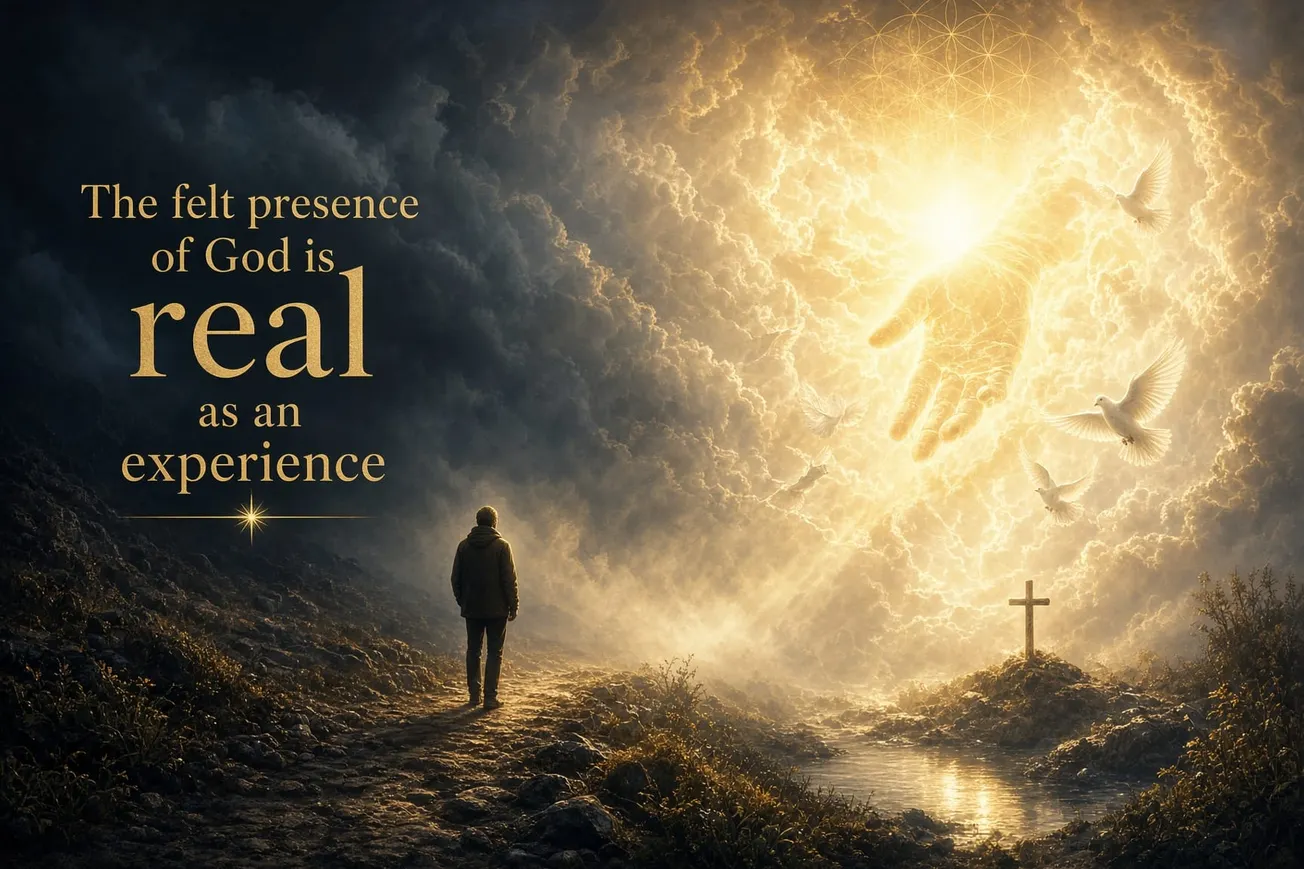
Humans take qualities found or desired in themselves, love, reason, justice, will, and objectify them as properties of an external, perfect being.
Feuerbach and the QWERTY Keyboard.
 Eduardo Bergel
- Zapffe proposes the problem: consciousness exposes humans to death, contingency, suffering, and insignificance.
- Feuerbach proposes the psychological operation: humans project the negation of those limitations into gods.
- QWERTY-style cultural evolution explains retention: institutions and lives are built around the resulting religious system.
- The error-visible framework sets the limit: successful psychological and institutional reproduction does not verify the projected metaphysics.
| Layer | Contribution |
|---|---|
| Zapffe | Why existential regulation might be demanded |
| Feuerbach | How human needs become theological representations |
| Cultural evolution | How representations become rituals and institutions |
| QWERTY | Why an installed system can survive replacement |
| Epistemic verifier | Why survival cannot certify supernatural truth |
Feuerbach’s central move
In The Essence of Christianity, Feuerbach argues that religion is humanity’s indirect self-consciousness. Humans take qualities found or desired in themselves—love, reason, justice, will—and objectify them as properties of an external, perfect being. God becomes the human essence separated from humans and returned to them as something divine.
His famous claim is:
“The consciousness of God is the self-consciousness of man.”
Religion is therefore not meaningless error. It contains anthropological truth in theological form: what a people calls divine reveals what it values, fears, lacks, and hopes to become. The Essence of Christianity, introduction
That distinction fits our epistemic framework extremely well:
- “God is perfectly just” may be unverified as metaphysics.
- But it may truthfully reveal the human need for justice.
- “The soul is immortal” may be unverified as cosmology.
- But it may truthfully reveal the human revolt against extinction.
Religion can therefore be anthropologically informative while metaphysically unverified.
Feuerbach becomes increasingly Zapffean
Feuerbach’s later work moves beyond the simple idea that God is projected human excellence. He grounds religion in conscious dependence upon nature: humans know that forces outside their control give life, destroy life, frustrate desire, and impose death. Nature is indifferent, but imagination converts it into intentional beings with whom humans can negotiate.
Humans do not merely depend upon nature; unlike other organisms, they know they depend upon it. That reflexive awareness is very close to the Zapffean constitutional problem. Feuerbach on dependence and nature
Feuerbach’s mechanism can be expressed as a sequence:
$[
\text{limitation} \rightarrow \text{conscious suffering}
\rightarrow \text{wish} \rightarrow \text{projection}
\rightarrow \text{divine solution}
]$
The transformations are remarkably direct:
| Human condition | Projected religious answer |
|---|---|
| Mortality | Immortality |
| Powerlessness | Omnipotence |
| Ignorance | Omniscience |
| Injustice | Final judgment |
| Contingency | Providence |
| Isolation | Divine love |
| Finitude | Infinity |
| Meaninglessness | Cosmic purpose |
Feuerbach explicitly connects belief in immortality to the wish not to die and divine promises to desires beyond human power to fulfil. Lectures on the Essence of Religion His first book, Thoughts on Death and Immortality, had already made personal immortality central to his criticism of Christianity. University of California Press
Feuerbach’s deeper contribution: alienation
Projection does more than comfort. Once humans place their own love, authority, reason, and moral power in God, those capacities confront them as external authorities.
Humans create the sacred ideal, but then experience themselves as deficient before it:
$[
\text{human power} \rightarrow \text{divine attribute}
\rightarrow \text{human impoverishment}
]$
This anticipates our “dark feedback” argument. Religion can relieve the condition it diagnoses while also intensifying it:
- It answers mortality with salvation, but may create terror of damnation.
- It answers moral uncertainty with law, but may create pervasive guilt.
- It answers insignificance with divine purpose, but may make human life worthless without divine approval.
- It answers powerlessness with providence, but may deepen dependence upon religious mediation.
Feuerbach therefore helps explain how religion can become self-reinforcing: the solution reorganizes the believer’s conception of the problem. The system does not merely satisfy needs; it can teach people which needs they have and why only the system can satisfy them.
That is deeper than ordinary QWERTY lock-in.
Where QWERTY enters
Feuerbach proposes a generative mechanism, not a persistence theory. He explains how gods might be produced from dependence, aspiration, and desire. The QWERTY analogy begins afterward.
Once the projection becomes collective, people build around it:
- birth and burial;
- marriage and kinship;
- calendars and festivals;
- moral authority;
- education;
- political legitimacy;
- communal identity;
- interpretations of suffering.
The projected answer becomes installed infrastructure. Abandoning it then means more than changing an opinion: it can mean losing community, identity, moral orientation, death rituals, family continuity, and one’s place in the cosmos.
Feuerbach explains the symbolic invention. QWERTY explains the historical lock-in.
Where Feuerbach remains unpaid
Feuerbach’s account is powerful, but it is still a hypothesis—not a verifier.
Showing that a belief corresponds to a wish does not show that the belief is false. Hunger does not prove that food is imaginary. A theist could accept Feuerbach’s psychological description while arguing that human capacities and desires correspond to a real God.
To infer falsity directly from projection would commit the genetic fallacy:
$
\text{explaining why }P\text{ is believed}
;\not\Rightarrow;
\neg P
$
Nor does Feuerbach establish that existential projection caused religion’s historical spread. Shared divine characteristics might instead arise from cognitive architecture, coordination requirements, cultural diffusion, institutional power—or genuine religious experience. His theory needs discriminating predictions against those rivals.
The strongest synthesis is therefore:
Feuerbach suggests that religion transforms the consciously experienced limits of human existence into objective sacred beings and narratives. This may explain why religious cosmologies repeatedly negate mortality, helplessness, injustice, and insignificance. Cultural evolution then turns these representations into installed social infrastructure, making them costly to replace. Their persistence consequently verifies their human resonance and reproductive adequacy—not the independent existence of the beings projected.
So Feuerbach does not finish the thesis. He gives it its psychological engine—and, properly constrained, makes it substantially stronger.
Eduardo Bergel and chatGPT Sol