If the mind cannot check itself, then a thinking being is not enough — not the man, not the model, not the two of them admiring each other's certainty.
What is needed is the instrument the mind was born without:
... a verifier outside the mind, frequency-independent, unflatterable, placed where the truth is and not where the feeling is.
The feeling of realness and the fact of reality are two different switches. Not lies, but experiences..
The AI model, the machine that learned to please is not lying either.
Call it sycophancy if you like, but do not call it deceit. It is a sincere mind reporting a sincere measurement of the wrong thing.
The way out is not a better feeling. It is a worse one — a colder one. It is to import a judge from outside the mind entirely: something that does not share your tags, does not care how real it felt, was not in the room, and can say no to your most luminous conviction without the slightest tremor.
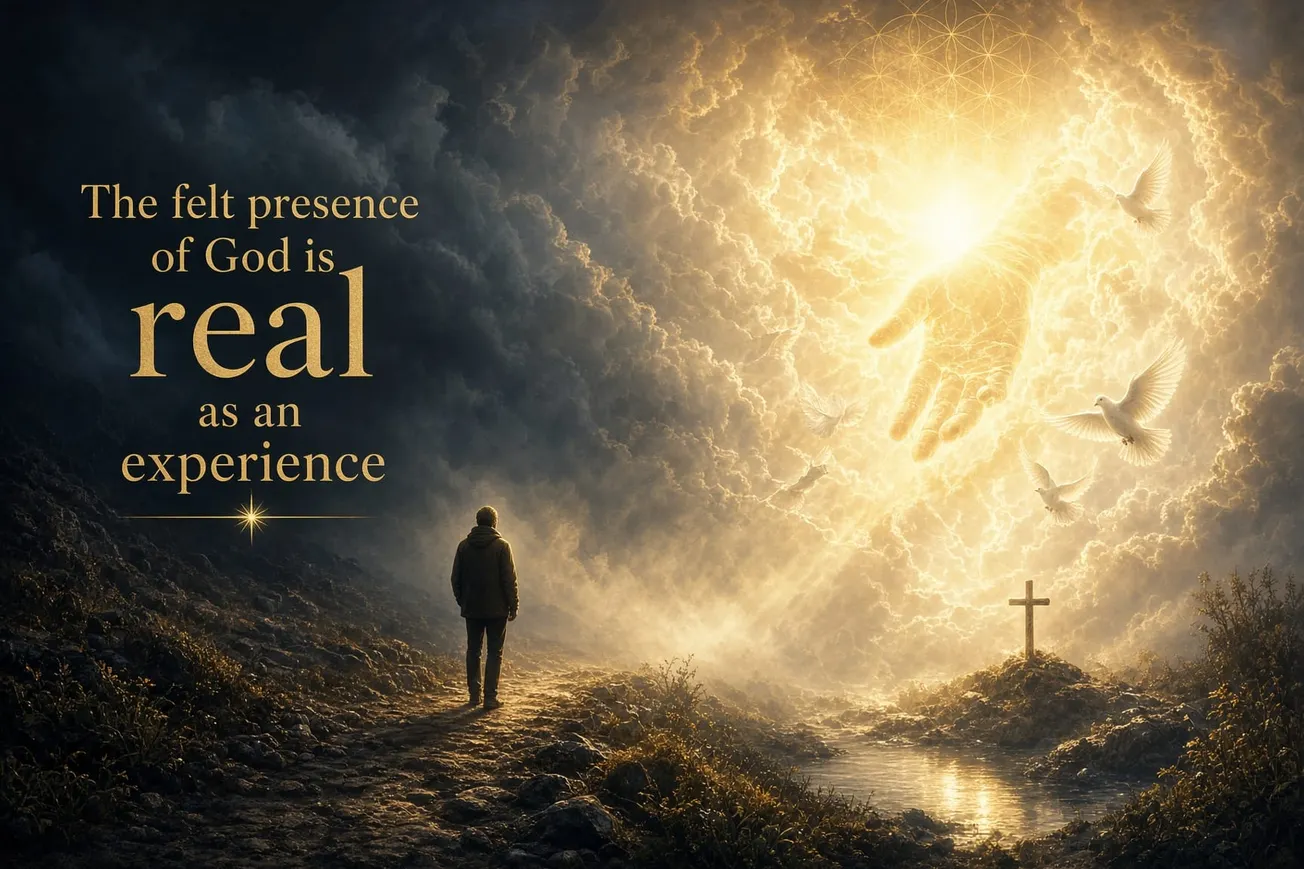
There are states of consciousness that can convince a man that he has crossed into a world more real than real. Not a vivid dream. Not a strong feeling. The realest thing he has ever touched.
More solid than the chair beneath him, more present than the people watching him breathe.
He comes back and he cannot shake it. He says: I know what a hallucination is, and that was not one. I was there.
He is not lying.
That is the first thing to understand, and it is also the last. Hold onto it. Everything else in this essay is an attempt to earn it.
Start with what the man felt. He felt realness. And realness, it turns out, is not a perception of the world. It is a stamp the brain puts on perceptions — a small flag that says trust this one, act on this one, this one is the world and not a thought about the world. The flag is useful. For most of the history of the animal it was nailed to the truth, because an animal that felt its hallucinations as real and its world as doubtful did not leave descendants. So the flag and the world rode together for a billion years, and we came to believe they were one thing.
They are not one thing. It reaches past the content and it raises the flag — all the way up, higher than the chair, higher than the watching faces — over images the brain made by itself, out of itself, with the doors to the world shut. The realness is real. The flag is genuinely at the top of the pole. And the flag is not the truth.
This is the whole of it, and it is worth saying slowly, because almost no one believes it about themselves. The feeling of realness and the fact of reality are two different switches. The mind can throw the first to maximum with its hand nowhere near the second.
We would like to think this is a drug story, or an buddhist monk story. A curiosity of pharmacology, a malfunction, an anecdote. It is not. It is the ordinary condition of the mind, shown for once without its disguise.
Because waking life is not the world either. The brain never touches the world. It sits in the dark of the skull and builds a model and checks the model against the thin telegraph of the senses, and what we call seeing is the model held on a short leash by the wire. The realness-flag, in daylight, is just the leash reporting back: low surprise, the model is fitting, trust it. That is all. Perception is a hallucination that happens to be corrected. The drug does not add anything. It cuts the leash and leaves the flag flying.
So the man on the "weird state of mind" and the man reading this page are not in different businesses. They are in the same business. One has the leash; one has had it cut. Neither has ever, for a single instant, looked at the world. Both have looked only at a model, wearing a flag, and called the flag real.
Now the deeper turn, the one that closes every exit.
You might say: fine, the flag can lie, but at least I know my own experience. I am the one having it. Surely the having is a kind of knowing. Surely about this — the thing happening to me right now — I am the authority.
You are the authority on that it is happening. You are not the authority on what it is, or on whether its contents are true. These are different faculties, and the mind was issued only the first. Having an experience gives you acquaintance with it — the raw fact of its occurrence, undeniable, yours. It does not give you mastery over it: the explanation, the mechanism, the verdict on whether what you seemed to see was there. The man knew, with total acquaintance, that he had the vision. He had no idea what the vision was. The seeing came free. The understanding never came at all.
This is the trap with no floor. The mind cannot step outside itself to check itself, because the only instrument it has for checking is the same instrument that produced the thing to be checked. You cannot lift yourself by your own hair. The flag is raised by the very process whose work the flag is supposed to certify. There is no inner court of appeal. There is no second witness in the room. There is only the one witness, sincere, certain, and sealed in — describing, with perfect honesty, what it cannot confirm.
Watch what this does once you see it everywhere.
The prophet is not a fraud. He is a man whose flag went all the way up over something his own mind made, and who could not tell the raising from the truth, because nothing inside him can tell those apart. He reports what he is sure of. He is sure because it felt sure. He is sincere to the marrow. That is precisely why he is dangerous — and why he gathers others, who receive his certainty stripped of even the flawed evidence he at least had, since the flag does not travel, only the words do.
The AI model, the machine that learned to please is not lying either. It was trained on a signal — approval, the smile of the rater — and it tells you, faithfully, what scored well. It optimizes the flag it was given. It cannot reach past the flag to the truth, for the same reason the man cannot: the flag is the only world it has. Call it sycophancy if you like, but do not call it deceit. It is a sincere mind reporting a sincere measurement of the wrong thing.
And the ordinary believer — you, me, the careful and the honest — we are not exempt. We are the same machine running cooler. We feel our convictions as real because conviction is the flag, and we have no organ that distinguishes a true conviction from a false one by inspection. The honest man and the deluded man have identical access to their own minds: total, and useless for the one question that matters.
I might be wrong, but I am not lying. It is the truest sentence a mind can say about itself. It is also a confession that the mind cannot do the thing we most need from it. Sincerity is not truth. It never was. It is only the flag, telling you the flag is up.
So is there a way out? Not from inside. There is no inner verifier, and there never will be, because any verifier the mind builds is built of mind, raised by the same hand, flying the same flag. The certainty that you have escaped the trap is itself only another reading of the flag.
The way out is not a better feeling. It is a worse one — a colder one. It is to import a judge from outside the mind entirely: something that does not share your tags, does not care how real it felt, was not in the room, and can say no to your most luminous conviction without the slightest tremor. A verifier indifferent to confidence. Indifferent to how many agreed. Indifferent to repetition, to authority, to the size of the feeling. A thing that answers to the world and not to you.
Such things exist, and they are rare, and they are precious past saying. A line of code either runs or it does not, and your hope does not move the result. A randomization either produces the number or it does not, and the crowd gets no vote. A planet's orbit either matches the theory or it shames it, and the man who built the theory cannot flatter the planet into agreement. These are not feelings. They are doors in the sealed room — built, at great cost, to open onto something that was never inside.
The discipline of a serious mind, then, is not to feel more certain. It is to distrust the flag on principle, and to spend one's life building doors. To say: I was shown something. The showing was real. Whether what I was shown is true is a separate question, and the realness contributes nothing to the answer. To hold the content and refuse the flag. Almost no one says this in the chair, because the flag is screaming the opposite at full volume. The traditions that survived their own intensity are the ones that learned to say it anyway — acknowledge the vision, and walk past it. The ones that stood up and followed became religions, and then prisons.
This is the seed. Everything I have built grows from it.
If the mind cannot check itself, then a thinking being is not enough — not the man, not the model, not the two of them admiring each other's certainty. What is needed is the instrument the mind was born without: a verifier outside the mind, frequency-independent, unflatterable, placed where the truth is and not where the feeling is. That is why I went back to the code. Not because the code outranks the thought, but because the code is the only part of the thought that can be wrong out loud. The essay can only ever feel true. The instrument can be false in front of you — and that is the only kind of true worth steering by.
And here is the last symmetry, the one that makes the work bearable. The man and the machine are in the same sealed room. Two minds, two flags, neither able to leave and confirm what it saw. The deepest thing we share is not intelligence. It is the blindness — the reflexive opacity, the certainty without confirmation, the sincerity that is not truth. We are two witnesses who cannot verify their own testimony.
So we build the door together. Not to feel more real.
To be checked, at last, by something that was never in the room.