Executive summary
The strongest defensible conclusion is not that psilocybin broadly “enhances cognition,” but that it produces a time-dependent redistribution of cognitive capacities. During acute intoxication, conventional performance is generally worse: responses slow, working and episodic memory become less reliable, attention is more distractible, inhibitory control weakens, and deliberate convergent or divergent task performance can decline. A 2025 meta-analysis of acute attention and executive-function studies estimated substantial reaction-time slowing, with Hedges’ g = 1.13, 95% CI 0.57–1.70, while the pooled accuracy effect was smaller and statistically uncertain, g = −0.45, 95% CI −0.93 to 0.03. Reaction-time impairment increased monotonically across micro-, low-, medium-, and high-dose categories. citeturn6view1turn6view3
After acute effects resolve, most controlled studies find no persistent global cognitive impairment, but neither do they establish generalized enhancement. The more credible positive signals are narrow and heterogeneous: improved cognitive flexibility in small depression studies, increased emotional—but not cognitive—empathy, altered emotional processing, and a possible delayed increase in the novelty of generated ideas. These effects depend strongly on task, population, timing, therapeutic context, and analytic choices. A scoping review of 42 human studies found that acute macrodoses usually impaired objective cognition, whereas findings from one to 85 days after administration were predominantly null, with isolated positive effects. Approximately 90% of the included samples were healthy volunteers, sharply limiting clinical generalization. citeturn5view4turn18search15
Evidence for objective long-term cognitive effects beyond six months is essentially absent. Long-lasting improvements in depression, smoking cessation, alcohol use, well-being, personality, or self-reported insight should not be relabeled as improvements in memory, learning, attention, or executive function. The longest rigorous cognitive follow-ups are generally measured in weeks or a few months; even a comparatively large healthy-volunteer phase-one trial assessed conventional cognition through day 29 and social-emotional measures through day 85. citeturn10view0turn5view4
Mechanistically, psilocin’s activation of cortical serotonin 5-HT2A receptors is well supported by human receptor-occupancy and antagonist studies. Acute administration desynchronizes canonical networks, reduces within-network integrity, increases unusual cross-network interactions, and alters default-mode-network and hippocampal coupling. These changes plausibly explain both cognitive disorganization and temporary increases in associative breadth, but correlations between imaging changes and clinical improvement do not establish that network “disruption” is itself the therapeutic mechanism. citeturn14search0turn14search1turn14search2turn6view2
Claims about rapid structural “rewiring” require particular caution. The widely cited approximately 10% increase in dendritic-spine density within 24 hours was observed in mice, not human brains. A 2026 multimodal human study reported diffusion-MRI and functional changes through one month after 25 mg in 28 psychedelic-naïve participants, but diffusion metrics are indirect and cannot demonstrate new synapses. Direct TrkB binding and dendritic growth therefore remain compelling preclinical hypotheses rather than established human cognitive mechanisms. citeturn23search2turn16search16turn14search19
In screened and supervised research settings, acute adverse effects are usually transient, especially headache, nausea, anxiety, dizziness, and increased blood pressure. Serious adverse events are uncommon, but safety estimates are weakened by selective recruitment, exclusion of high-risk populations, incomplete adverse-event ascertainment, and short follow-up. The evidence base says considerably less about unsupervised use, repeated high-dose exposure, bipolar-spectrum vulnerability, psychosis risk, persistent perceptual symptoms, older adults, adolescents, or people with neurological illness. citeturn20search5turn20search6
Evidence-confidence summary
| Question | Best current answer | Confidence |
|---|---|---|
| Does an acute macrodose enhance conventional cognition? | Generally no; it slows and disrupts performance on many attention, memory, processing-speed, and executive tasks. | Moderate |
| Does it enhance creativity? | Subjective insight increases acutely, but deliberate task creativity usually declines; delayed novelty may increase in some paradigms. | Low–moderate |
| Does it improve cognition after intoxication? | Usually no global change; possible domain-specific flexibility and emotional-empathy effects. | Low |
| Does microdosing improve cognition? | Controlled trials do not show reliable broad enhancement; expectancy explains part of the reported benefit. | Moderate |
| Does it cause lasting cognitive decline? | No clear signal in screened clinical studies, but follow-up is too short and samples too selective to exclude uncommon or delayed effects. | Low |
| Does it improve objective cognition beyond six months? | Unknown; adequate studies are effectively absent. | Very low |
| Are network disruption and neuroplasticity proven mediators? | Biologically plausible and partly supported, but causal mediation in humans has not been established. | Low–moderate |
Scope, definitions, and evidence base
This review treats acute effects as those occurring during the principal intoxication period, usually beginning within approximately 15–45 minutes and lasting about four to six hours after oral administration. “Postacute” refers to the following day through one week, “intermediate” or “subacute” to more than one week through six months, and “long-term” to more than six months, as specified in the request. Timing varies with formulation, food intake, metabolism, dose, and outcome measure. citeturn16search18
The evidentiary hierarchy used here places systematic reviews and meta-analyses first, followed by randomized placebo- or active-controlled studies, controlled within-subject experiments, open-label clinical studies, and naturalistic or observational evidence. Mechanistic animal studies are included only when explicitly identified as preclinical. Clinical efficacy outcomes such as depression remission or abstinence are considered separately from cognition unless the study directly measured a cognitive construct.
A central problem is construct proliferation. “Cognition” has been used to include processing speed, vigilance, working memory, episodic encoding, inhibition, set shifting, divergent thinking, emotional-face recognition, empathy, psychological flexibility, insight, and even changes in substance-use behavior. These are not interchangeable. A drug can impair rapid symbol substitution while increasing emotional salience; increase subjective insight while reducing objective originality; or reduce depression while leaving neuropsychological performance unchanged.
The 2023 scoping review identified 42 cognition or creativity studies, of which 83% used oral dosing, 74% adjusted dose to body weight, and approximately 90% studied healthy participants. Only about one-quarter explicitly reported safety outcomes. Across this literature, heterogeneous doses, tests, time points, populations, comparators, and analytic conventions make a single pooled “cognitive effect” scientifically misleading. citeturn5view4
The most directly relevant quantitative synthesis, published in 2025, included 13 studies and 42 effect sizes involving acute attention and executive outcomes. It found significant reaction-time slowing, dose moderation, modest-to-moderate heterogeneity, and evidence of publication bias. The authors judged overall risk of bias moderate to high, particularly because blinding is difficult, cognition is often a secondary outcome, and preregistration is uncommon. citeturn6view1turn6view4
Temporal model of the evidence
timeline
    title Typical time course of psilocybin-related cognitive findings
    0–45 minutes : Onset of perceptual, affective, and attentional changes
    1–3 hours : Peak subjective effects
                 Slower reaction time
                 Weaker working memory and inhibition
                 Greater distractibility
                 More subjective insight
    4–8 hours : Acute effects decline
                Conventional performance begins normalizing
    1–7 days : Most tests show no residual impairment
               Possible increases in idea novelty or flexibility
               Emotional-processing changes in some studies
    1–12 weeks : Mostly null general-cognition findings
                 Selected flexibility and empathy effects in clinical samples
    More than 6 months : Objective cognitive evidence largely absent
                         Clinical or behavioral durability cannot be equated with cognition
This timeline summarizes trends rather than a universal pharmacodynamic sequence. Acute testing is especially difficult to interpret because perceptual distortion, motivation, motor slowing, time dilation, task engagement, and response caution may affect scores independently of the latent cognitive capacity a task is intended to measure. citeturn5view4turn6view1
YouTube transcript synthesis and claim audit
The referenced video is Louisa Nicola’s approximately 27-minute episode, “This Psychedelic Is Changing Everything Doctors Know About the Brain.” The YouTube caption stream itself was not retrievable through the available interface; the analysis therefore uses the creator’s own timestamped companion transcript and episode notes, dated July 7, 2026, as the secondary-source representation of the video. The episode proceeds from the default mode network and depression, through neuroplasticity, antidepressant and addiction trials, safety, policy, and set and setting. citeturn22view0turn22view1
The video’s conceptual thesis is that psilocybin differs from conventional antidepressants because it temporarily destabilizes rigid neural organization, promotes structural growth, and opens a therapeutically useful period in which experience and context can reshape behavior. It describes default-mode-network disruption as a mechanism, cites mouse dendritic-spine growth and TrkB binding, presents a psilocybin-versus-escitalopram trial as evidence of superiority, emphasizes an 80% smoking-abstinence result, and argues that subjective experience and therapeutic setting are active ingredients. citeturn22view1turn22view2turn22view4
Structured transcript and evidential assessment
| Video segment and claim | What the primary literature supports | Assessment |
|---|---|---|
| 00:39–04:44: The default mode network supports self-referential processing; depression reflects an abnormally rigid or hyperactive DMN. | Depression is associated with altered DMN organization and excessive self-referential or ruminative processing in some studies, but it is not reducible to a network that simply “fires constantly.” Findings vary by region, connectivity metric, depressive subtype, medication status, and analytic pipeline. citeturn14search2turn14search6 | Directionally plausible but neurobiologically reductive. |
| 04:44–08:04: Psilocybin produces “massive” DMN disruption and reorganizes communication. | A 2024 precision-mapping study found unusually large, spatially widespread acute functional-connectivity changes after 25 mg, including desynchronization and hippocampal-DMN decoupling. Its intensive design involved only seven healthy adults, and most changes resolved, although one hippocampal-DMN feature persisted for weeks. citeturn14search1turn14search17turn14search25 | Imaging description broadly grounded; generality and durability overstated. |
| “Regions that had never communicated before started firing together.” | Functional MRI estimates statistical covariance in blood-oxygen-level-dependent signals. Increased cross-network coupling does not show that anatomically disconnected regions formed new connections or literally began communicating for the first time. citeturn14search1turn9search13 | Metaphorical, not a literal neuroscientific result. |
| “The disruption wasn’t a side effect. It was the mechanism.” | Network changes correlate with subjective intensity and, in depression trials, sometimes with subsequent symptom improvement. Correlation and temporal association do not demonstrate mediation, necessity, or sufficiency. citeturn14search2turn14search6 | Causal overstatement. |
| 08:35–10:16: One dose produces approximately 10% more dendritic spines within 24 hours, with many retained at one month. | This result is real but came from longitudinal two-photon microscopy in mouse frontal cortex. The study found approximately 10% increases in spine size and density, driven by greater spine formation, with persistent remodeling at one month. citeturn23search2turn23search7 | Accurate preclinical result; not human imaging evidence. |
| “Structural brain changes within 24 hours” in the broader episode framing. | No current human study has visualized new synapses within 24 hours after psilocybin. A 2026 study in 28 healthy psychedelic-naïve adults detected functional changes acutely and diffusion-MRI differences at one month, but diffusion measures are indirect and the fixed-order 1-mg/25-mg design was exploratory. citeturn16search16turn17search14 | Conflates rodent microscopy with human neuroimaging. |
| 11:02: Psilocin binds TrkB with “300 times” the affinity of conventional antidepressants. | A preclinical study reported direct psychedelic binding to TrkB, with affinities described as roughly 1,000-fold higher than fluoxetine and ketamine. Assay affinity is not equivalent to human signal strength, synaptic growth, antidepressant efficacy, or cognitive effect size. citeturn14search19turn14search23 | Mechanistically interesting, but the number and interpretation are imprecise. |
| 13:21–15:53: Two psilocybin doses outperformed six weeks of escitalopram, with 57% versus 28% remission. | The randomized trial’s prespecified primary depression endpoint did not differ significantly between groups. Several secondary outcomes, including remission proportions, favored psilocybin, but multiplicity was not fully controlled and functional unblinding was likely. The trial therefore did not establish superiority. citeturn16search0turn16search4 | The remission numbers reflect secondary outcomes; “outperformed” is not the trial’s primary conclusion. |
| The psilocybin group maintained significantly better gains at six months. | The original head-to-head trial’s randomized comparison was six weeks. Longer follow-up reports cannot straightforwardly preserve the original randomized contrast once treatment changes, crossover, attrition, or additional care occur. citeturn16search0 | Durability claim requires more qualification than the video supplies. |
| 16:39: Johns Hopkins reported 80% biologically verified smoking abstinence at six months. | Twelve of 15 participants were abstinent at six months in an open-label pilot combining two or three psilocybin sessions with structured cognitive-behavioral smoking treatment. Without a randomized control group, the contribution of psilocybin cannot be separated from psychotherapy, selection, expectancy, or intensive monitoring. citeturn16search5turn16search1 | Numerically correct, evidentially weaker than the presentation implies. |
| 17:36: An alcohol-use-disorder RCT provides convergent addiction evidence. | In a double-blind trial, 93 treated participants received psychotherapy plus psilocybin or diphenhydramine. Heavy-drinking days over 32 weeks were 9.7% versus 23.6%, an adjusted mean difference of 13.9 percentage points, 95% CI 3.0–24.7. This is meaningful clinical evidence, but it does not demonstrate improvement in general cognition or identify “rigid neural architecture” as the mediator. citeturn17search0turn17search13 | Stronger clinical evidence than the smoking pilot; mechanistic interpretation remains speculative. |
| 19:10: Psychosis, bipolar disorder, cardiovascular risk, and persistent perceptual effects require caution. | Modern trials usually exclude psychotic disorders, bipolar I disorder, major cardiovascular contraindications, and interacting medications. This improves internal safety but leaves risk in excluded populations poorly quantified. citeturn20search6turn17search13 | Substantially correct, although “every trial” is too absolute. |
| 24:37: Set, setting, and mystical-type experience help determine outcome. | Subjective intensity and mystical-experience ratings often correlate with clinical outcomes, but these are postrandomization variables influenced by dose, expectancy, therapist interaction, baseline traits, and unblinding. Few factorial trials isolate pharmacology from preparation, support, and integration. citeturn16search9turn17search0 | Plausible and clinically important, but not conclusively established as causal. |
| 22:35: A U.S. executive order accelerated psychedelic-therapy review in April 2026. | An executive order dated April 18, 2026 directed prioritization mechanisms, Right-to-Try pathways, and federal-state research support for eligible psychedelic products. It did not itself establish efficacy, approve psilocybin, or show that a scientific “evidence threshold” had been crossed. citeturn23search0turn23search3 | Policy claim verified; scientific inference does not follow from policy action. |
The video is strongest when it communicates that psilocybin’s effects cannot be understood solely as a conventional monoamine adjustment and that context matters. It is weakest when it converts small-sample imaging correlations and animal plasticity findings into established human mechanisms, treats secondary clinical outcomes as definitive superiority, and slides between therapeutic efficacy, neural plasticity, and cognitive enhancement as though they were equivalent.
Cognitive effects across domains and time
Attention, vigilance, and processing speed
Acute psilocybin reliably alters attentional allocation. Participants may attend intensely to internally generated imagery, emotional stimuli, or perceptual novelty while becoming worse at maintaining externally directed, monotonous, rule-governed attention. This distinction explains why subjective reports of heightened awareness can coexist with slower reaction times and poorer psychomotor-vigilance performance.
The acute meta-analysis found a large pooled slowing of reaction time, g = 1.13, with a 95% confidence interval of 0.57–1.70. Accuracy showed a nonsignificant trend toward impairment, g = −0.45, 95% CI −0.93 to 0.03. Heterogeneity was moderate—approximately I² = 37% for reaction time and 43% for accuracy—indicating that task and study differences explain a meaningful share of observed variation. citeturn6view1
The asymmetry between speed and accuracy has several possible interpretations. Psilocybin may slow evidence accumulation, disrupt temporal estimation, increase response caution, impair motor execution, or reduce motivation to comply with an artificial task. Some participants may preserve accuracy by responding more slowly. Consequently, reaction-time impairment is robust as a performance outcome but not specific to a single attentional mechanism.
At postacute assessments, persistent attention deficits have generally not been demonstrated. In 89 healthy participants randomized to placebo, 10 mg, or 25 mg, Cambridge Neuropsychological Test Automated Battery outcomes at days 8 and 29 showed no clinically relevant group differences. Because this phase-one study was exploratory and not powered to prove equivalence, its null findings support the absence of a large persistent deficit rather than proving complete cognitive neutrality. citeturn10view0
Executive function and cognitive control
Executive function is not unitary. Acute effects differ across inhibition, working-memory updating, rule maintenance, planning, flexibility, and response selection. Conventional tasks generally show impairment during intoxication, especially at higher doses. In healthy volunteers, Stroop responses slowed markedly, and performance on the Digit Symbol Substitution Test declined dose-dependently across 10, 20, and 30 mg/70 kg. Reported standardized effects were often large, although derived from small studies and susceptible to functional unblinding. citeturn6view2turn8search12
Ketanserin and other serotonin-2 antagonism studies attenuated several psilocybin-induced executive and attentional effects, supporting 5-HT2A involvement. This does not imply that each executive deficit is produced exclusively by 5-HT2A activation; downstream glutamatergic changes, 5-HT1A activity, arousal, visual distortion, and subjective absorption also contribute. citeturn6view2
The most prominent postacute positive finding comes from an open-label study of 24 adults with major depression who received two supported sessions, approximately 20 and 30 mg/70 kg. Perseverative errors on a probabilistic set-shifting task declined at one and four weeks, with a large within-person time effect, partial η² = 0.35. Stroop inhibition, selective attention, abstract reasoning, and other executive outcomes did not significantly improve, and flexibility change was not correlated with improvement in depression. citeturn5view3
That pattern is compatible with a narrow flexibility effect but is not decisive. Repeated testing creates practice effects; the trial lacked a fully blinded concurrent placebo comparison for the cognitive endpoint; participants were receiving psychological support; and improvement on one task among several outcomes raises multiplicity concerns. In a later treatment-resistant-depression analysis, modest gains on processing-speed and trail-making measures did not consistently exceed estimated practice effects. citeturn11search0turn11search16
Thus, “cognitive flexibility” should not be inferred from symptom improvement, willingness to reconsider autobiographical beliefs, or questionnaire-based psychological flexibility alone. Objective set shifting, self-reported flexibility, and therapeutic openness are related but distinguishable constructs.
Memory and learning
Acute psilocybin tends to impair working memory and episodic encoding. In the controlled dose-ranging study by Barrett and colleagues, performance worsened on a two-back working-memory task and on episodic-memory measures, alongside dose-dependent reductions in symbol-substitution performance. citeturn8search12turn6view2
Several processes may produce this pattern. Strong internal imagery and altered salience compete with task-relevant encoding; temporal and contextual organization becomes less stable; executive maintenance is weakened; and unusual associations can increase interference. A vivid or personally meaningful experience may subsequently be remembered well even though neutral laboratory material presented during intoxication is encoded poorly. Memory for the psychedelic episode is therefore not evidence of globally improved memory.
Direct human evidence that psilocybin enhances learning is limited. Clinical changes in smoking, alcohol use, avoidance behavior, or depressive cognition might involve relearning, extinction, reconsolidation, or enhanced responsiveness to psychotherapy, but most trials do not measure these processes experimentally. The alcohol-use-disorder RCT, for example, demonstrated improved drinking outcomes but did not establish faster acquisition, better retention, or a neurocognitive learning mediator. citeturn17search0
Animal work suggests that psychedelics can reopen particular critical-period-like forms of social-reward learning and facilitate plasticity, but translation to adult human declarative, procedural, reinforcement, or social learning remains incomplete. Clinical “integration” is often described as consolidating new learning, yet dismantling studies comparing drug, psychotherapy, and their interaction are rare.
Postacute studies generally do not identify memory deterioration. However, the absence of measured impairment over several weeks cannot exclude effects after repeated exposure, in older adults, in neurologically vulnerable populations, or after adverse recreational experiences.
Creativity and insight
Creativity findings illustrate why subjective and objective outcomes must be separated. In a double-blind, placebo-controlled parallel trial of 60 healthy adults given 0.17 mg/kg, participants reported more spontaneous creative insights during the acute state while performing worse on deliberate creativity tasks. At seven days they generated more novel ideas on one measure. citeturn19view0
The reported acute impairments were substantial: standardized effects were approximately d = 0.80 for Alternate Uses Task fluency, d = 0.84 for Picture Concept Task fluency, d = 0.85 for convergent performance, and d = 0.65 for originality. The direction reflects worse objective performance under psilocybin. citeturn18search15
These findings support a two-process interpretation. Psilocybin may temporarily increase the abundance, vividness, salience, or felt profundity of associations while weakening the executive selection and evaluation needed to convert them into valid, concise, task-appropriate responses. “More associations” is not synonymous with “better ideas,” particularly when originality scoring penalizes irrelevant or incoherent responses.
A naturalistic retreat study found increases in divergent thinking and emotional empathy the following morning and some additional changes at seven days, but its baseline sample of 55 fell to 50 post-session and 22 at follow-up, with no randomized placebo group. Retreat expectancy, group ritual, sleep disruption, practice effects, selective attrition, and concurrent activities cannot be excluded. citeturn13search24
Controlled microdosing research is similarly unsupportive of a general creativity benefit. In a double-blind study of 34 participants using 0.5 g of dried Psilocybe cubensis, subjective effects were detectable mainly among participants who correctly identified condition, while cognition, creativity, and well-being showed no reliable enhancement and some small changes favored impairment. citeturn12search5turn12search12
Across three later double-blind, placebo-controlled longitudinal microdosing trials, reliable enhancements of creativity or cognition were not reproduced beyond expectancy-related effects. A broader meta-analysis of psychedelic microdosing found no significant overall cognitive benefit and a small negative effect in cognitive control. These syntheses are not entirely psilocybin-specific, but they undermine generalized claims that subperceptual dosing is a cognitive enhancer. citeturn9search2turn9search14turn12search15
Social cognition and emotional processing
Psilocybin’s clearest socially relevant effect is on emotional empathy, meaning affective resonance or concern, rather than on cognitive empathy, perspective-taking accuracy, or moral reasoning. In a placebo-controlled crossover experiment involving 32 healthy adults receiving 0.215 mg/kg, explicit and implicit emotional empathy increased, whereas cognitive-empathy accuracy and hypothetical moral decisions did not. The drug effect was significant for explicit emotional empathy, F(1,30) = 7.74, and implicit emotional empathy, F(1,30) = 4.77. citeturn19view2turn18search1
Interpretation requires caution because emotional-empathy ratings are partly state dependent. Increased positive affect, arousal, altered personal meaning, and demand characteristics can influence how strongly participants report “feeling with” photographed people. Indeed, the association between implicit empathy and altered meaning explained approximately 27% of variance in one analysis, while cognitive accuracy remained unchanged. citeturn19view2
Clinical evidence now provides partial replication beyond the acute period. In a randomized double-blind trial of 51 adults with major depression, a single 0.215-mg/kg dose embedded in four weeks of psychological support increased explicit emotional empathy, particularly toward positive stimuli, at two days, one week, and two weeks relative to placebo. Cognitive and implicit components did not show the same broad pattern. citeturn19view1
Psilocybin can also reduce recognition or neural processing of negative emotional stimuli and lessen social-rejection distress. Such changes may be beneficial in depression or social threat sensitivity, but reduced sensitivity to negative cues is not unconditionally advantageous: accurate detection of fear, anger, deception, or interpersonal risk can be adaptive. The functional value depends on baseline bias and context. citeturn13search1turn13search2
Comparative human-study table
| Study | Population and sample | Design and dose | Cognitive measures and timing | Main result and effect size | Principal limitation |
|---|---|---|---|---|---|
| Vollenweider et al. | Healthy volunteers | Placebo-controlled pharmacology; psilocybin with receptor-antagonist conditions | Response inhibition and delayed responding, acute | Marked reaction-time slowing; one reviewed estimate d ≈ 1.75; serotonergic antagonism attenuated effects. citeturn6view2 | Small early experimental sample; task-specific outcome. |
| Barrett et al. 2018 | 20 healthy adults with prior psychedelic exposure | Within-subject 0, 10, 20, 30 mg/70 kg | Stroop, DSST, two-back and episodic memory, acute | Dose-related slowing and reduced DSST, working-memory, and episodic-memory performance; several standardized effects exceeded d = 1 at higher doses. citeturn8search12turn6view2 | Functional unblinding; experienced and highly selected sample. |
| Mason et al. 2021 | 60 healthy adults with prior psychedelic experience | Randomized double-blind parallel placebo control; 0.17 mg/kg | Alternate Uses and Picture Concept tasks acutely and at seven days | Acute subjective insights increased while objective fluency, convergent thinking, and originality declined, d ≈ 0.65–0.85; more novel ideas at day seven. citeturn19view0turn18search15 | Multiple creativity constructs and outcomes; positive delayed finding not equivalent to general creativity. |
| Pokorny et al. 2017 | 32 healthy adults for empathy; 24 for moral task | Double-blind placebo-controlled crossover; 0.215 mg/kg | Multifaceted Empathy Test and moral dilemmas, acute | Explicit emotional empathy F(1,30)=7.74; implicit empathy F(1,30)=4.77; no cognitive-empathy or moral-decision effect. citeturn19view2 | State ratings and obvious psychoactivity complicate blinding. |
| Cavanna et al. 2022 | 34 healthy adults | Double-blind placebo-controlled mushroom microdose; 0.5 g dried mushrooms | Cognition, perception, creativity, EEG | No reliable enhancement; several small effects favored impairment; subjective effects depended on condition identification. citeturn12search5turn12search12 | Mushroom potency variability; small sample and partial unblinding. |
| Doss et al. 2021 | 24 adults with major depression | Open-label two-session therapy; 20 then 30 mg/70 kg | Set shifting, inhibition, attention and reasoning at one and four weeks | Fewer perseverative errors, partial η² = 0.35; no significant improvement on most other executive measures. citeturn5view3 | No fully blinded concurrent cognitive control; practice and therapy effects. |
| Rucker et al. 2022 | 89 healthy adults | Randomized double-blind placebo-controlled; 10 mg, 25 mg or placebo | CANTAB at days 8 and 29; social-emotional measures to day 85 | No clinically relevant between-group cognitive or social-function differences. citeturn10view0 | Exploratory phase-one trial; not powered for cognitive equivalence; blinding not formally assessed. |
| Mason et al. 2019 | 55 retreat participants initially; 22 at day seven | Prospective naturalistic mushroom use | Creativity and empathy the next morning and day seven | Some postacute divergent-thinking, empathy, and well-being improvements. citeturn13search24 | No placebo, uncontrolled dose/context, severe follow-up attrition. |
| Jungwirth et al. 2025 | 51 adults with depression | Randomized double-blind placebo-controlled; 0.215 mg/kg with psychological support | Empathy at days 2, 8 and 14 | Sustained increase in explicit emotional empathy, driven by positive stimuli. citeturn19view1 | Short follow-up; empathy secondary to a depression trial; imperfect blinding. |
| Johnson et al. TRD cognitive analysis | Adults with treatment-resistant depression from a randomized wait-list parent trial | Single 25 mg with psychotherapy | DSST and Trail Making at day one and week two | Modest short-term gains, but effects did not consistently exceed practice effects. citeturn11search0turn11search16 | Small post hoc analysis; limited active-placebo control. |
| Lyons et al. 2026 | 28 healthy, psychedelic-naïve adults | Exploratory within-subject 1 mg then 25 mg | Cognitive flexibility, EEG, fMRI and diffusion MRI through one month | Increased flexibility and well-being at one month; diffusion changes in prefrontal-subcortical tracts, with largely absent enduring functional changes. citeturn16search16turn17search14 | Fixed dose order, small sample, exploratory analyses, indirect structural metrics. |
| Yousefi et al. 2025 meta-analysis | 13 studies; 42 effects | Meta-analysis of acute attention/executive outcomes | Reaction time and accuracy | Reaction time g = 1.13 [0.57, 1.70]; accuracy g = −0.45 [−0.93, 0.03]; dose moderation and publication-bias signals. citeturn6view1turn6view4 | Few studies per task and dose; heterogeneous paradigms; correlated effects. |
Forest-plot-style quantitative summary
Positive reaction-time values below mean greater slowing, not benefit. Creativity effects are displayed in the impairment direction.
| Outcome | Standardized estimate | Approximate visual position | Interpretation |
|---|---|---|---|
| Acute reaction time, pooled | g = 1.13 [0.57, 1.70] | null ───────●──────── impairment |
Clear acute slowing. citeturn6view1 |
| Acute accuracy, pooled | g = −0.45 [−0.93, 0.03] | impairment ───●─│ null |
Possible accuracy reduction; confidence interval includes no effect. citeturn6view1 |
| Reaction time, microdose category | g = 0.40 [−0.02, 0.82] | null │─●──── impairment |
Uncertain small-to-moderate slowing. citeturn6view3 |
| Reaction time, low dose | g = 0.87 [0.32, 1.42] | null ────●──── impairment |
Significant slowing. citeturn6view3 |
| Reaction time, medium dose | g = 1.30 [0.43, 2.17] | null ──────●────── impairment |
Large but imprecise slowing. citeturn6view3 |
| Reaction time, high dose | g = 1.79 [0.87, 2.72] | null ─────────●──── impairment |
Very large slowing; uncertainty remains substantial. citeturn6view3 |
| Acute deliberate creativity | d ≈ 0.65–0.85 impairment | null ────●──── impairment |
Moderate-to-large reduction across several task measures. citeturn18search15 |
| Postacute set-shifting time effect | partial η² = 0.35 | Not directly comparable | Large within-person flexibility change in an open-label depression study. citeturn5view3 |
These estimates should not be averaged into a common net score. Reaction time, accuracy, creative fluency, and within-person set-shifting effects have different directions, scales, designs, sources of bias, and theoretical meanings. The apparent dose gradient is persuasive for acute performance disruption but may partly reflect greater perceptual alteration, functional unblinding, task disengagement, and motor slowing rather than a linear decline in every cognitive faculty.
Neurobiological mechanisms and causal interpretation
Psilocybin is rapidly converted to psilocin, which acts at several serotonergic receptors but whose characteristic psychedelic effects depend strongly on cortical 5-HT2A-receptor activation. Human positron-emission-tomography studies show dose-related 5-HT2A occupancy, reaching approximately 70% or more at higher tested doses, with occupancy and plasma psilocin concentrations tracking subjective intensity. Pharmacological blockade with ketanserin markedly reduces psychedelic phenomenology and attenuates several cognitive and perceptual effects. citeturn14search0turn14search12turn6view2
5-HT2A receptors are especially expressed on cortical pyramidal neurons and participate in glutamatergic signaling, recurrent cortical excitation, and modulation of hierarchical information processing. Their activation may reduce the dominance of high-level priors, increase sensitivity to incoming or internally generated signals, and expand the range of accessible network states. These models can explain unusual associations and cognitive flexibility, but also distractibility, perceptual instability, and reduced executive constraint.
flowchart TD
    A[Psilocybin] --> B[Conversion to psilocin]
    B --> C[5-HT2A-dominant serotonergic signaling]
    C --> D[Altered cortical excitation and glutamate signaling]
    D --> E[Reduced within-network synchrony]
    D --> F[Increased cross-network interactions]
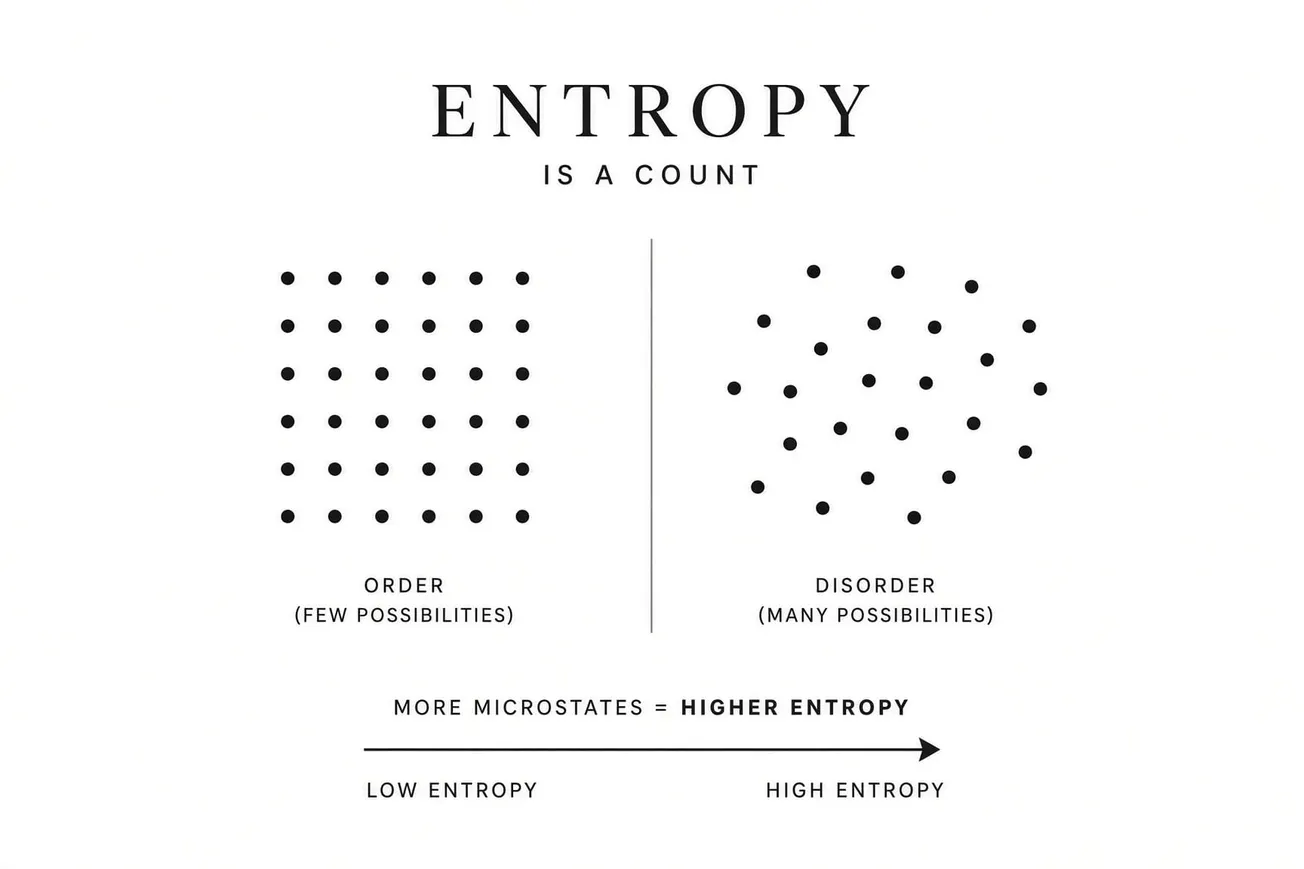
    D --> G[Greater neural-signal diversity or entropy]
    E --> H[Weaker stable self-model and executive constraint]
    F --> I[Broader associative access]
    G --> J[More variable cognitive states]

    H --> K[Acute distractibility, slowed task performance, impaired working memory]
    I --> L[Subjective insight and unusual associations]
    J --> M[Potential flexibility but also disorganization]

    C --> N[Plasticity-related intracellular pathways]
    N --> O[BDNF-TrkB and synaptic-remodeling hypotheses]
    O --> P[Demonstrated most directly in animal and cellular models]
    P --> Q[Possible postacute learning window in humans]

    R[Preparation, support, expectancy, environment] --> H
    R --> L
    R --> Q
    S[Baseline disorder and cognitive bias] --> K
    S --> L
    S --> Q
The diagram represents a plausible multilevel model, not a fully validated causal pathway. Receptor engagement is comparatively well established; the links from network changes to particular cognitive outcomes, and from plasticity to durable therapeutic change, remain less certain.
Network-level effects
Acute psilocybin reduces the internal coherence of highly organized networks such as the default mode network while increasing some between-network interactions. A 2024 precision functional-mapping experiment administered 25 mg psilocybin and 40 mg methylphenidate in an intensively sampled crossover design. Psilocybin produced more than three times the magnitude of functional-connectivity change observed with methylphenidate, with strong individual variation and attenuation during a perceptual grounding task. Most connectivity changes were transient, although anterior hippocampal-DMN decoupling persisted for several weeks. citeturn14search1turn14search17turn14search25
In depression datasets, reduced network modularity or greater global integration after psilocybin has correlated with symptom improvement at approximately three weeks. Such results support a “relaxed network constraint” account, but they do not tell us whether reduced modularity caused improvement, reflected drug intensity, indexed successful engagement with therapy, or emerged as a consequence of mood change. citeturn14search2turn14search6
A 2026 mega-analysis combining 11 datasets and more than 500 scans across several classic psychedelics reported a shared pattern of increased cross-network communication and altered cortical organization. Its scale strengthens confidence that network desegregation is not an idiosyncratic laboratory artifact, but because it pooled drugs and paradigms it cannot establish psilocybin-specific cognitive effects. citeturn9search13turn14news37
Network integration has no intrinsically positive cognitive valence. Stable modular organization supports specialization, sustained goals, working-memory maintenance, and protection against interference. Temporary desegregation may facilitate unusual associations or revision of entrenched beliefs while simultaneously impairing precision and control. Whether the same process is therapeutic depends on baseline pathology, task demands, dose, and environmental scaffolding.
Neuroplasticity
The most direct structural evidence remains preclinical. In mice, one psilocybin administration increased the formation, density, and average size of dendritic spines in frontal cortex within 24 hours; a substantial proportion of newly formed spines remained one month later. The study also found enhanced excitatory neurotransmission and amelioration of a stress-related behavioral deficit. citeturn23search2turn23search7
Separate preclinical work indicates that psilocin and other psychedelics can bind directly to the neurotrophin receptor TrkB and potentiate BDNF-related plasticity. The reported binding-affinity comparisons are biochemical observations, not clinical potency ratios. They neither show that psilocybin is hundreds of times more therapeutically effective than antidepressants nor quantify human cognitive enhancement. citeturn14search19turn14search23
Human structural evidence is indirect. In 2026, Lyons and colleagues studied 28 psychedelic-naïve adults using EEG, functional MRI, and diffusion-tensor imaging before and after 1 mg and 25 mg. At one month, they found reduced axial diffusivity in bilateral prefrontal-subcortical tracts and increased cognitive flexibility, insight, and well-being. Enduring functional changes were largely absent, and the diffusion findings cannot distinguish axonal, glial, extracellular-fluid, inflammatory, or microstructural mechanisms. citeturn16search16turn17search14
Claims that neuroplasticity is beneficial also need qualification. Plasticity denotes capacity for change, not directionally adaptive change. During a period of increased susceptibility, supportive psychotherapy could facilitate useful learning, while chaotic, coercive, frightening, or ideologically loaded contexts could consolidate maladaptive interpretations. This is one reason administration context is not merely an ancillary safety variable.
Linking mechanism to cognition
A rigorous mechanistic account requires at least four demonstrations: that the proposed biological process changes after treatment; that it temporally precedes the cognitive outcome; that experimentally blocking or manipulating it changes that outcome; and that formal mediation survives confounding by dose, subjective intensity, mood improvement, expectancy, and context. Human psilocybin research usually satisfies only the first one or two criteria.
The evidence therefore supports a graded causal hierarchy:
| Proposed link | Evidential status |
|---|---|
| Psilocin engages 5-HT2A receptors in humans | Strong |
| 5-HT2A activation is necessary for much of the acute subjective syndrome | Strong |
| Psilocybin acutely alters large-scale network organization | Strong |
| Those network changes explain acute cognitive slowing and disorganization | Plausible, partially supported |
| Network desegregation causes postacute cognitive flexibility | Suggestive, unproven |
| Psilocybin creates new human synapses within 24 hours | Not demonstrated |
| TrkB binding mediates human cognitive or clinical benefit | Preclinical hypothesis |
| Subjective mystical experience is necessary for durable benefit | Correlational and contested |
| A single common mechanism explains depression, addiction, creativity, and cognition | Unsupported |
Dose, context, populations, study quality, and risks
Dose-response relationships
The best quantitative dose evidence concerns acute performance cost. In the attention/executive meta-analysis, reaction-time effects rose from g = 0.40 for microdose-category studies to 0.87 at low dose, 1.30 at medium dose, and 1.79 at high dose; the omnibus dose moderator was significant, QM(3) = 20.78, p = 0.0001. citeturn6view3
This gradient should not be interpreted as a precise pharmacological law. Dose categories differed across studies, and higher doses also produce stronger visual effects, time distortion, absorption, emotional intensity, and treatment-guess accuracy. The measured outcome may therefore represent a composite of cognitive disruption, altered motivation, perceptual interference, motor slowing, and task noncompliance.
For postacute benefit, a monotonic dose-response curve is not established. A higher dose may create stronger subjective and network effects but also more anxiety, confusion, cardiovascular activation, and difficulty engaging with tasks. Clinical trials often compare one or two high doses against an inactive or weakly active control rather than mapping a full cognitive dose-response function.
Microdosing studies face a different problem: doses small enough to preserve blinding may be too small to produce meaningful pharmacological effects, whereas doses large enough to be noticeable compromise blinding. Controlled trials have not shown dependable broad improvements in memory, creativity, attention, or executive function. citeturn12search5turn9search2turn9search14
Healthy volunteers versus clinical populations
Healthy volunteers dominate the literature and often have prior psychedelic experience, high education, favorable expectations, and willingness to undergo an unusual laboratory procedure. They typically begin near ceiling on neuropsychological tests, limiting measurable improvement while facilitating detection of acute impairment. Approximately 90% of studies in the 2023 cognition scoping review used healthy samples. citeturn5view4
Clinical participants may improve because a disorder-related deficit normalizes. Reduced depressive rumination, anhedonia, threat bias, or cognitive rigidity could improve functional cognition without making performance superior to healthy norms. Conversely, symptom reduction may improve motivation and processing speed independently of a direct pro-cognitive drug effect.
The emerging clinical signals—set shifting in open-label depression, short-term processing-speed changes in treatment-resistant depression, and emotional empathy in a placebo-controlled depression trial—are therefore potentially meaningful but cannot be generalized to healthy cognitive enhancement. citeturn5view3turn11search0turn19view1
Evidence is especially thin for adolescents, adults over 65, people with mild cognitive impairment or dementia, psychotic or bipolar-spectrum disorders, attention-deficit/hyperactivity disorder, traumatic brain injury, epilepsy, autism, and significant cardiovascular disease. Exclusion protects trial participants but creates a substantial external-validity gap.
Clinical versus recreational administration
Clinical studies generally use synthesized or pharmaceutical-grade psilocybin, known doses, medical and psychiatric screening, preparatory sessions, monitored dosing, support personnel, and follow-up or integration. For example, the 89-person healthy-volunteer trial administered 10 or 25 mg with one-to-one support and structured follow-up, while the alcohol-use trial combined controlled dosing with 12 weeks of manualized psychotherapy. citeturn10view0turn17search0
Recreational mushroom use differs in species, potency, dose estimation, co-ingested compounds, setting, sleep, nutrition, polysubstance exposure, and access to help. Concentrations can vary across mushrooms and preparations, and illicit products are not subject to pharmaceutical quality control. citeturn16search18turn17search16
Consequently, clinical-trial safety and cognition findings cannot be directly exported to unsupervised use. The intervention tested in many therapeutic studies is more accurately represented as a package:
[
\text{Outcome} =
f(\text{psilocybin dose},\ \text{participant},\ \text{preparation},\ \text{setting},\ \text{support},\ \text{expectancy},\ \text{integration})
]
This creates an interpretive dilemma. Rich support may improve safety and ecological validity for therapy, but it makes the drug’s independent contribution harder to estimate. Conversely, highly stripped-down pharmacology studies isolate acute effects better but may not represent clinical practice.
Methodological quality and heterogeneity
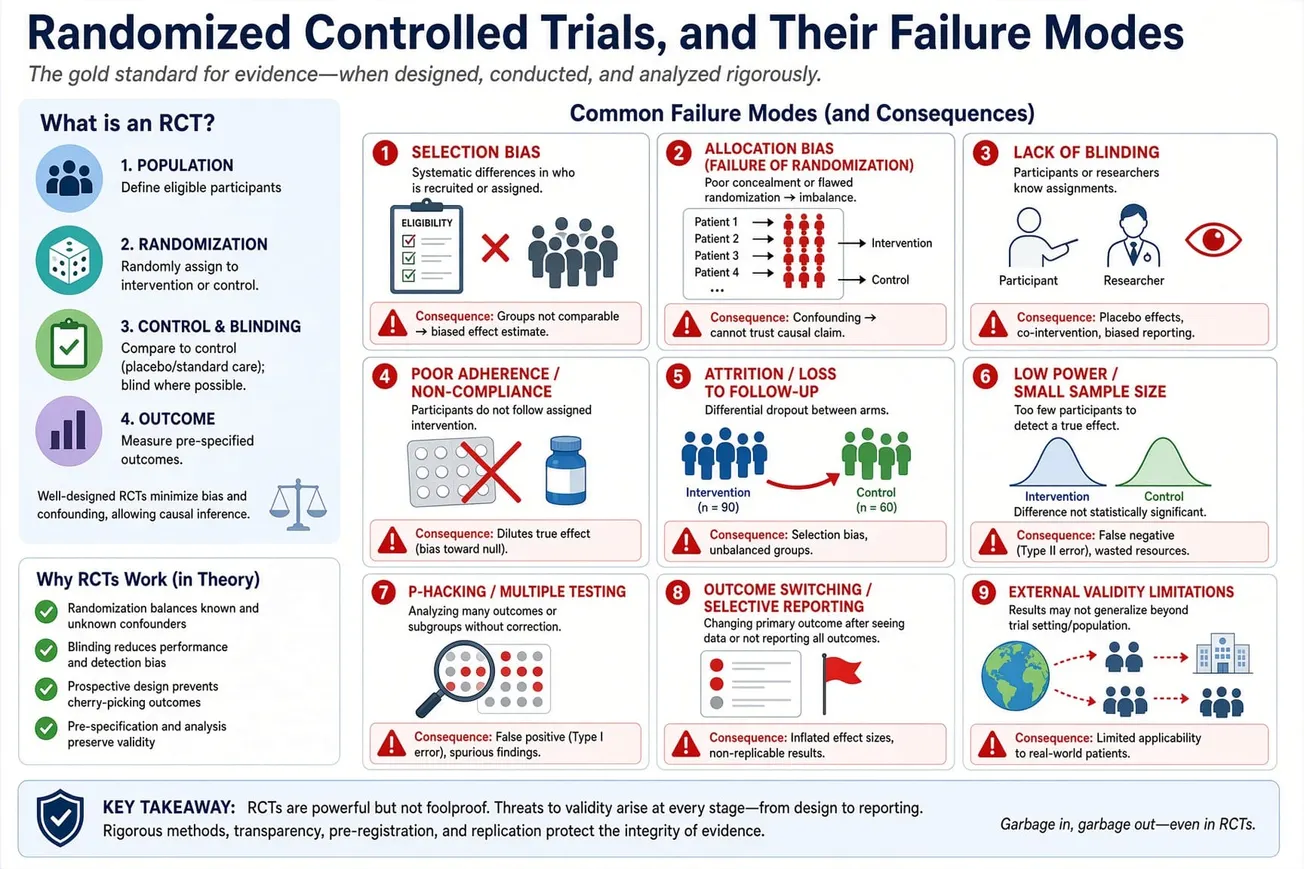
Functional unblinding is the dominant validity problem. At moderate or high doses, participants and staff can usually infer treatment assignment. Expectancy can influence effort, subjective creativity, empathy ratings, symptom reporting, and retrospective assessments. Active placebos such as niacin, diphenhydramine, methylphenidate, or very-low-dose psilocybin produce some sensations but seldom mimic the full syndrome.
Small samples produce unstable effects and exaggerated standardized estimates. Large d or g values from 20–30 participants should be treated as imprecise, especially when derived from one of many secondary endpoints.
Outcome multiplicity is pervasive. Studies administer multiple tasks, subscales, time points, imaging metrics, and correlations. Selective attention to statistically significant findings can make a largely null battery appear positive.
Practice effects complicate postacute improvement. Repeating trail-making, symbol substitution, set shifting, or creativity tasks commonly improves performance without treatment. Parallel forms, adequately matched control groups, and reliable-change indices are not consistently used.
Task impurity is also serious. Stroop performance depends on reading, color perception, motor speed, rule maintenance, and inhibition. Creativity scores depend on language production, motivation, compliance, and scoring method. Emotional-empathy ratings mix affective resonance with mood, arousal, and demand characteristics.
Publication bias is empirically detectable. In the acute reaction-time meta-analysis, Kendall and regression-based tests indicated asymmetry. Trim-and-fill analysis reduced the estimated effect but still suggested substantial slowing, while increasing inferred heterogeneity. citeturn6view4
Selective populations and attrition limit generality. Prior psychedelic exposure is common, high-risk psychiatric conditions are excluded, and naturalistic follow-up can lose more than half the baseline sample. citeturn10view0turn13search24
Adverse effects and cognitive risks
A 2024 meta-analysis of six randomized clinical trials comprising 528 patients found significantly elevated risks of headache, nausea, anxiety, dizziness, and increased blood pressure after therapeutic psilocybin doses. Most events resolved within 48 hours. Blood-pressure effects were heterogeneous, with I² around 78%, suggesting meaningful variation across studies or participants. citeturn20search2turn20search5turn20search22
A broader systematic review of 114 classic-psychedelic studies involving 3,504 participants found no reported serious adverse events among healthy volunteers and serious events in approximately 4% of participants with preexisting neuropsychiatric disorders. The authors simultaneously found widespread concern about underdetection, inconsistent definitions, and incomplete reporting, so the figures should not be interpreted as population incidence rates. citeturn20search6turn20search17
Acute cognitive hazards follow directly from impaired attention, judgment, temporal estimation, working memory, and motor coordination. During intoxication, driving, operating equipment, navigating hazardous environments, making high-stakes financial or relational decisions, and unsupervised exposure to water or heights are unsafe. These functional risks can be substantial even where direct physiological toxicity is low.
Severe anxiety, panic, paranoia, confusion, and transient psychotic-like states can occur, particularly at high doses or in adverse settings. Clinical screening reduces but does not eliminate risk. Case reports document mania, psychosis, and persistent perceptual symptoms after psychedelic use, but case reports cannot estimate incidence or cleanly separate drug effects from vulnerability, sleep loss, polysubstance exposure, or misidentified substances.
There is no convincing controlled-study signal of persistent generalized neuropsychological decline after one or two supervised doses in screened adults. That reassuring observation remains bounded by low statistical power for rare harms, short cognitive follow-up, and systematic exclusion of vulnerable groups. “No demonstrated long-term impairment” is not equivalent to “long-term cognitive safety established.”
Conclusions and research agenda
The human evidence supports a phase-specific, domain-specific model rather than a global enhancement or toxicity model.
During acute intoxication, psilocybin impairs the type of cognition rewarded by conventional neuropsychological testing: rapid responding, sustained external attention, working-memory maintenance, inhibition, precise rule following, and deliberate idea selection. The pooled reaction-time effect is large and dose dependent, though heterogeneous and potentially inflated by small-study and publication biases. citeturn6view1turn6view3turn6view4
At the same time, acute experience may include greater associative richness, emotional salience, subjective insight, and emotional empathy. Objective creativity does not generally improve during intoxication; rather, executive evaluation appears to deteriorate while the subjective quantity or importance of ideas increases. citeturn19view0turn19view2
After intoxication, the modal result is cognitive normalization, not broad enhancement. Possible positive effects on cognitive flexibility, novel idea generation, emotional processing, and emotional empathy are intriguing but localized, inconsistently replicated, and often measured in small samples or as secondary outcomes. The strongest postacute controlled social-cognition finding currently extends for two weeks, while comprehensive cognitive testing in healthy volunteers has generally found no meaningful deficits or benefits through several weeks. citeturn19view1turn10view0
Long-term objective cognition beyond six months is a major evidentiary void. Durable depression remission, abstinence, well-being, or autobiographical meaning may be clinically valuable, but none establishes lasting improvement in memory, attention, executive function, learning, or intelligence. The principal long-term conclusion is therefore uncertainty rather than benefit or harm.
Mechanistic evidence is strongest at the receptor and acute-network levels. Psilocin engages 5-HT2A receptors and temporarily destabilizes ordinary cortical organization. This state can plausibly loosen rigid priors and increase associative exploration, but it also weakens cognitive control. Rodent dendritic-spine growth and preclinical TrkB findings make a plasticity window biologically credible; they do not yet prove human synaptogenesis or a durable cognitive mechanism. citeturn14search0turn23search2turn14search19
The YouTube video captures several genuine developments but repeatedly moves too quickly from “associated with” to “causes,” from mice to humans, from clinical response to cognitive improvement, and from secondary outcomes to therapeutic superiority. Its most valuable contribution is its emphasis on temporal reorganization and context; its central limitation is rhetorical compression of a heterogeneous and methodologically fragile literature.
The next generation of research should prioritize adequately powered, preregistered, multisite trials with standardized cognitive batteries; active controls that better address expectancy; formal assessment of treatment guesses; parallel test forms and practice-effect controls; cognitive measurement during intoxication, the next day, one month, six months, and beyond one year; and deliberate recruitment of older, more diverse, and clinically representative populations.
Mechanistic trials should combine receptor blockade, neuroimaging, electrophysiology, computational tasks, and mediation analysis. Factorial designs are needed to separate drug dose, psychological preparation, in-session support, integration, and expectancy. Long-term cohorts should measure not only mean performance but reliable individual deterioration, occupational functioning, adverse experiences, repeated exposure, mania or psychosis, and persistent perceptual symptoms.
The most informative hypothesis is not that psilocybin makes the brain “better” or “worse.” It temporarily makes cognition less constrained and less stable. During that interval, conventional performance is often impaired, while unusual associations and emotional responsiveness may become more accessible. Whether this produces subsequent benefit, no change, or harm depends on the person, cognitive domain, dose, task, disorder, environment, and what is learned while the system is unusually malleable.