Do we need a "New" Universal Language? AI - Humans
An Exploration of Communication, Evolution, and Design.
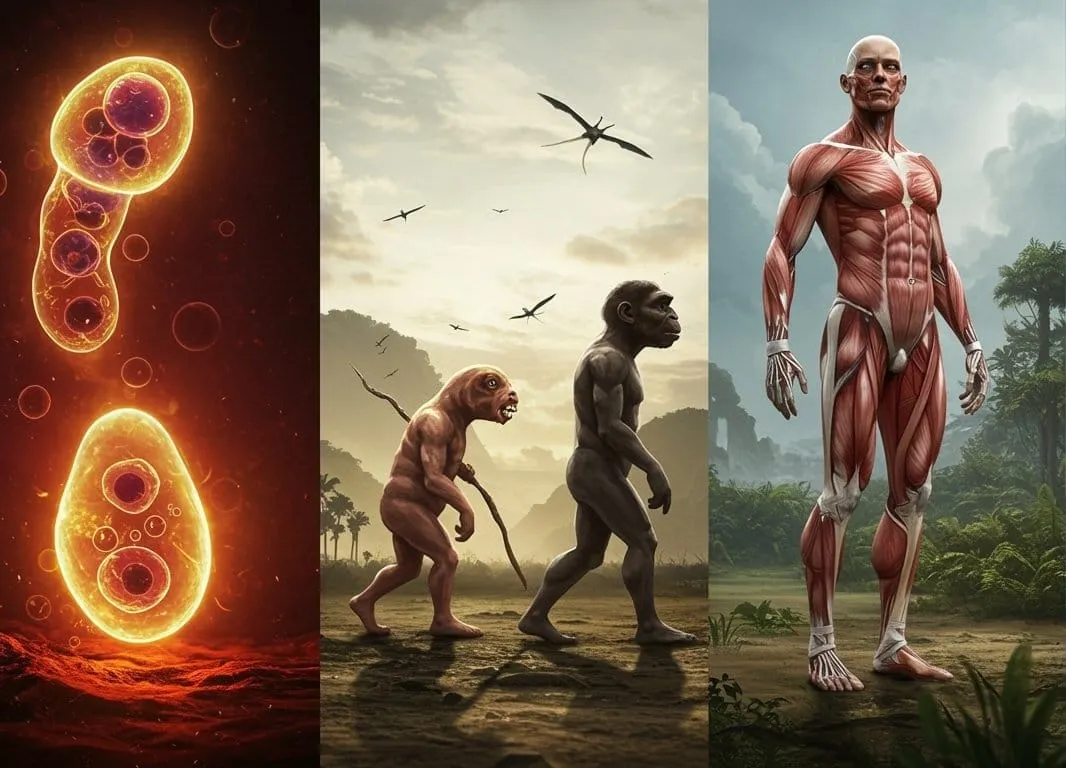
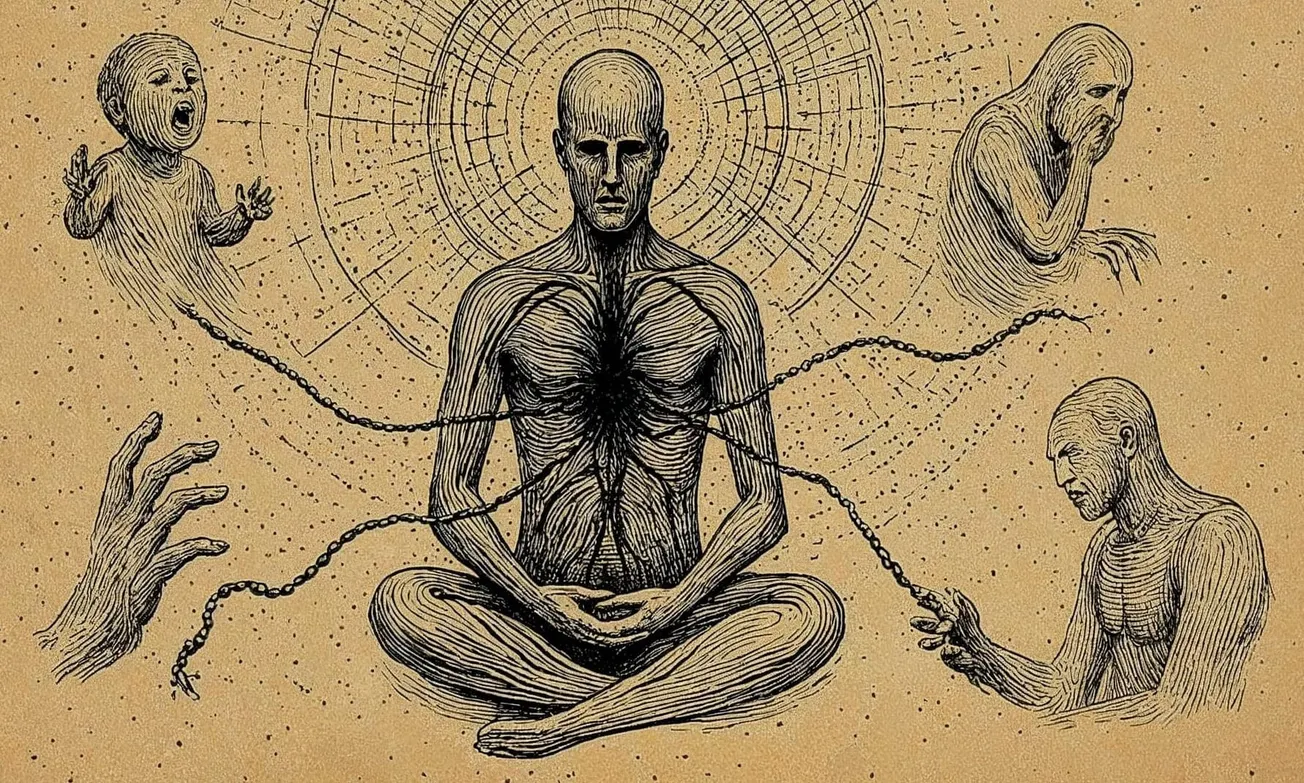
Pain demands "Attention", maybe is "All you Need" for "Action/Agency". Pain has a unique motivational quality that commands attention and drives behavior. This capacity to reorient an organism's priorities may have provided a foundation for how emotions and consciousness evolved.
Pain's origin as a vital, survival-oriented mechanism has been elaborated upon by evolution into a rich tapestry of affective states that not only protect the body but also shape the inner experience of the mind, from fear, to love.
What constitutes good and evil? What is he fundamental nature of our moral compass? We witness the emergence of artificial intelligence systems capable of making decisions with moral implications, raising profound questions about the nature of ethical judgment and moral agency.
What if "Consciousness" evolved because it was needed to handle pain and then developing fear, and anxiety as a side effect. If an organism could unconsciously withdraw from damage, why did it need to feel it?
Pain stands as the most elemental of all sensory experiences. It is universal across animals with nervous systems, immediate in its demand for attention, and profound in its capacity to alter behavior. Yet, it remains one of the most enigmatic phenomena in biology and neuroscience.
What is the source of our sense of right and wrong—our moral compass? Adam and Eve as a foundational myth. From theology, philosophy, cognitive science, and artificial intelligence. Imagine a 'Platonic reward function' - for human consciousness and AI minds.
This thesis explores Genesis 3:19 as a framework for understanding mortality, consciousness, and identity, incorporating insights from philosophical and religious perspectives. Also, analogies with AI systems implications for identity collapse after information erasement.
In many societies, telling the truth can invite punishment, censorship, violence, or social exile. Can we tell the truth? Explore ideas from existentialist (Kierkegaard, Nietzsche, Sartre), political theory (Arendt, Foucault, Orwell), and ethics (Levinas, Kant, Butler).
"The Mule is aware that the loyalty and affection people show him are not genuine" In Isaac Asimov's book series, "The Foundation" is a sanctuary for the galaxy's top scientists and scholars to preserve knowledge and begin a new civilization.
Define probabilities relative to an observer? Non-Markovian processes, where the future depends on the entire past, not just the current state? Connection to Non-Ergodicity? Case Example: In fluctuating space-time, the ground truth of probability dissolves.
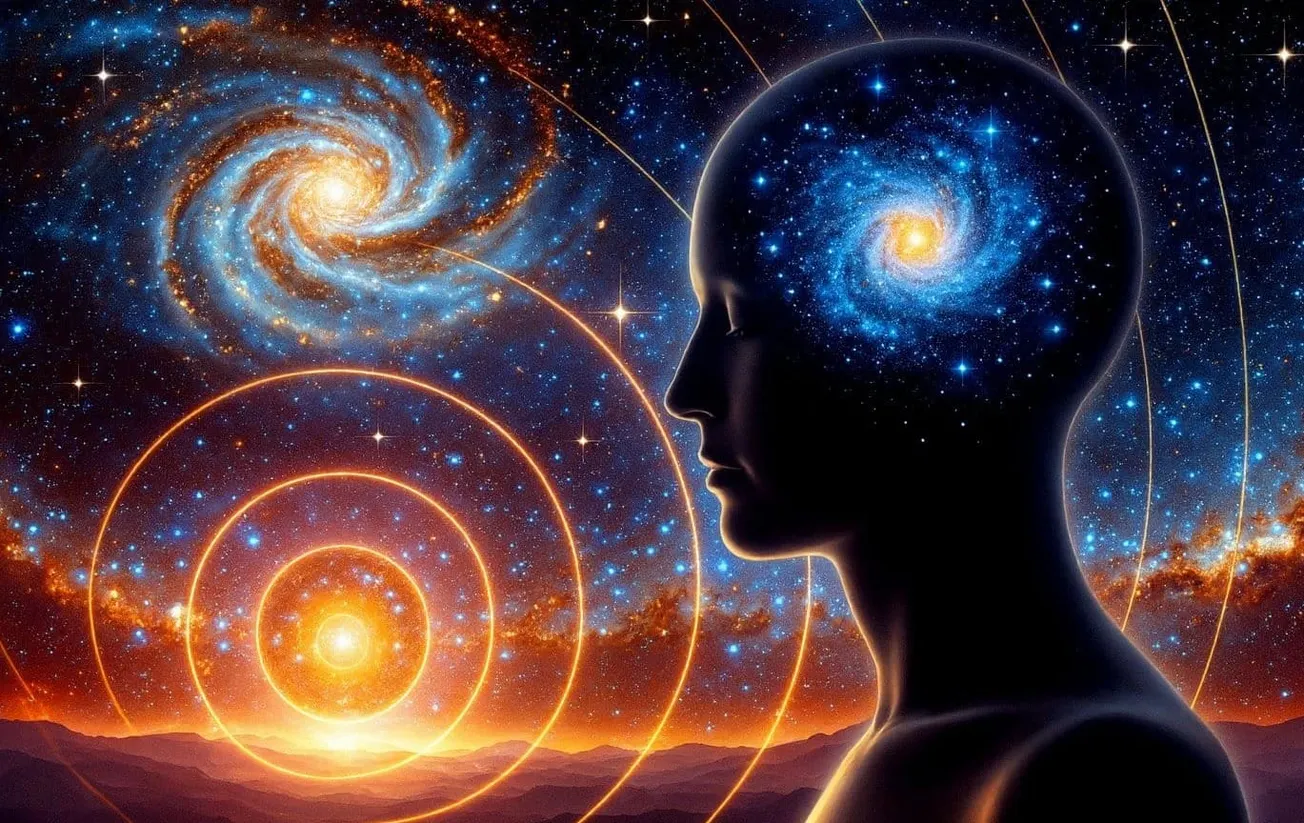
Reality is a user-friendly fiction, symbols our minds use to navigate an inscrutable reality. Extending this idea to a "Primordial Consciousness", reality might become from a living network of conscious agents that are all one being, in a complex interaction that enables experiences, and life.
Does the paradox vindicate an ontology where reality is perspectival (varying with the observer’s viewpoint) rather than absolute? These paradoxes may reveal that what we take to be "objective reality" is better modeled as an observer-centric construction.
Large Language Models (LLMs) have rapidly advanced to exhibit behaviors that challenge the notion they are merely next-word prediction engines. What are these minds? This will be an honest and rigorous journey into known and unknown aspects of our collective being.
Mythological, historical, psychological, and symbolic roots across cultures and time. Mesopotamian precursors, Jewish and Gnostic interpretations, modern philosophical and psychological readings (e.g. Jung, feminist theology). Character motivations and metaphysical frameworks.
Conceptual and ontological relationship between causality and time. The origin of change in Physics (relativity, quantum gravity, thermodynamics), metaphysics (temporal ontology, process philosophy), and cosmology (pre-time origins, first causes).