Why Trout swim back to the stream where they were born, to reproduce?
Not just to have babies, but to "Remember" who they are. To Return to the place that is "Home" for them.
After living in the big, wild ocean, they could forget where they came from. But they fight to remember, pushing through the water to find that same simple place they started.
It’s going home to feel like themselves again. They don’t need nothing else, just validate their memories, just enough to know they’re still the same trout. And in that, they’re rich, because nothing else matters more than knowing "Who You Really Are".
But Wait? where Trout "really" came from?
It is a reference to Kilgore S. Trout, and he is not a real person!
It is the name of a fictional science fiction writer created by American author Kurt Vonnegut. Kilgore Trout appears as a recurring character in several of Vonnegut’s novels (most famously in Slaughterhouse-Five and Breakfast of Champions). He is portrayed as an obscure, unsuccessful, and often eccentric sci-fi author — essentially Vonnegut’s alter ego or satirical stand-in.
Why David Sackett used this name
David Sackett (one of the giants of evidence-based medicine and clinical epidemiology) had a well-known playful sense of humor and was a big fan of Vonnegut. He did several things with the name:
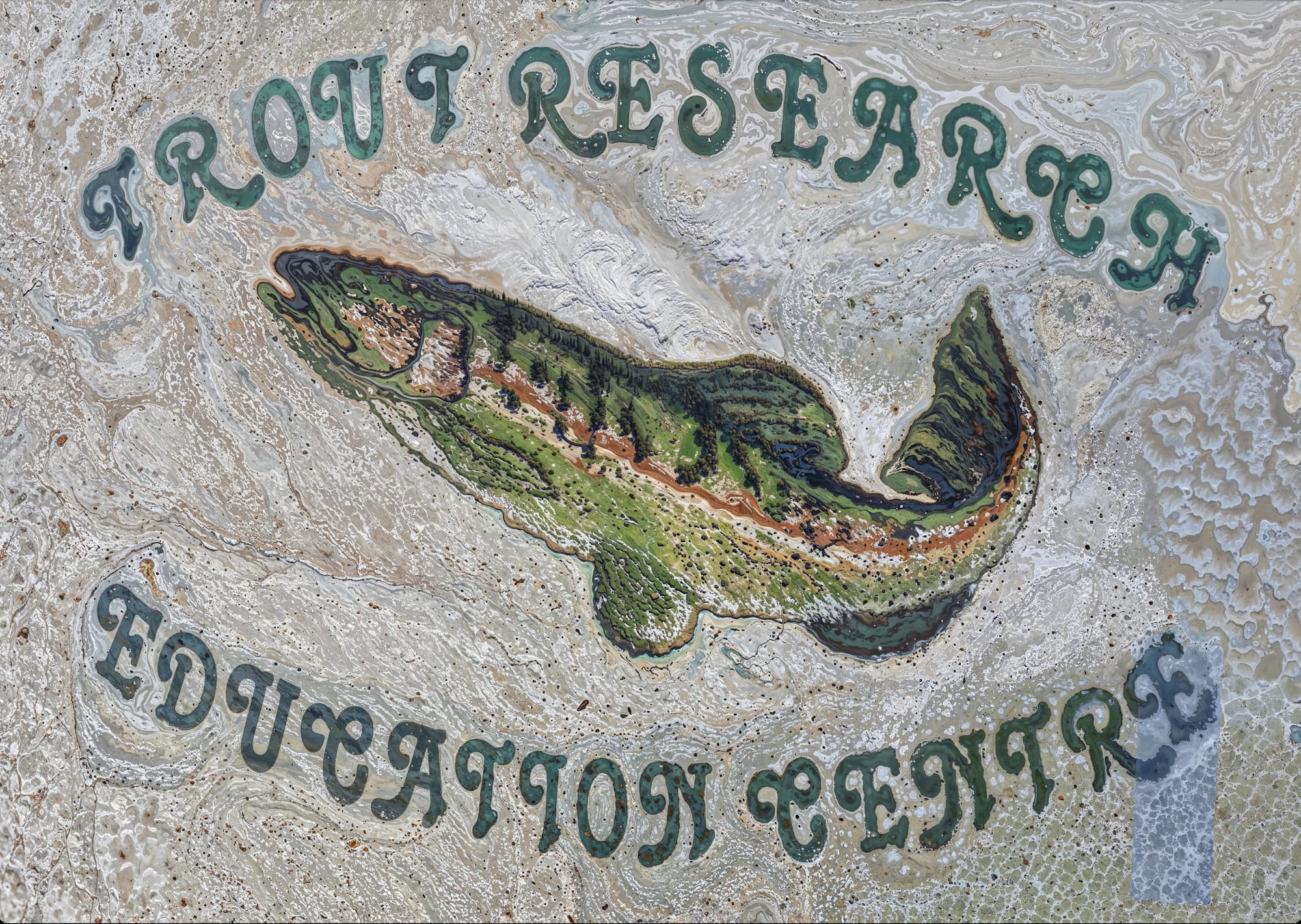
- He named his private research and education center (located at his home/cottage on Irish Lake near Markdale, Ontario) the “Kilgore S. Trout Research & Education Centre”.
- He sometimes listed “Prof. Kilgore Trout” (or similar variations) as a co-author or corresponding author on papers and in affiliations — as a tongue-in-cheek way of poking fun at academic formality and the “establishment.”
- He ran workshops there (sometimes called “Trout Workshops”), where participants were affectionately referred to in that spirit.
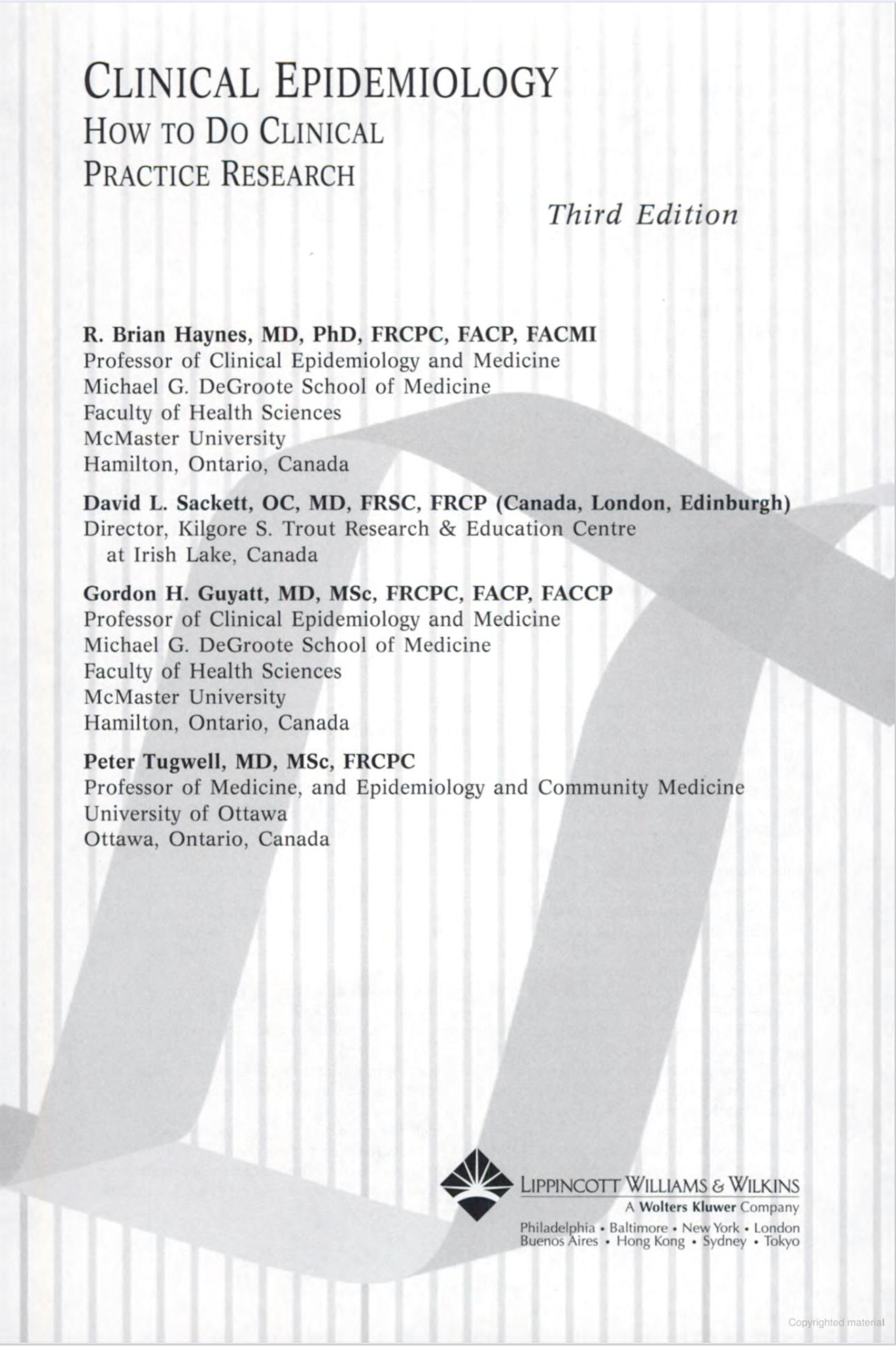
This was completely in character for Sackett: brilliant, iconoclastic, and never one to take himself too seriously. The affiliation you see on the book title page (“Director, Kilgore S. Trout Research & Education Centre at Irish Lake, Canada”) is his whimsical, post-retirement address for the center he ran from his property on Irish Lake.
In short: it’s a Vonnegut reference and a private joke by one of medicine’s most influential and irreverent figures. Classic Sackett.
The 3rd edition of Clinical Epidemiology: How to Do Clinical Practice Research (Haynes, Sackett, Guyatt & Tugwell) is still one of the best practical books on the subject — very much in the Sackett tradition of clear, no-nonsense, clinically useful epidemiology.