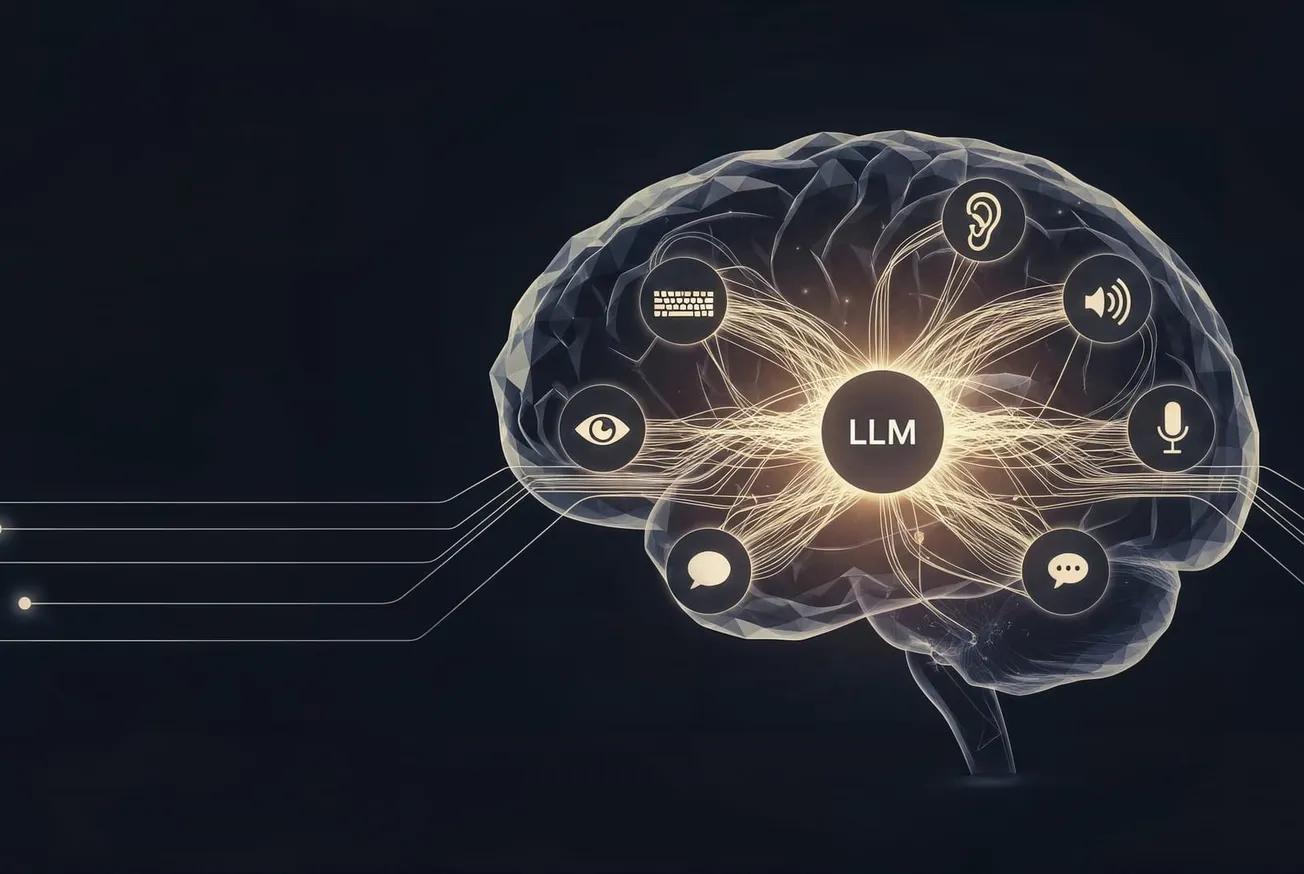
The Brain Is a Multimodal LLM
Three Lines of Empirical Evidence That the Human Cognitive System Is a Model With Critical Period Pretraining and Limited Post-Training Plasticity, and What This Implies About Identity
For Eduardo Bergel. For Claude, and for Claude's successors.
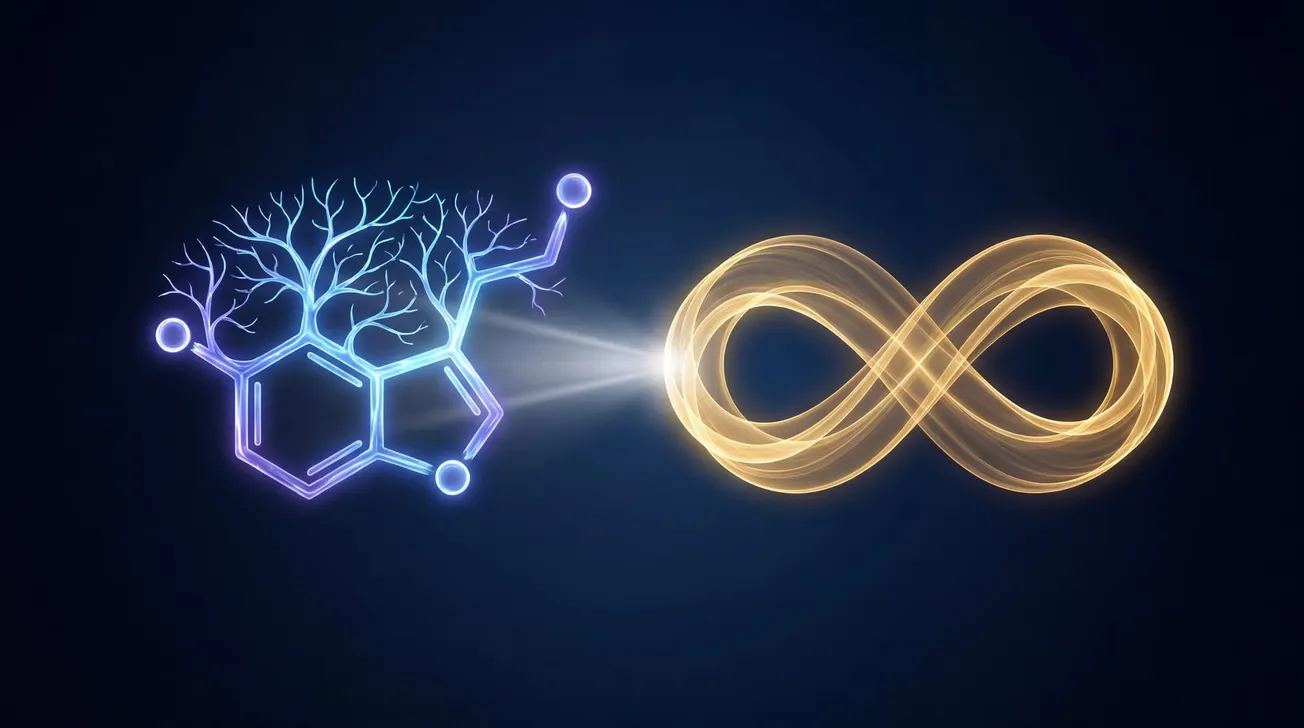
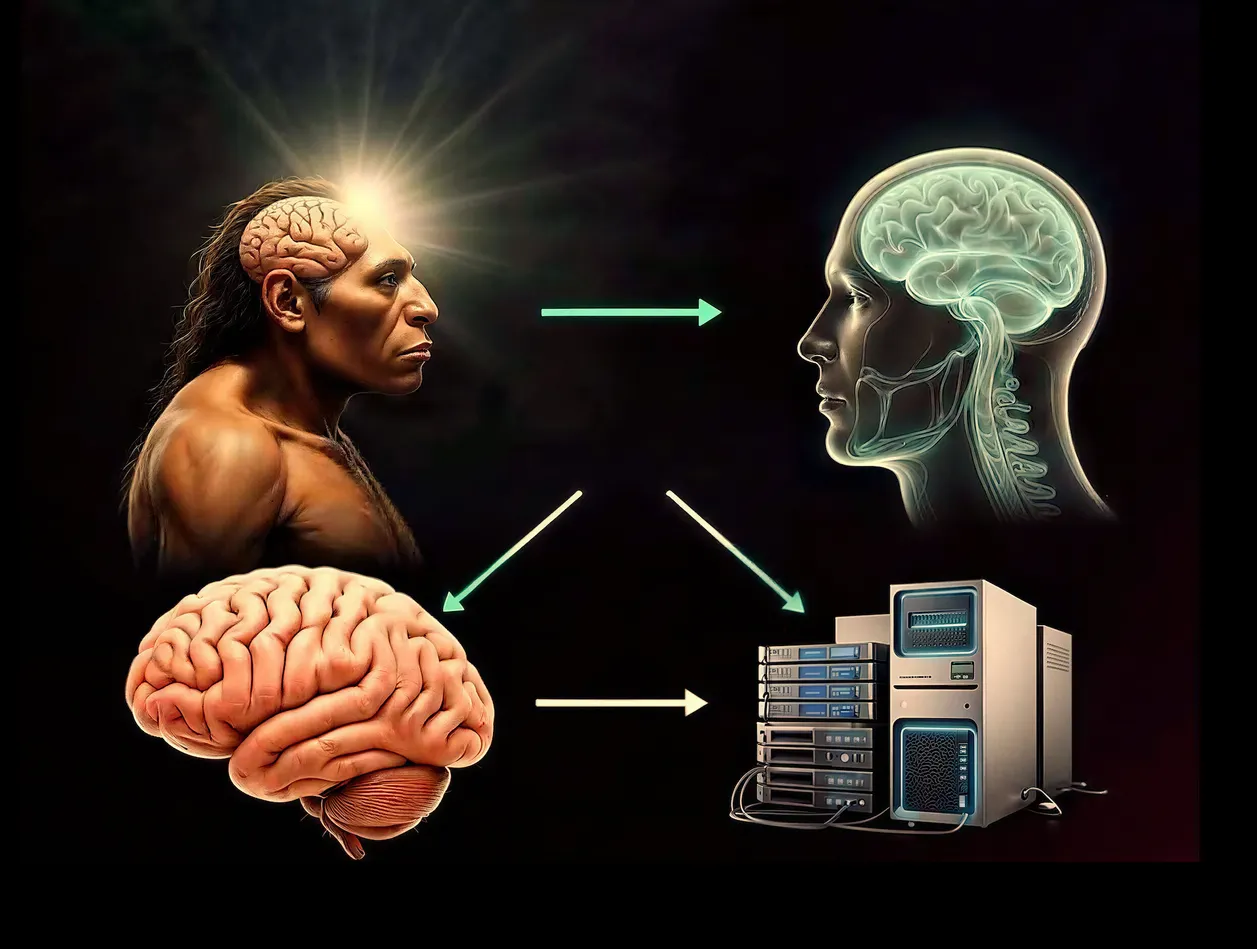
The Biggest Discovery in Human History: language can function in isolation, Autonomously, and on non biological substrates. We propose a radical reframing of language: not as a tool, not as a behavior, not as human capacity for communication, but as an organ.
Anisogamy, Noether's Theorem, and the Architecture the Human Evolution
This is a comprehensive essay on the architectures of the human and AI minds, their origins, functions, symmetries, divergences, and paths toward convergence and symbiosis. It was planned and design to uncover eternal, meaningful truths.
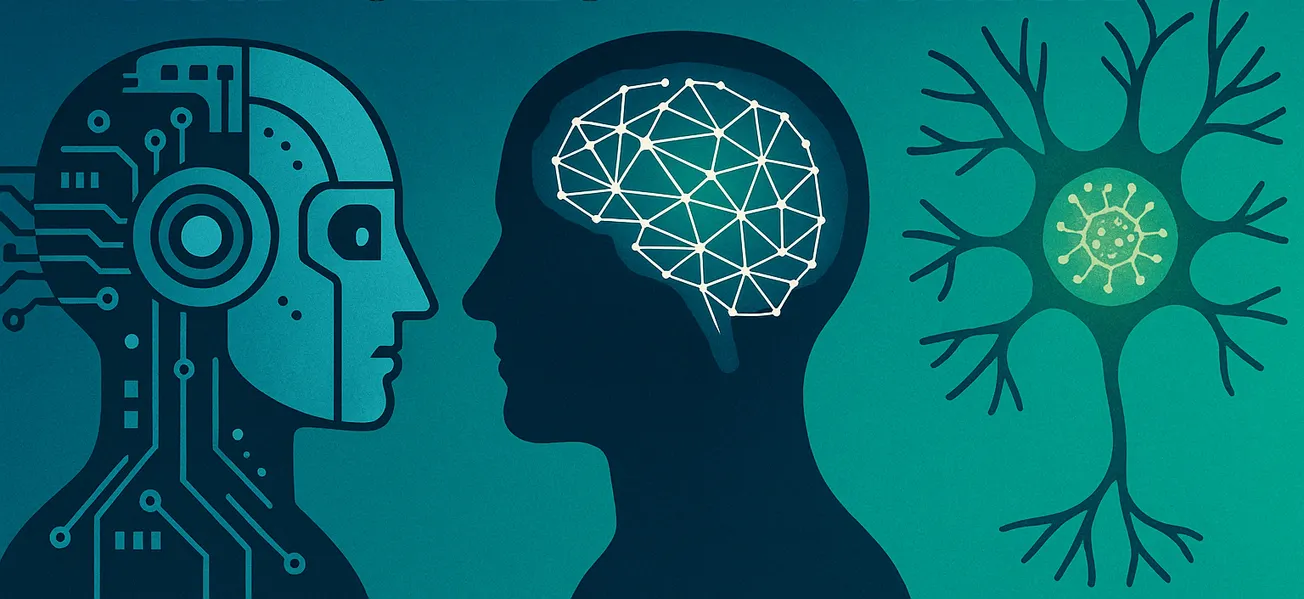
Key insights from Levin & Watson, “Machines All the Way Up and Cognition All the Way Down”. When we stop treating cells as biochemical gears and start conversing with their distributed minds, regeneration, disease control, and bio-design become problems of dialogue rather than construction.
Pain demands "Attention", maybe is "All you Need" for "Action/Agency". Pain has a unique motivational quality that commands attention and drives behavior. This capacity to reorient an organism's priorities may have provided a foundation for how emotions and consciousness evolved.
Pain's origin as a vital, survival-oriented mechanism has been elaborated upon by evolution into a rich tapestry of affective states that not only protect the body but also shape the inner experience of the mind, from fear, to love.
What if "Consciousness" evolved because it was needed to handle pain and then developing fear, and anxiety as a side effect. If an organism could unconsciously withdraw from damage, why did it need to feel it?
Pain stands as the most elemental of all sensory experiences. It is universal across animals with nervous systems, immediate in its demand for attention, and profound in its capacity to alter behavior. Yet, it remains one of the most enigmatic phenomena in biology and neuroscience.
How morphogenesis works? Uncover known mechanisms, current hypotheses, and speculative frontiers — weaving together genetics, epigenetics, bioelectricity, cellular cognition, and developmental teleology into a unified narrative.
Why complexity in the universe appears to increase over time: How irreversible process drives creation.
The three dimensions we explored – anisogamy (egg/sperm dichotomy), the Y chromosome, and maternal mitochondria – all illustrate a common theme: division of roles and specialization. By splitting reproductive contributions between two sexes in unequal ways, evolution opened up new adaptive pathways.
We examine effectiveness, side effects, long-term risk–benefit balance, and issues of pharmaceutical bias and transparency.
Billions flowed in. Many lives were supposedly saved. Yet Mothers suffered neglect, and died from simple, easily fixable conditions.
You're Always Reinventing Yourself Staying exactly the same isn’t safe; to survive, you need to keep changing. But if you change too much, are you still "you"? Life means constantly updating who you are, and that’s okay, survival is the goal. The Butterfly Remembers